
Where to see the Grayling in the Netherlands
With luck 🦋 Butterfly
Where and when do you see a Grayling? With some luck you can see this species, from June to September.
How do you recognise a Grayling?
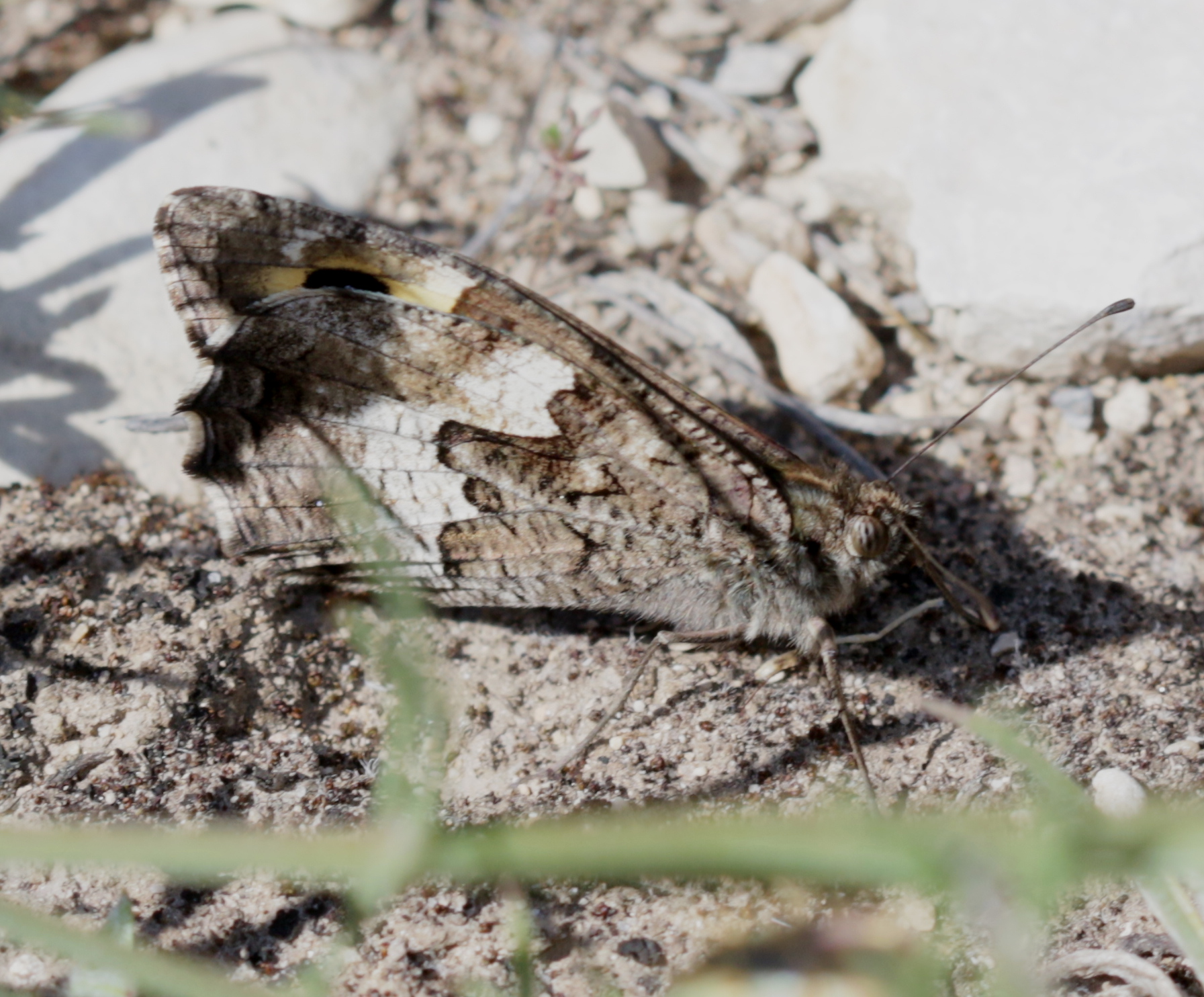
Forewing length 21 to 25 millimetres. A grey-brown butterfly with a broad orange band and eyespots; with its wings closed it is almost indistinguishable from the sandy ground.
Where do you see this species in the Netherlands?
Dry heath, drifting sand and open dune on the higher sandy soils.
This is a common, widespread species: you can come across it in far more places than the areas listed below. Treat that list as a starting point rather than a full survey.
📍 Nationaal Park De Hoge Veluwe
presence reported📍 Nationaal Park Duinen van Texel
presence reported📍 Amsterdamse Waterleidingduinen
With luck chance per source📍 Deelerwoude
presence reported📍 Nationaal Park Drents-Friese Wold
presence reported📍 Nationaal Park Zuid-Kennemerland
presence reported📍 Nationaal Park Veluwezoom
presence reported📍 Kroondomein Het Loo
presence reported📍 Nationaal Park Utrechtse Heuvelrug
presence reported📍 Fochteloërveen
presence reported📍 Planken Wambuis
presence reported📍 Noordhollands Duinreservaat
presence reported📍 Meijendel & Berkheide
presence reported📍 Strabrechtse Heide & Beuven
presence reported📍 Loonse en Drunense Duinen
presence reported📍 Schoorlse Duinen
presence reported📍 De Putten bij Camperduin
presence reportedThese links come straight from our database, with the chance, the source and the evidence level for each area.
When is the best time?
Green = present · orange = peak period. The bar is generated from our database.
Best period: Late June to early September, one generation.
Best time of day: By day, in the sun.
Recent sightings
👁️ Where has this species been seen recently?
Check the current sightings on Waarneming.nl. A useful addition to our own verified information.
How to improve your chances
- Go on a warm, windless day between about ten and four, when they are active.
- Look for the place rather than the animal: flowery edges for butterflies, banks and open water for dragonflies.
- Move slowly and keep your shadow off the animal. It notices that before it notices you.
- Early in the morning they are still cold and motionless on a leaf. That is when you can get closest.
🎒 What you need for this
None; a macro lens if you like
🌿 Watching responsibly
Keep your distance, stay on the paths, and never lure animals with food or sound. Leave as soon as an animal becomes uneasy.
Status: Verified · Last checked: 2026-08-08