
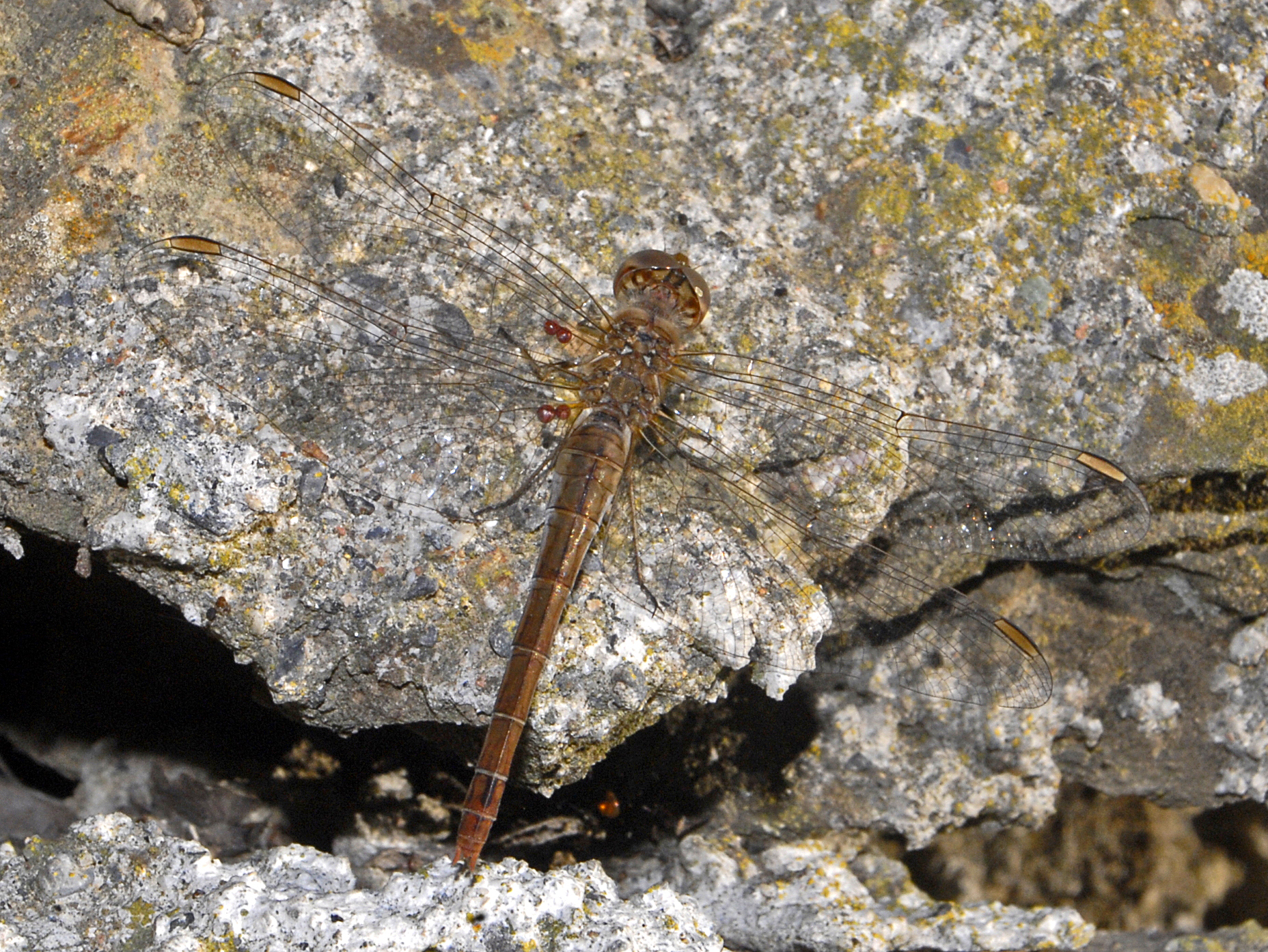
Where to see the Southern Darter in the Netherlands
Very rare 🪰 Dragonfly
Where and when do you see a Southern Darter? This species is very rarely seen, from July to October.
How do you recognise a Southern Darter?
A slender, strikingly pale-looking darter of 35 to 40 millimetres. The feature is precisely the absence of black: the legs are yellow with only narrow black stripes, and the sides of the thorax are yellow with very thin black seams.
Where do you see this species in the Netherlands?
Scattered across the country, from Limburg to Friesland; most individuals have been seen in the dunes near Voorne and Rockanje, including freshly emerged ones.
📍 Gelderse Poort & Millingerwaard
presence reported📍 Zwin & Zeeuws-Vlaanderen
presence reported📍 Amsterdamse Waterleidingduinen
presence reported📍 Noordhollands Duinreservaat
presence reported📍 Meijendel & Berkheide
presence reportedThese links come straight from our database, with the chance, the source and the evidence level for each area.
When is the best time?
Green = present · orange = peak period. The bar is generated from our database.
Best period: Early July to early October.
Best time of day: The warm hours in the middle of the day.
Recent sightings
👁️ Where has this species been seen recently?
Check the current sightings on Waarneming.nl. A useful addition to our own verified information.
How to improve your chances
- Go on a warm, windless day between about ten and four, when they are active.
- Look for the place rather than the animal: flowery edges for butterflies, banks and open water for dragonflies.
- Move slowly and keep your shadow off the animal. It notices that before it notices you.
- Early in the morning they are still cold and motionless on a leaf. That is when you can get closest.
🎒 What you need for this
A macro lens; the difference is in the thickness of black lines
Photography
Photograph the side of the thorax and the legs sharply: here the feature is precisely the absence of thick black. Without that close-up it cannot be separated from the far commoner Common Darter
🌿 Watching responsibly
Keep your distance, stay on the paths, and never lure animals with food or sound. Leave as soon as an animal becomes uneasy.
Status: Verified · Last checked: 2026-08-07