
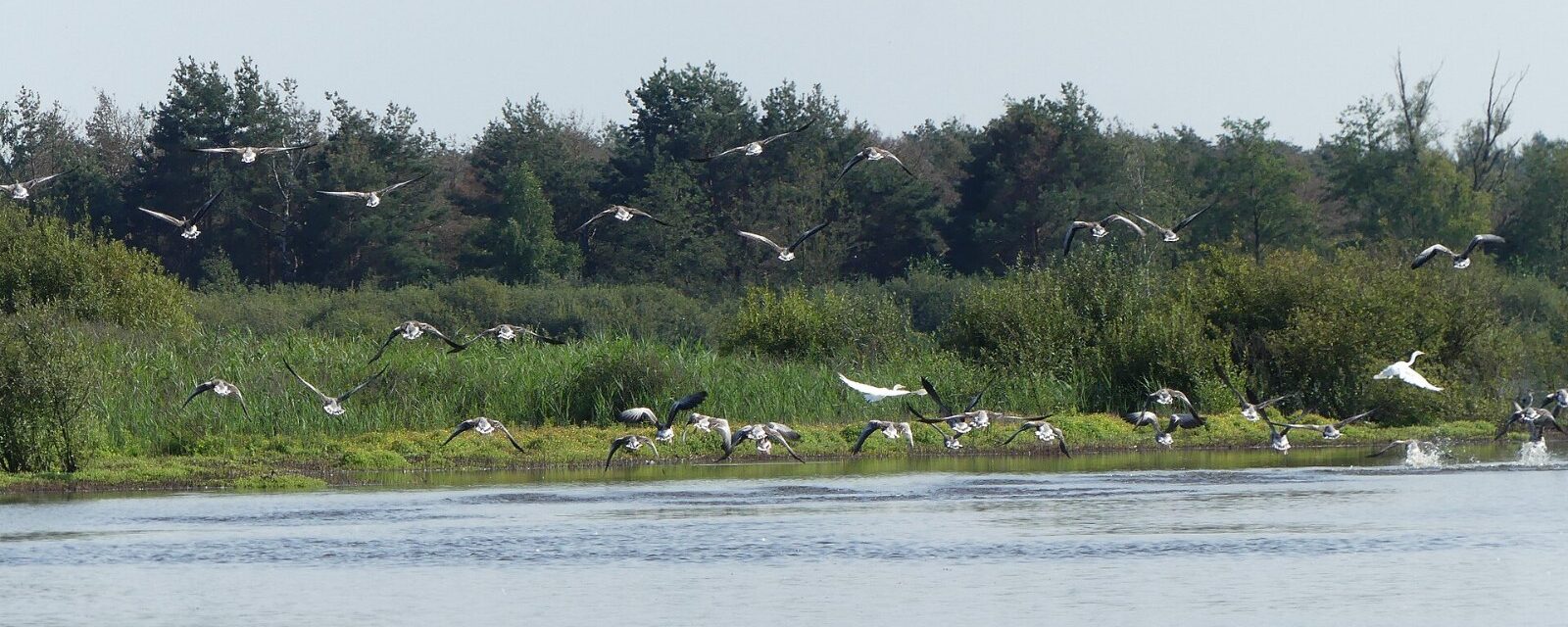
 📷 Foto: G.Lanting / CC BY 4.0 via Wikimedia Commons.
Strabrechtse Heide & Beuven: where to see wildlife
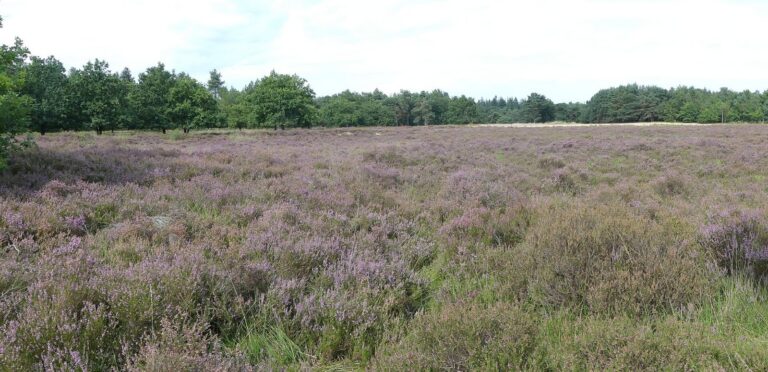
There is a tension here you need to know about: the crane migration falls in October and November, but that is exactly when 400 hectares are closed, from 15 October to 15 November. Winter is good for the Great Grey Shrike, summer for European Nightjar, alcon blue and dragonflies at the pools. Heath, pools and drift sand
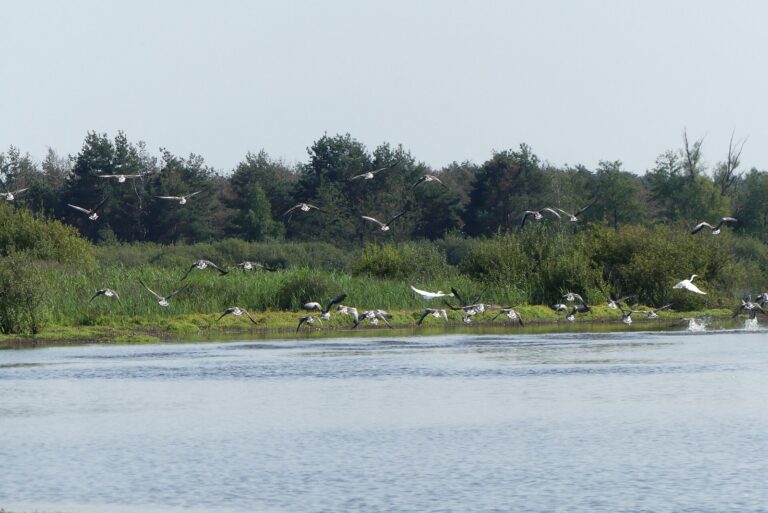
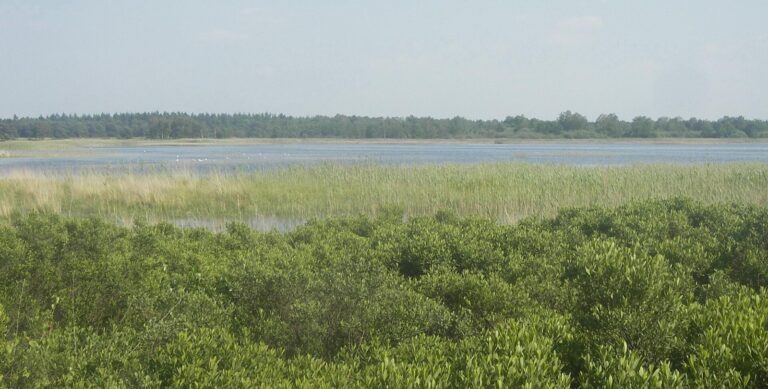
Strabrechtse Heide & Beuven — The Beuven is the largest pool in the Netherlands — more than sixty hectares. It was dredged in 1985 and 1986 after nutrient-rich water from the Peelrijt had polluted it; that was one of the first pool restoration projects in the country, and the soft-water flora partly returned afterwards. All three of this site’s Birds Directive targets depend on it: at least five breeding pairs of Eurasian Bittern, at least two of Little Bittern, and the capacity for an average of seventy Common Cranes as a seasonal maximum. Mainly here: Eurasian Bittern, Little Bittern and Common Crane are the three Birds Directive targets, and all three depend on the Beuven. From the 2024 breeding bird survey: European Stonechat 99 territories, Eurasian Skylark 98, European Nightjar 33, Yellowhammer 25, Woodlark 23, Little Grebe 10, Eurasian Bittern 1. The Great Grey Shrike is a winter visitor. Also Marsh Harrier, Spotted Crake, Bluethroat, Sedge Warbler, Black-necked Grebe, Great Egret and Black Stork. Butterflies: alcon blue. Amphibians: moor frog and natterjack toad. Grazers: a shepherded flock of sheep with livestock guardian dogs. Best period: There is a tension here you need to know about: the crane migration falls in October and November, but that is exactly when 400 hectares are closed, from 15 October to 15 November. Winter is good for the Great Grey Shrike, summer for European Nightjar, alcon blue and dragonflies at the pools.
Which animals will you see here?
Also reported present in this area (297 species) presence reported
These species are known to occur here (NDFF), but nothing has been recorded yet about your chance of seeing them.
Amphibian (8)
Dragonfly (36)
Reptile (1)
Spider (6)
Grasshopper (22)
Fish (6)
Butterfly (29)
Bird (156)
Mammal (land) (24)
Mammal (land/water) (2)
Mammal (bat) (7)
Walking routes
Stuifzandroute
Heideakkerroute
Herderspad
Rulse Laarzenpad
Rolstoelroute De Plaetse
Boswachterspad Vennenroute
Facilities
No visitor centre, refreshments or toilet are listed. There is a sheepfold with an insect garden and a vegetable garden along the Herderspad, where the shepherd and the sheep are often to be found, and a play wood, the Huttenbouwbos.
Practical information
- Access: Most of the heath is open, but only for quiet forms of recreation. The area is closed at night: no access between sunset and sunrise. There are two seasonal closures of about 400 hectares — in the breeding season from 15 March to 15 July, and during the crane migration from 15 October to 15 November. In March the Rulsedijk in Heeze is closed to cars at night for the toad migration, between 17.00 and 08.00, for a few days to a few weeks depending on the weather. The green-marked route around De Plaetse near Heeze is wheelchair-suitable. Activities and events must be reported at least six weeks in advance.
- Parking: This is a real gap: on none of its pages for this area does Staatsbosbeheer name a car park by name or address. Two locations are mentioned: De Plaetse near Heeze, the start of the wheelchair route, and the Rulsedijk in Heeze. Ask in advance or go by the signs.
- Dogs: Welcome, on a lead. Dogs are not allowed on the Rulse Laarzenpad because of the livestock there. Around the sheep flock a stricter regime applies: livestock guardian dogs stay with the sheep day and night to protect them against wolves. Keep your dog on a short lead there and avoid the immediate surroundings of the flock. Those dogs are not there to be approached or petted; they may bark if you come too close and settle again if you simply walk on and follow the shepherd’s instructions. No off-lead area is mentioned.
🌿 Rules in this area
Staatsbosbeheer is the main manager; the ranger is Erik Schram. The Natura 2000 site document also names Brabants Landschap, Rijkswaterstaat and private owners. From 2019 to 2028 Staatsbosbeheer is running a heath restoration project commissioned by the province of Noord-Brabant. sets its own rules here. Stay on the paths, respect refuges and closures, keep dogs on a lead where that applies, and do not fly a drone — they are banned in almost every Dutch nature reserve.
Status: Verified · Last checked: 2026-10-28
Photo: Foto: G.Lanting / CC BY 4.0 via Wikimedia Commons.