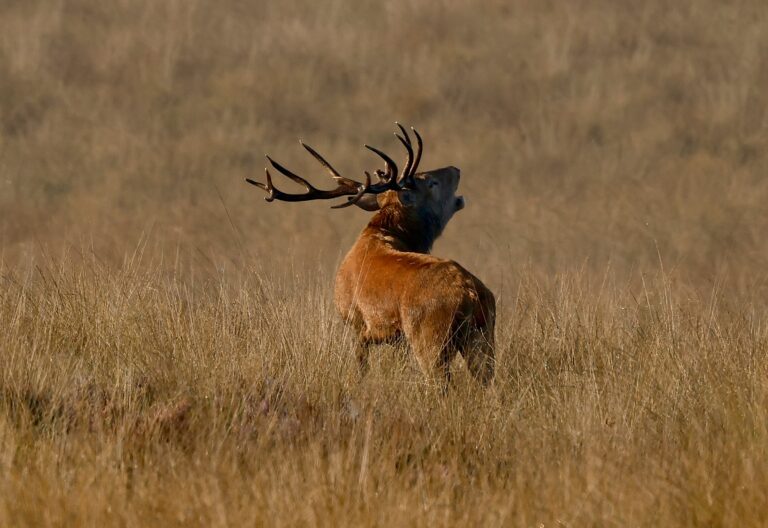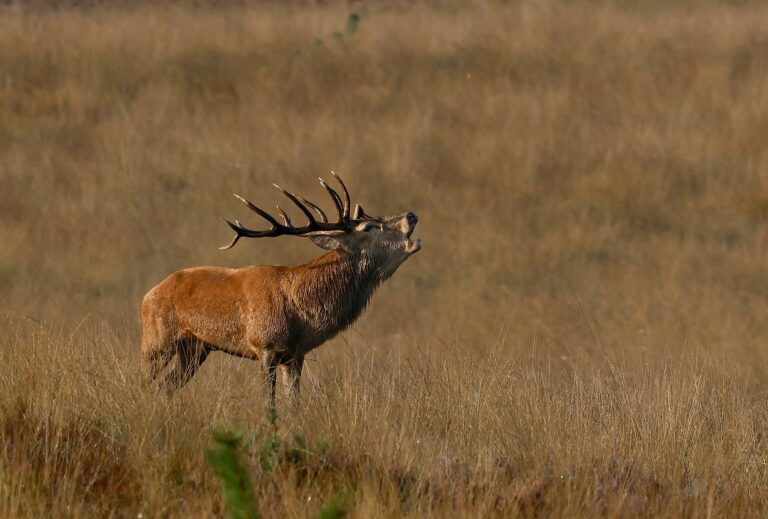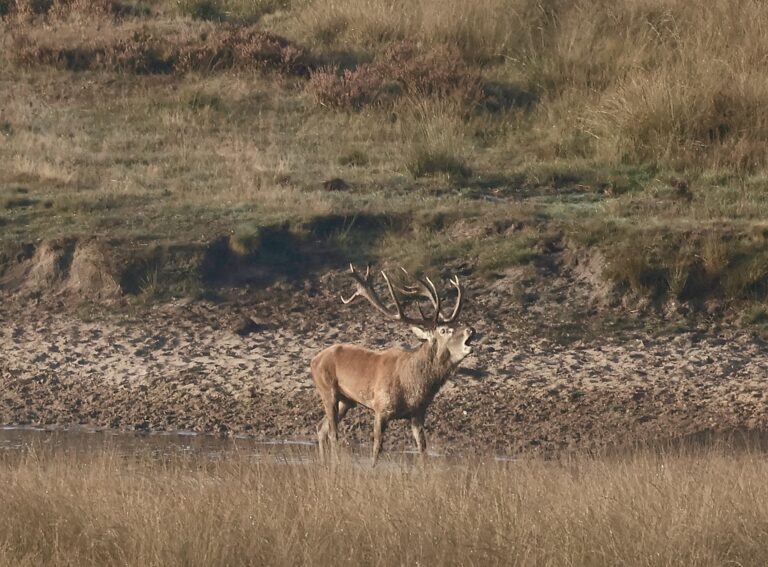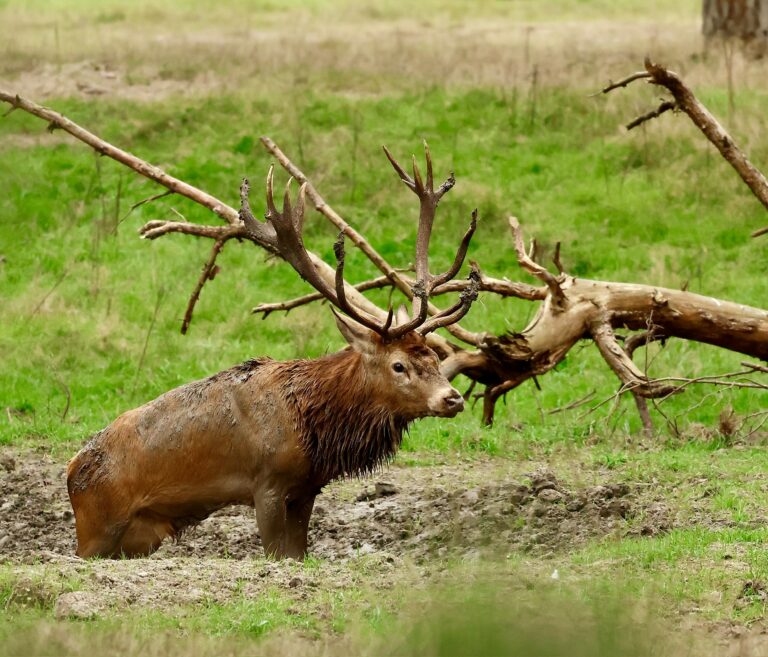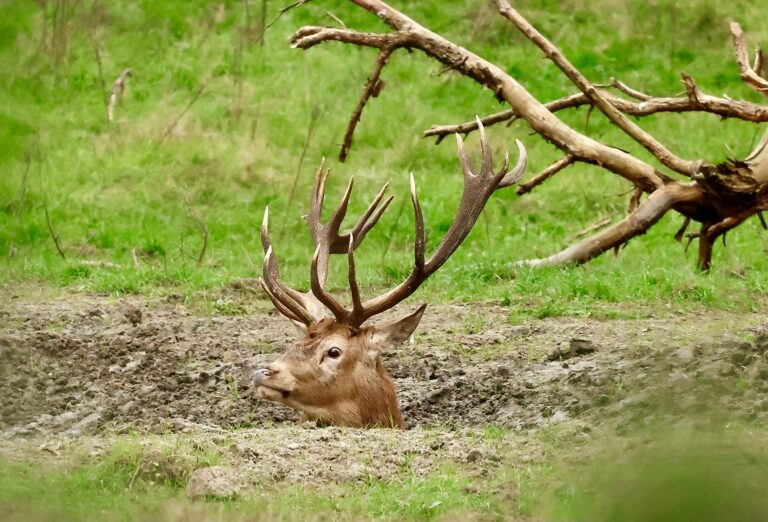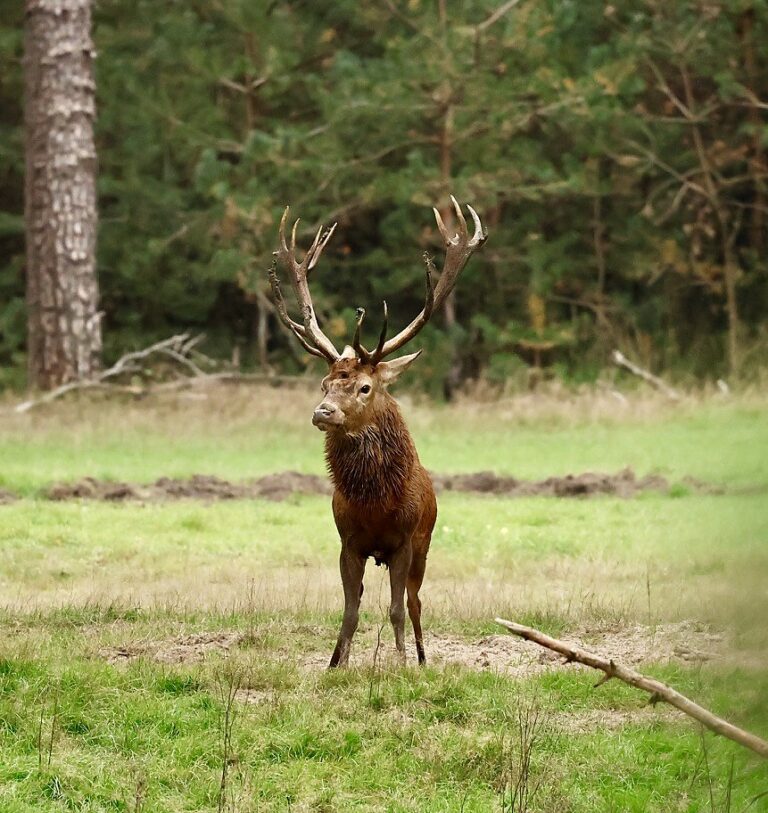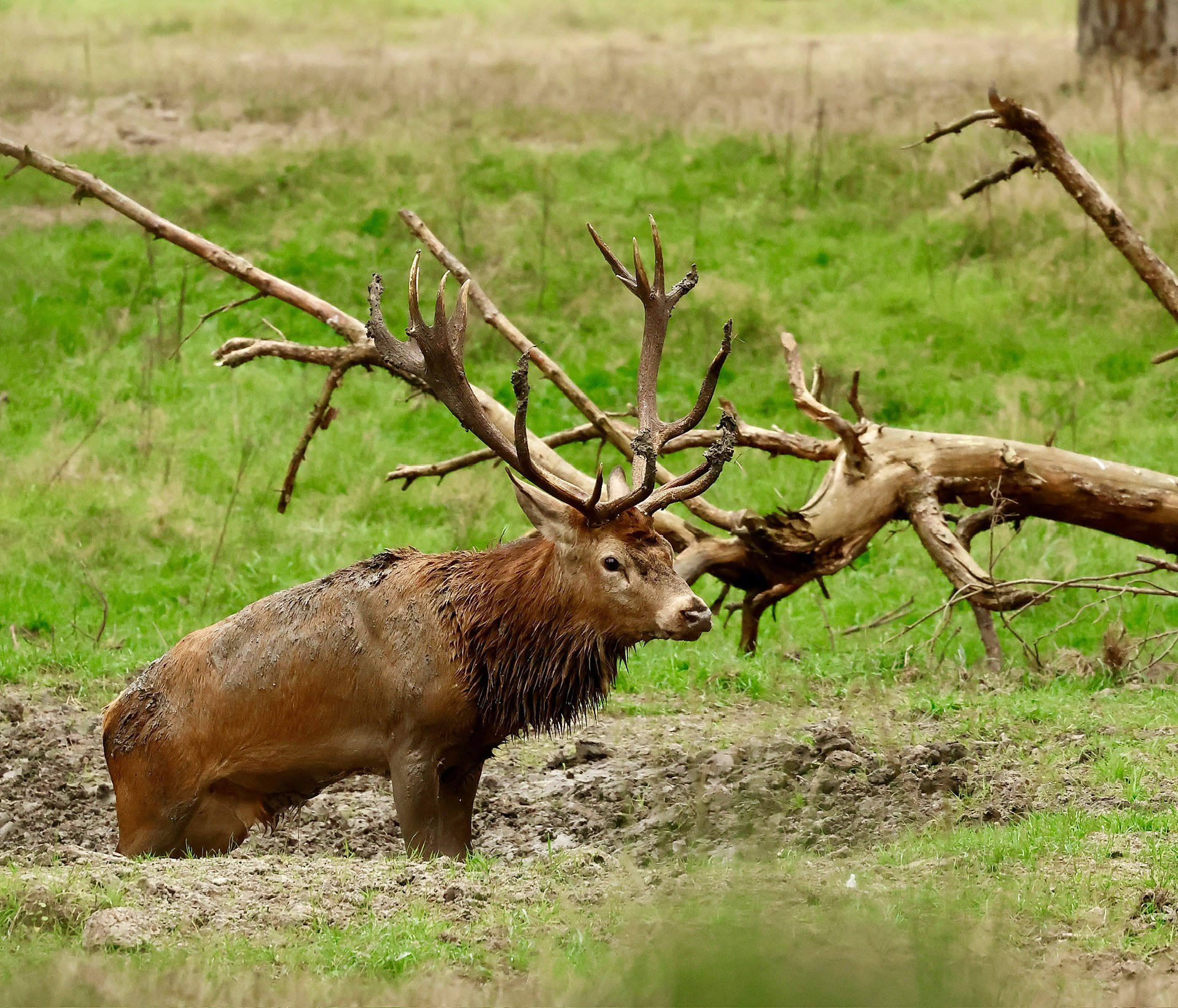
A rutting red deer stag up to his neck in a mud pool
📷 Bas de Bruin — Nationaal Park De Hoge Veluwe

Where to see the red deer in the Netherlands

Cervus elaphus · Red deer

Easy 🦌 Mammal (land)

Where and when do you see a red deer? This species is easy to see, all year round.

How do you recognise a red deer?

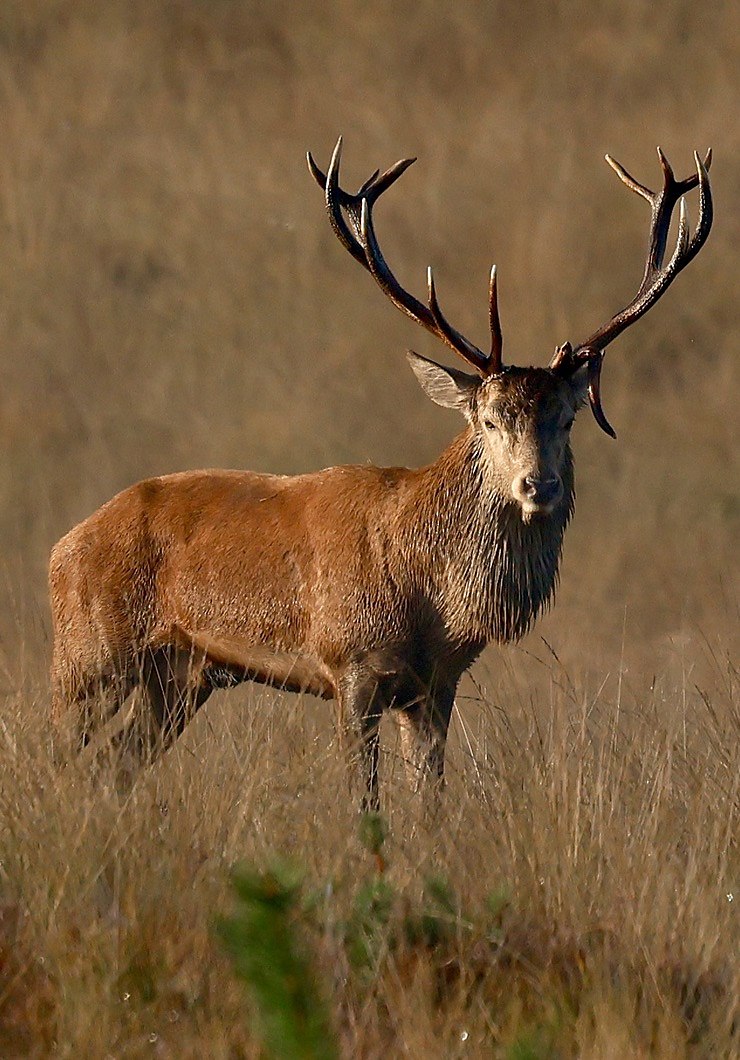
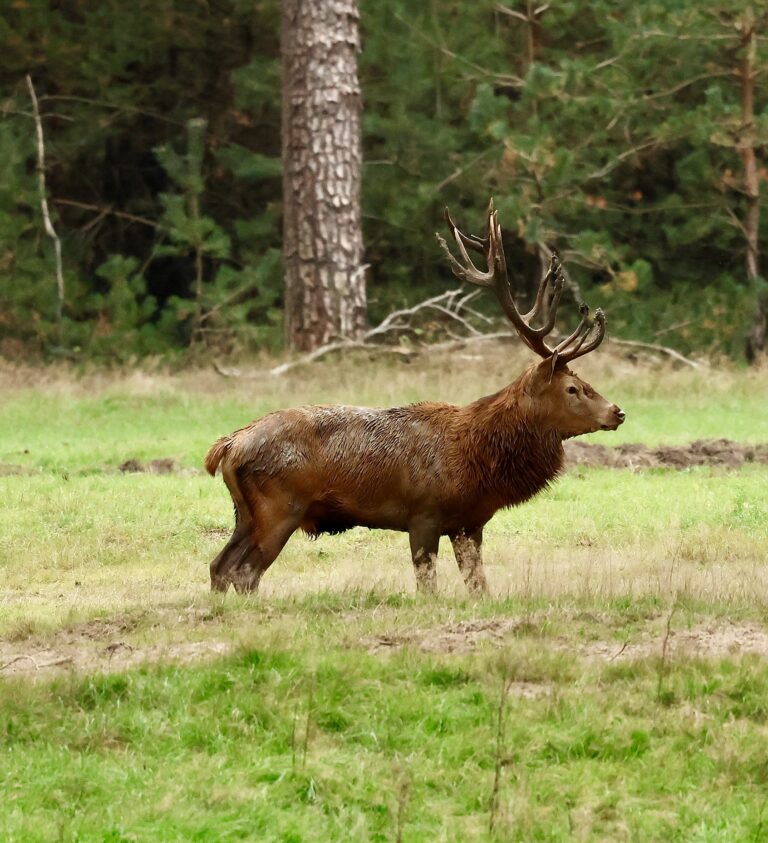
The largest wild land mammal in the Netherlands: red-brown in summer, greyer brown in winter, with a pale patch around the tail. Only the stags carry branched antlers, which they shed every spring and rebuild over the summer.

What can you confuse a red deer with?

Looks like: Fallow deer, Roe deer, Sika deer

  • Fallow deer: smaller, usually spotted, and the buck carries palmate antlers rather than branched ones.
  • Roe deer: much smaller and knee-high, with short straight antlers and a white rump patch.
  • Sika deer: smaller and spotted in summer, with a white rump patch edged in dark.

What does a red deer sound like?

Recording: Jugrü, CC BY-SA 3.0, via Wikimedia Commons

What tracks does a red deer leave?

6.5 × 8.5 cm

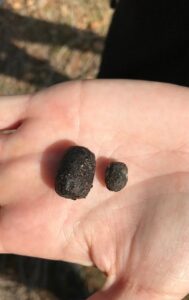
Hoof print: 6 to 7 cm wide and 8 to 9 cm long for a stag, 4 to 5 by 6 to 7 cm for a hind. The two halves stand slightly apart and are rounded at the front, unlike the pointed print of a roe deer. Droppings: 13 to 18 mm thick and 15 to 30 mm long, dark, and usually dented on one side. Fraying marks: smooth, worn patches on trunks at 60 to 120 cm, where stags have rubbed their antlers.
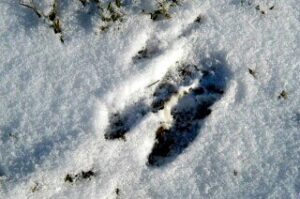
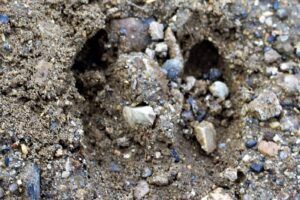
Pootafdruk van een edelhert
Photo: James Lindsey, CC BY-SA 3.0, via Wikimedia Commons
Pootafdruk van een edelhert
Photo: Emőke Dénes, CC BY-SA 4.0, via Wikimedia Commons
Uitwerpselen van een edelhert
Photo: Lukas Zangl, CC BY 4.0, via iNaturalist

Where do you see this species in the Netherlands?

The Veluwe is the stronghold, with the Oostvaardersplassen as the second core area and a small population in the Weerterbos. Outside those areas you will not see them in the Netherlands.

How certain is this? verified chance per source presence reported Links that do not clear the bottom threshold are not published. How we decide that.

📍 Deelerwoude

Good chance verified
Natuurmonumenten
Nationwide period: Present all year, but mid-September to early October is the rut: then you hear them before you see them. Stags roar mostly at dusk and at night — a deep bellow that carries a long way. Outside the rut, stags and hinds live in separate groups.

📍 Kroondomein Het Loo

Good chance in season chance per source
Zodion (Zoogdiervereniging)
Nationwide period: Present all year, but mid-September to early October is the rut: then you hear them before you see them. Stags roar mostly at dusk and at night — a deep bellow that carries a long way. Outside the rut, stags and hinds live in separate groups.

📍 Nationaal Park De Hoge Veluwe

Good chance verified
NDFF open data, 2.516 records 2016-2026 · the national park
Nationwide period: Present all year, but mid-September to early October is the rut: then you hear them before you see them. Stags roar mostly at dusk and at night — a deep bellow that carries a long way. Outside the rut, stags and hinds live in separate groups.

📍 Nationaal Park Veluwezoom

Good chance in season verified
Natuurmonumenten · Birdingplaces · own fieldwork
Nationwide period: Present all year, but mid-September to early October is the rut: then you hear them before you see them. Stags roar mostly at dusk and at night — a deep bellow that carries a long way. Outside the rut, stags and hinds live in separate groups.

📍 Oostvaardersplassen

With luck verified
Staatsbosbeheer
Nationwide period: Present all year, but mid-September to early October is the rut: then you hear them before you see them. Stags roar mostly at dusk and at night — a deep bellow that carries a long way. Outside the rut, stags and hinds live in separate groups.

📍 Planken Wambuis

With luck chance per source
Natuurmonumenten
Nationwide period: Present all year, but mid-September to early October is the rut: then you hear them before you see them. Stags roar mostly at dusk and at night — a deep bellow that carries a long way. Outside the rut, stags and hinds live in separate groups.

📍 Leuvenumse Bossen

With luck presence reported
Natuurmonumenten (area page and information panel Poolseweg), August 2026
Nationwide period: Present all year, but mid-September to early October is the rut: then you hear them before you see them. Stags roar mostly at dusk and at night — a deep bellow that carries a long way. Outside the rut, stags and hinds live in separate groups.
NDFF open data, 10 records 2016-2026
Nationwide period: Present all year, but mid-September to early October is the rut: then you hear them before you see them. Stags roar mostly at dusk and at night — a deep bellow that carries a long way. Outside the rut, stags and hinds live in separate groups.

These links come straight from our database, with the chance, the source and the evidence level for each area.

When is the best time?

Green = present · orange = peak period. The bar is generated from our database.

Best period: Present all year, but mid-September to early October is the rut: then you hear them before you see them. Stags roar mostly at dusk and at night — a deep bellow that carries a long way. Outside the rut, stags and hinds live in separate groups.

Best time of day: The first hour after sunrise and the last hour before sunset. In the middle of the day they lie in cover and you will rarely see anything, however long you wait.

Recent sightings

👁️ Where has this species been seen recently?

Check the current sightings on Waarneming.nl. A useful addition to our own verified information.

Current sightings on Waarneming.nl →

How to improve your chances

  • Keep the wind in your face. Most mammals will smell you long before they see you.
  • Arrive before sunrise and then stay put. Sitting still beats walking about.
  • Wear muted colours, skip the scent, and put your phone on silent.
  • Be patient. Expect to come back more than once before it works.

🎒 What you need for this

Binoculars 8x42; a 400 mm lens or longer.

🌿 Watching responsibly

Keep your distance, stay on the paths, and never lure animals with food or sound. Leave as soon as an animal becomes uneasy.

Sources: De Hoge Veluwe; Natuurmonumenten Veluwezoom; Staatsbosbeheer Zodion (Zoogdiervereniging), geraadpleegd 21-08-2026
Status: Verified · Last checked: 2026-07-29

More photos
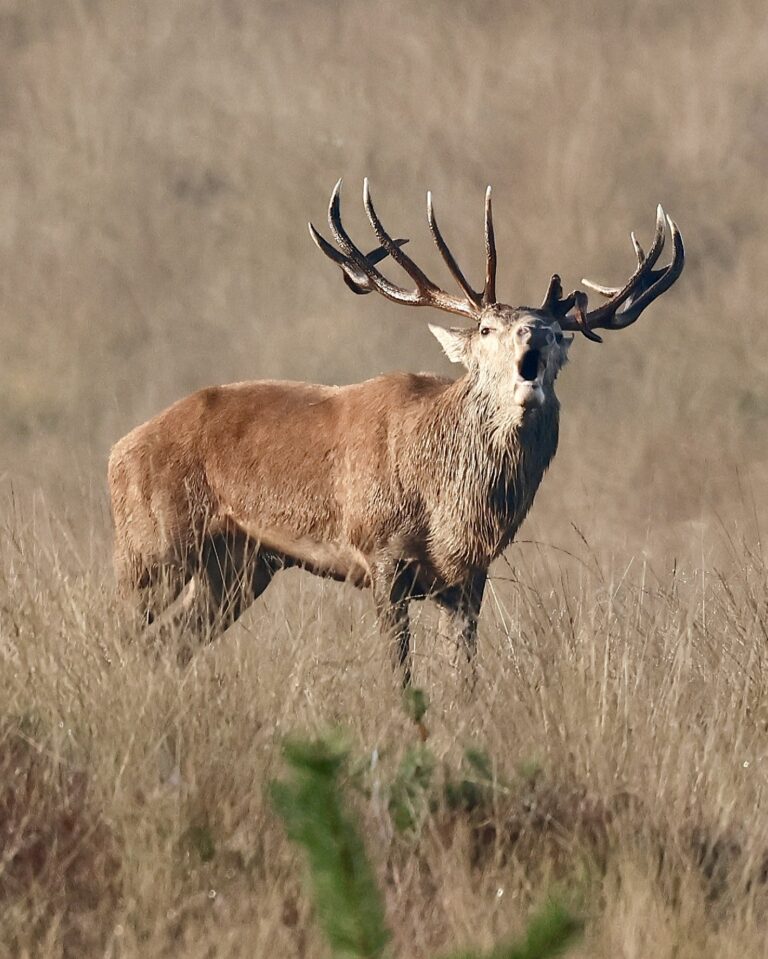
Burlende edelhertbok frontaal met wijd geopende bek en volledig gewei
Photo: Bas de Bruin — Nationaal Park Veluwezoom
Edelhertbok met de kop in de nek en de bek open terwijl hij burlt
Photo: Bas de Bruin — Nationaal Park Veluwezoom
Edelhertbok in zijaanzicht die burlt, met de kop omhoog
Photo: Bas de Bruin — Nationaal Park Veluwezoom
Burlende edelhertbok op een open vlakte met heide en zandgrond
Photo: Bas de Bruin — Nationaal Park Veluwezoom
Frontaal portret van een edelhertbok met volledig gewei
Photo: Bas de Bruin — Nationaal Park Veluwezoom
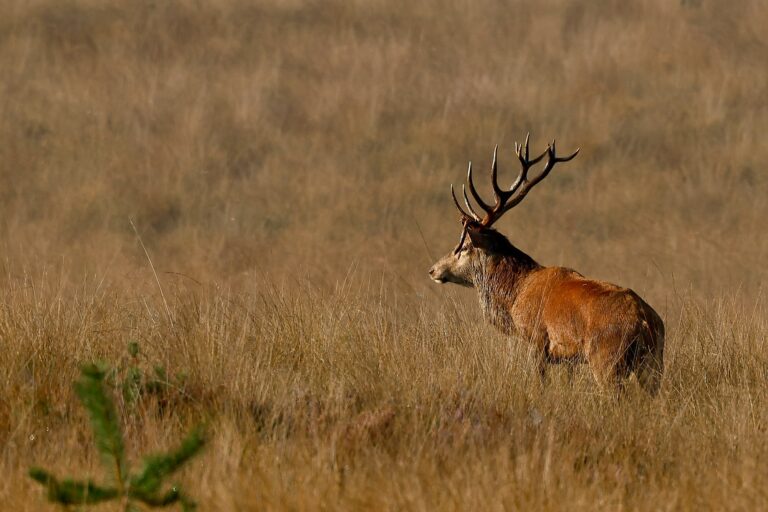
Edelhertbok in hoog gras die uitkijkt over een open vlakte
Photo: Bas de Bruin — Nationaal Park Veluwezoom
A rutting red deer stag up to his neck in a mud pool
Photo: Bas de Bruin — Nationaal Park De Hoge Veluwe
Edelhertbok met kop en gewei boven de modder terwijl hij zich wentelt
Photo: Bas de Bruin — Nationaal Park De Hoge Veluwe
Edelhertbok met donkere natte vacht vlak na een modderbad
Photo: Bas de Bruin — Nationaal Park De Hoge Veluwe
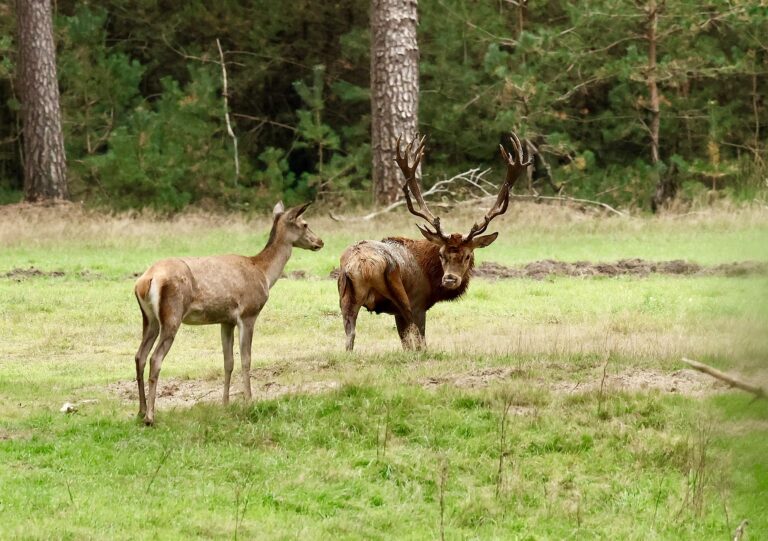
Edelhertbok met een hinde op een open wildweide
Photo: Bas de Bruin — Nationaal Park De Hoge Veluwe
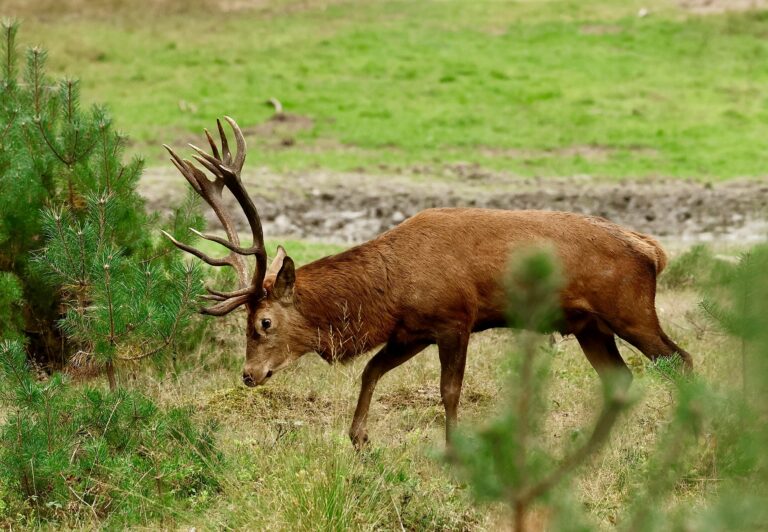
Grazende edelhertbok aan de rand van het bos
Photo: Bas de Bruin — Nationaal Park De Hoge Veluwe
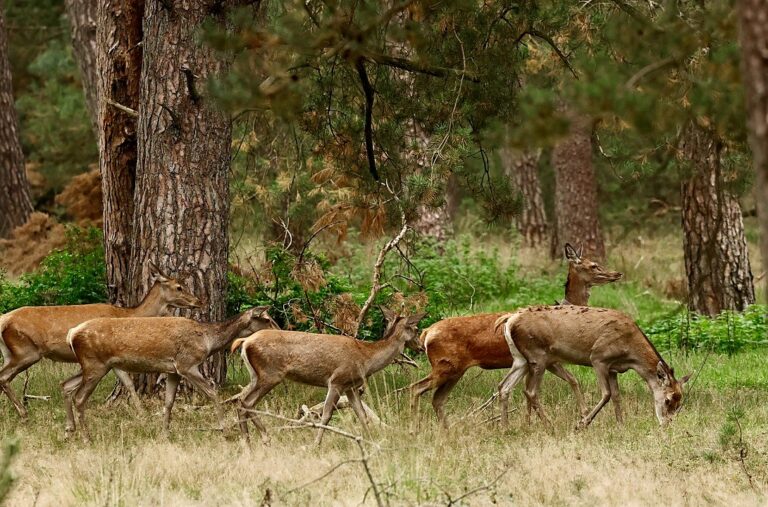
Groepje edelhertenhindes dat tussen de bomen door trekt
Photo: Bas de Bruin — Nationaal Park De Hoge Veluwe
Edelhertbok frontaal in beeld met volledig gewei
Photo: Bas de Bruin — Nationaal Park De Hoge Veluwe
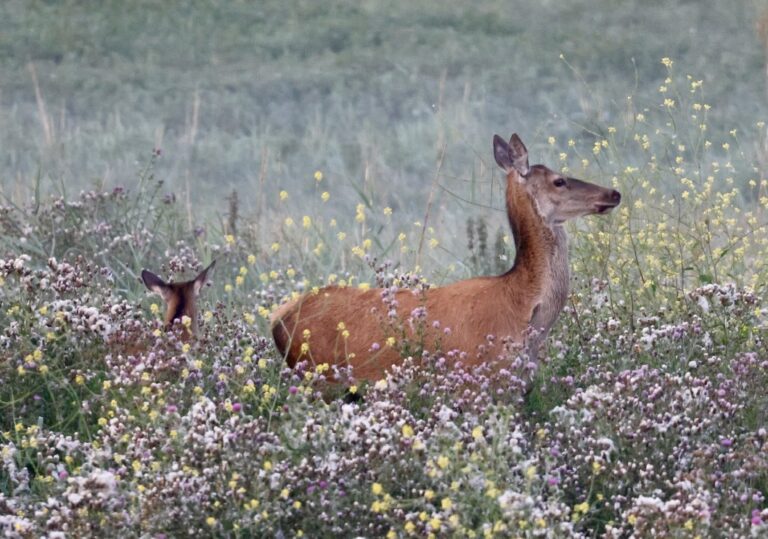
Vrouwelijk edelhert met kalf tussen bloeiende distels in de ochtendmist
Photo: Bas de Bruin — Oostvaardersplassen