
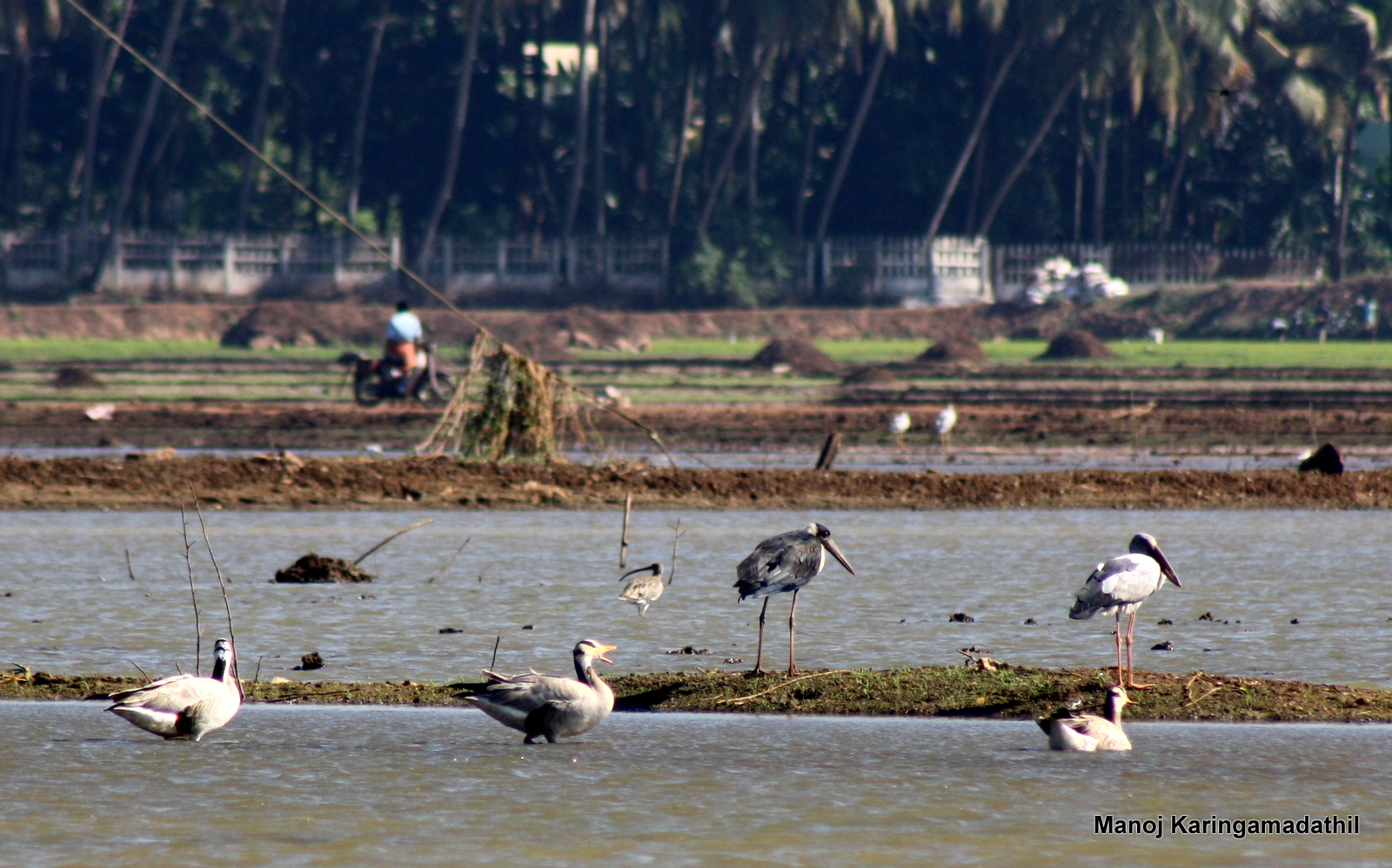
Where to see the Bar-headed Goose in the Netherlands
With luck 🦅 Bird
Where and when do you see a Bar-headed Goose? With some luck you can see this species, all year round.
How do you recognise a Bar-headed Goose?
Wingspan 140 to 160 cm. A pale grey goose of 71 to 76 centimetres with a snow-white head and neck and, unmistakably, two black cross-bands over the back of the head. The bill and legs are yellow to orange.
What does a Bar-headed Goose sound like?
Recording: Akasmita, CC BY-SA 4.0, via Wikimedia Commons
Where do you see this species in the Netherlands?
Scattered across the country in small numbers, often at urban waters, lakes and grassland among other geese.
Habitat: Grassland, lakes and urban water; as a non-native species it is not tied to a specific habitat type.
This is a common, widespread species: you can come across it in far more places than the areas listed below. Treat that list as a starting point rather than a full survey.
📍 Zuidlaardermeergebied en Hunzedal
presence reported📍 Meijendel & Berkheide
presence reported📍 Strabrechtse Heide & Beuven
presence reportedThese links come straight from our database, with the chance, the source and the evidence level for each area.
When is the best time?
Green = present · orange = peak period. The bar is generated from our database.
Best period: All year.
Best time of day: During the day.
Recent sightings
👁️ Where has this species been seen recently?
Check the current sightings on Waarneming.nl. A useful addition to our own verified information.
How to improve your chances
- Learn the calls first. You will hear most birds before you see them.
- Go in the first hour after sunrise, when the song is at its peak and the wind is still down.
- Use a hide or natural cover. Sitting still gets you more than walking closer.
- Keep the sun behind you. Against the light you see a silhouette and no colour.
🎒 What you need for this
Binoculars
Photography
The two black bands on the white head are the image; photograph from the side so both bands are visible. At urban water it comes close enough for a portrait without a telephoto lens
🌿 Watching responsibly
Keep your distance, stay on the paths, and never lure animals with food or sound. Leave as soon as an animal becomes uneasy.
Status: Verified · Last checked: 2026-08-07