
Where to see the Small Red Damselfly in the Netherlands
With luck 🪰 Dragonfly
Where and when do you see a Small Red Damselfly? With some luck you can see this species, from May to September.
How do you recognise a Small Red Damselfly?
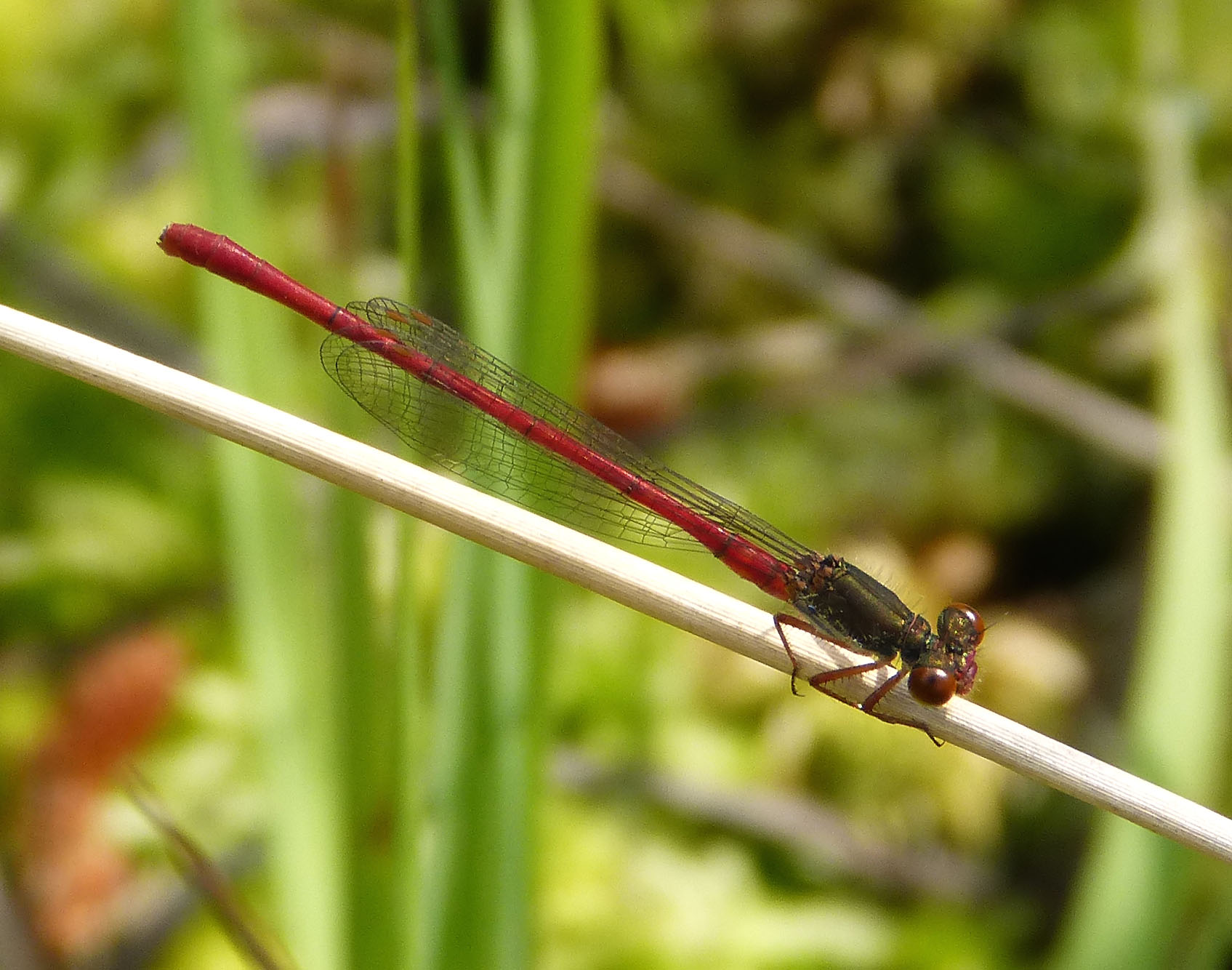
A small damselfly of 25 to 35 millimetres. The male has an entirely blood-red abdomen with red eyes and, decisively, light red to orange legs. The upper side of the thorax is bronze-coloured and the wing spots are dark red. Females occur in four colour forms, from largely red to almost entirely dark.
Where do you see this species in the Netherlands?
The sandy soils of Drenthe and adjoining Friesland, Overijssel, the Achterhoek, North Brabant and Limburg; its range is expanding.
📍 Fochteloërveen
presence reported📍 Deelerwoude
presence reported📍 Nationaal Park De Groote Peel
presence reported📍 Nationaal Park Dwingelderveld
presence reported📍 Naardermeer
presence reported📍 Nationaal Park Drents-Friese Wold
presence reported📍 Nationaal Park De Meinweg
presence reported📍 Nationaal Park Weerribben-Wieden
presence reported📍 Nationaal Park De Hoge Veluwe
presence reported📍 Kroondomein Het Loo
presence reported📍 Nationaal Park De Maasduinen
presence reported📍 Nationaal Park Utrechtse Heuvelrug
presence reported📍 Planken Wambuis
presence reported📍 Kampina & Oisterwijkse Vennen
presence reported📍 Strabrechtse Heide & Beuven
presence reported📍 Loonse en Drunense Duinen
presence reportedThese links come straight from our database, with the chance, the source and the evidence level for each area.
When is the best time?
Green = present · orange = peak period. The bar is generated from our database.
Best period: Late May to late September, with the peak in the second half of July and early August.
Best time of day: The warm hours in the middle of the day.
Recent sightings
👁️ Where has this species been seen recently?
Check the current sightings on Waarneming.nl. A useful addition to our own verified information.
How to improve your chances
- Go on a warm, windless day between about ten and four, when they are active.
- Look for the place rather than the animal: flowery edges for butterflies, banks and open water for dragonflies.
- Move slowly and keep your shadow off the animal. It notices that before it notices you.
- Early in the morning they are still cold and motionless on a leaf. That is when you can get closest.
🎒 What you need for this
A macro lens or binoculars with a short focusing distance
Photography
The leg colour is the identification feature, so make sure the legs are sharply in frame: photograph from the side and slightly from below. It sits low among soft rush and sphagnum and moves little, so you can approach calmly
🌿 Watching responsibly
Keep your distance, stay on the paths, and never lure animals with food or sound. Leave as soon as an animal becomes uneasy.
Status: Verified · Last checked: 2026-08-07