Where to see the wild boar in the Netherlands
With luck 🦌 Mammal (land)
Where and when do you see a wild boar? With some luck you can see this species, all year round.
How do you recognise a wild boar?
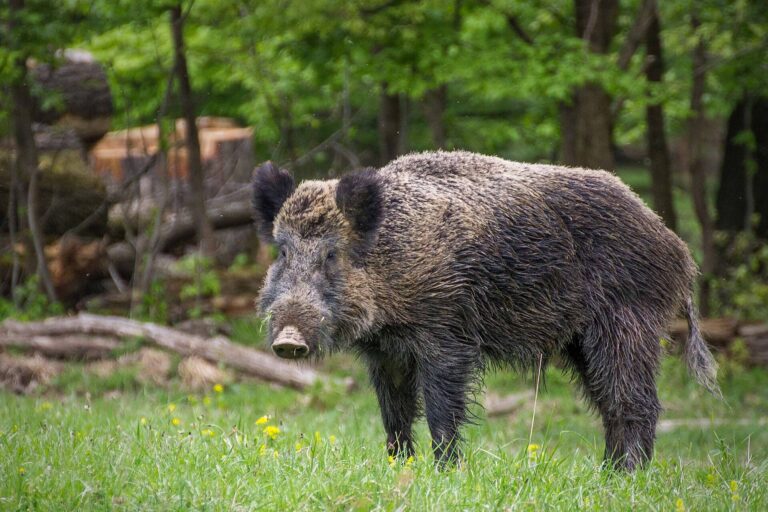
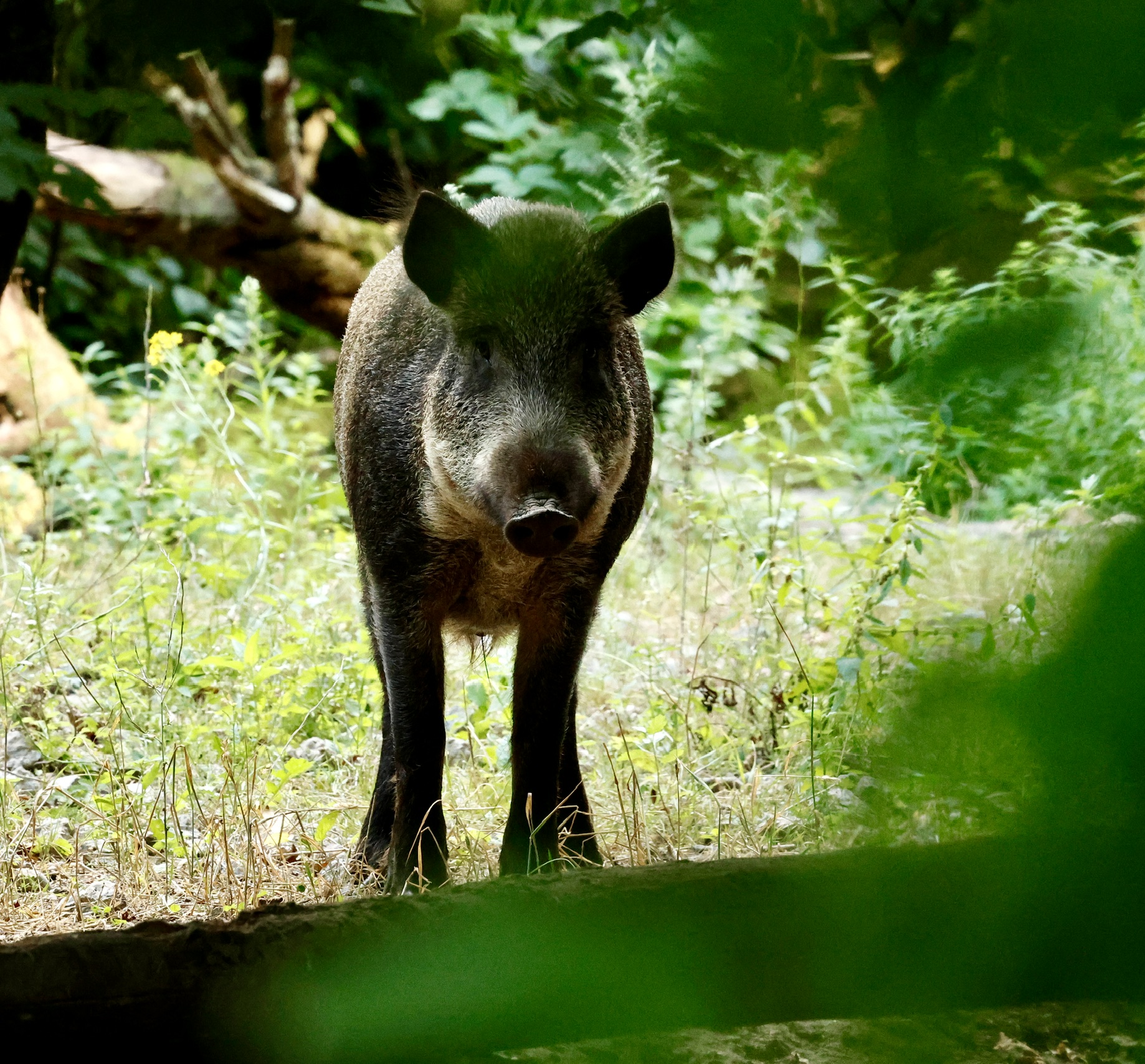
Massive and dark, with high shoulders that slope away towards the rear. The piglets are unmistakable: light brown with lengthwise stripes, which is why the Dutch call them frislingen. That striping disappears at about four months old.
What does a wild boar sound like?
Recording: GrWolf1129, CC BY-SA 4.0, via Wikimedia Commons
What tracks does a wild boar leave?
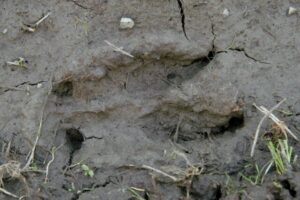
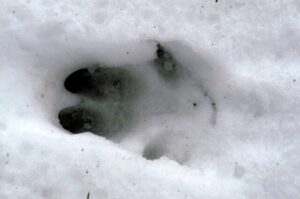
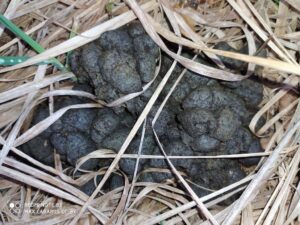
Tracks: up to 12 cm long and 5 to 7 cm wide, with the dew claws almost always showing. Wild boar walk and trot with a stride of about 40 cm, along trails at least 30 cm wide. Droppings: up to 7 cm thick, rounded and flattened on the sides, usually stuck together in strings or clumps with plant material in them. The rooting is the most obvious sign: soil scratched open, grass tussocks turned over and turf pulled out, coarser than a badger’s work and over greater distances. Rubbing trees are polished smooth at 50 to 60 cm above the ground.
Where do you see this species in the Netherlands?
The Veluwe and Nationaal Park De Meinweg are the ranges where the species occurs as a matter of course. Elsewhere boar are reported only now and then.
📍 Deelerwoude
Good chance verified📍 Kroondomein Het Loo
With luck chance per source📍 Nationaal Park De Hoge Veluwe
Good chance verified📍 Nationaal Park De Meinweg
With luck verified📍 Nationaal Park Veluwezoom
With luck chance per source📍 Nationaal Park De Groote Peel
With luck verified📍 Nationaal Park Zuid-Limburg (in formation)
Rare verified📍 Planken Wambuis
With luck chance per source📍 Leuvenumse Bossen
With luck presence reported📍 Sint-Pietersberg & Zuid-Limburg
presence reported📍 Strabrechtse Heide & Beuven
presence reportedThese links come straight from our database, with the chance, the source and the evidence level for each area.
When is the best time?
Green = present · orange = peak period. The bar is generated from our database.
Best period: Present all year. The rut falls in late autumn and winter, and the piglets are born from early spring onwards. That is also when you see them by day most often, because sows with young are more active in daylight than solitary animals.
Best time of day: Dusk and night. By day you will see almost nothing but signs: rooting patches, wallows, and mud smeared on tree trunks at shoulder height. Reading the signs gets you further here than waiting on luck.
Recent sightings
👁️ Where has this species been seen recently?
Check the current sightings on Waarneming.nl. A useful addition to our own verified information.
How to improve your chances
- Keep the wind in your face. Most mammals will smell you long before they see you.
- Arrive before sunrise and then stay put. Sitting still beats walking about.
- Wear muted colours, skip the scent, and put your phone on silent.
- Be patient. Expect to come back more than once before it works.
🎒 What you need for this
Binoculars; a trail camera.
🌿 Watching responsibly
Keep your distance, stay on the paths, and never lure animals with food or sound. Leave as soon as an animal becomes uneasy.
Status: Verified · Last checked: 2026-07-29
More photos