
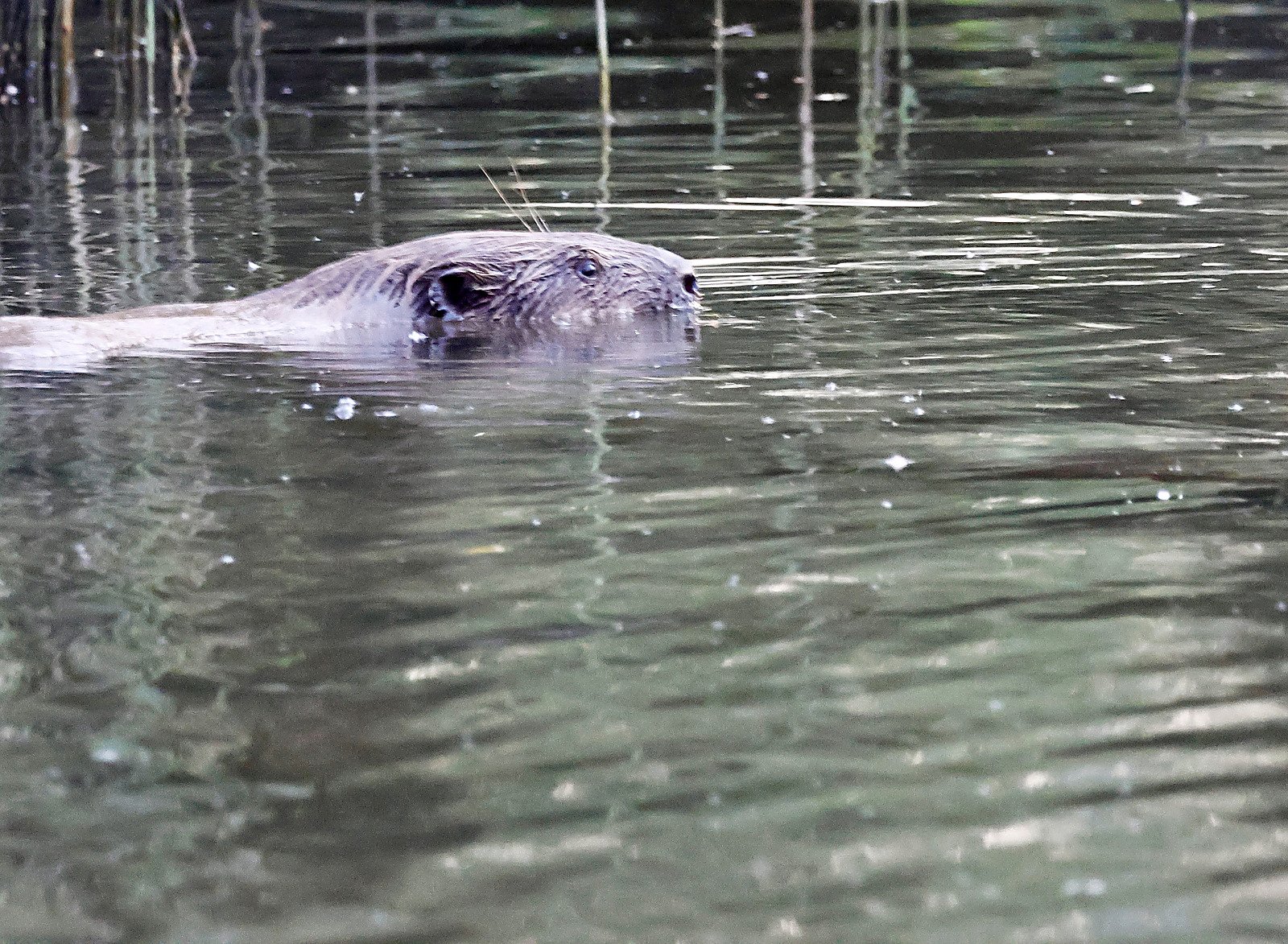
A beaver swimming with its head above water through a reed creek in the Biesbosch
📷 Bas de Bruin

Where to see the Eurasian beaver in the Netherlands

Castor fiber · Eurasian beaver

With luck 🦫 Mammal (land/water)

Where and when do you see a Eurasian beaver? With some luck you can see this species, all year round.

How do you recognise a Eurasian beaver?

Europe’s largest rodent: heavy and dark brown, with a broad, flat, scaly tail that you usually only see as the animal dives. In the water it is mostly the shape that gives it away: a broad head and back lying low along the waterline. Do not confuse it with the muskrat, which is much smaller, or with the otter, which is slimmer and moves faster and more playfully.

What can you confuse a Eurasian beaver with?

Looks like: Muskrat, Coypu, Eurasian otter

  • Muskrat: much smaller, about a third of the size, with a tail flattened side to side instead of a broad, flat scaly one.
  • Coypu: smaller, with a round tail and strikingly orange incisors.
  • Otter: slimmer and faster, with a tail that tapers to a point.

What tracks does a Eurasian beaver leave?

10 × 14.5 cm

Tracks: the front foot prints like a small hand, about 5.5 by 4.5 cm; the hind foot is far bigger at up to 14.5 by 10 cm and shows webbing between the toes. The prints are often half wiped out by the drag mark of the broad tail. Gnawing: a felled trunk narrows to an hourglass, with chips 10 to 12 cm long and 3 to 4 cm wide scattered around it; the incisor marks in the wood are about 8 mm wide.
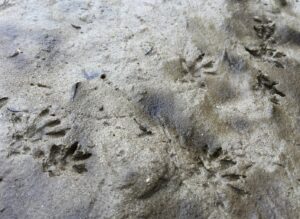
Pootafdruk van een bever
Photo: Arkelin, CC BY 4.0, via Wikimedia Commons
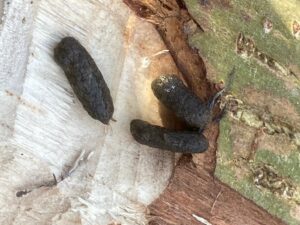
Uitwerpselen van een bever
Photo: Andre Hosper, CC BY 4.0, via iNaturalist

Where do you see this species in the Netherlands?

The Biesbosch, the Gelderse Poort, the Limburg Meuse, Flevoland and Drenthe. The beaver was extinct here in 1826; since its reintroduction in the Biesbosch in the late 1980s it has spread steadily.

How certain is this? verified chance per source presence reported Links that do not clear the bottom threshold are not published. How we decide that.
Staatsbosbeheer
Nationwide period: Present all year, as beavers do not hibernate. Between May and September the evenings are long and mild enough to wait comfortably. In late spring there are kits in the lodge; they first appear outside later in the summer.

📍 Nationaal Park De Biesbosch

Good chance verified
NDFF open data, 1.771 records 2016-2026 · Staatsbosbeheer · Zodion
Nationwide period: Present all year, as beavers do not hibernate. Between May and September the evenings are long and mild enough to wait comfortably. In late spring there are kits in the lodge; they first appear outside later in the summer.

📍 Onlanden & Leekstermeer

With luck verified
NDFF open data, 116 records 2016-2026 · the national park
Nationwide period: Present all year, as beavers do not hibernate. Between May and September the evenings are long and mild enough to wait comfortably. In late spring there are kits in the lodge; they first appear outside later in the summer.

📍 Oostvaardersplassen

With luck verified
NDFF open data, 480 records 2016-2026 · Staatsbosbeheer
Nationwide period: Present all year, as beavers do not hibernate. Between May and September the evenings are long and mild enough to wait comfortably. In late spring there are kits in the lodge; they first appear outside later in the summer.
NDFF open data, 164 records 2016-2026
Nationwide period: Present all year, as beavers do not hibernate. Between May and September the evenings are long and mild enough to wait comfortably. In late spring there are kits in the lodge; they first appear outside later in the summer.
NDFF open data, 323 records 2016-2026 · nationaal-parkdemaasduinen.nl
Nationwide period: Present all year, as beavers do not hibernate. Between May and September the evenings are long and mild enough to wait comfortably. In late spring there are kits in the lodge; they first appear outside later in the summer.

📍 Nationaal Park De Meinweg

presence reported
NDFF open data, 333 records 2016-2026
Nationwide period: Present all year, as beavers do not hibernate. Between May and September the evenings are long and mild enough to wait comfortably. In late spring there are kits in the lodge; they first appear outside later in the summer.
NDFF open data, 675 records 2016-2026 · ARK Rewilding
Nationwide period: Present all year, as beavers do not hibernate. Between May and September the evenings are long and mild enough to wait comfortably. In late spring there are kits in the lodge; they first appear outside later in the summer.
NDFF open data, 406 records 2016-2026 · Natuurmonumenten
Nationwide period: Present all year, as beavers do not hibernate. Between May and September the evenings are long and mild enough to wait comfortably. In late spring there are kits in the lodge; they first appear outside later in the summer.

📍 Naardermeer

Very rare verified
NDFF open data, 215 records 2016-2026 · natuurtijdschriften.nl
Nationwide period: Present all year, as beavers do not hibernate. Between May and September the evenings are long and mild enough to wait comfortably. In late spring there are kits in the lodge; they first appear outside later in the summer.
NDFF open data, 50 records 2016-2026
Nationwide period: Present all year, as beavers do not hibernate. Between May and September the evenings are long and mild enough to wait comfortably. In late spring there are kits in the lodge; they first appear outside later in the summer.

📍 Blauwe Kamer

presence reported
NDFF open data
Nationwide period: Present all year, as beavers do not hibernate. Between May and September the evenings are long and mild enough to wait comfortably. In late spring there are kits in the lodge; they first appear outside later in the summer.

📍 Zouweboezem

presence reported
NDFF open data
Nationwide period: Present all year, as beavers do not hibernate. Between May and September the evenings are long and mild enough to wait comfortably. In late spring there are kits in the lodge; they first appear outside later in the summer.
NDFF open data
Nationwide period: Present all year, as beavers do not hibernate. Between May and September the evenings are long and mild enough to wait comfortably. In late spring there are kits in the lodge; they first appear outside later in the summer.

📍 Voornes Duin

presence reported
NDFF open data, 378 records 2016-2026
Nationwide period: Present all year, as beavers do not hibernate. Between May and September the evenings are long and mild enough to wait comfortably. In late spring there are kits in the lodge; they first appear outside later in the summer.
NDFF open data, 400 records 2016-2026
Nationwide period: Present all year, as beavers do not hibernate. Between May and September the evenings are long and mild enough to wait comfortably. In late spring there are kits in the lodge; they first appear outside later in the summer.

📍 De Maashorst

presence reported
NDFF open data, 83 records 2016-2026
Nationwide period: Present all year, as beavers do not hibernate. Between May and September the evenings are long and mild enough to wait comfortably. In late spring there are kits in the lodge; they first appear outside later in the summer.
NDFF open data, 292 records 2016-2026
Nationwide period: Present all year, as beavers do not hibernate. Between May and September the evenings are long and mild enough to wait comfortably. In late spring there are kits in the lodge; they first appear outside later in the summer.

📍 Loonse en Drunense Duinen

presence reported
NDFF open data, 471 records 2016-2026
Nationwide period: Present all year, as beavers do not hibernate. Between May and September the evenings are long and mild enough to wait comfortably. In late spring there are kits in the lodge; they first appear outside later in the summer.

📍 Haringvlietsluizen

presence reported
NDFF open data, 12 records 2016-2026
Nationwide period: Present all year, as beavers do not hibernate. Between May and September the evenings are long and mild enough to wait comfortably. In late spring there are kits in the lodge; they first appear outside later in the summer.

These links come straight from our database, with the chance, the source and the evidence level for each area.

When is the best time?

Green = present · orange = peak period. The bar is generated from our database.

Best period: Present all year, as beavers do not hibernate. Between May and September the evenings are long and mild enough to wait comfortably. In late spring there are kits in the lodge; they first appear outside later in the summer.

Best time of day: The last two hours before sunset and the dusk that follows. Find fresh signs first and sit down there; anyone who gets up after half an hour and walks on sees nothing.

Recent sightings

👁️ Where has this species been seen recently?

Check the current sightings on Waarneming.nl. A useful addition to our own verified information.

Current sightings on Waarneming.nl →

How to improve your chances

  • Keep the wind in your face. Most mammals will smell you long before they see you.
  • Arrive before sunrise and then stay put. Sitting still beats walking about.
  • Wear muted colours, skip the scent, and put your phone on silent.
  • Be patient. Expect to come back more than once before it works.

🎒 What you need for this

Binoculars; a canoe.

🌿 Watching responsibly

Keep your distance, stay on the paths, and never lure animals with food or sound. Leave as soon as an animal becomes uneasy.

Sources: Zodion; ARK Rewilding; Staatsbosbeheer Biesbosch
Status: Verified · Last checked: 2026-07-29

More photos
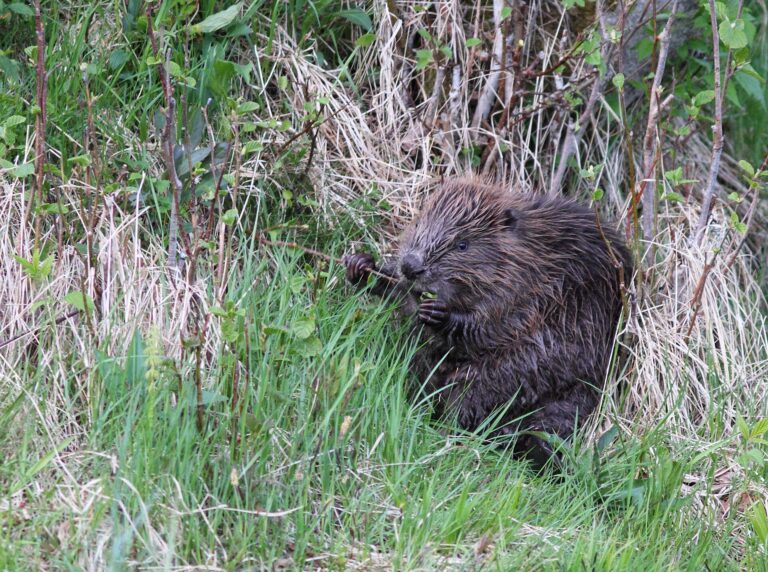
Bever
Photo: Bouke ten Cate, CC BY 4.0 (Wikimedia Commons)