
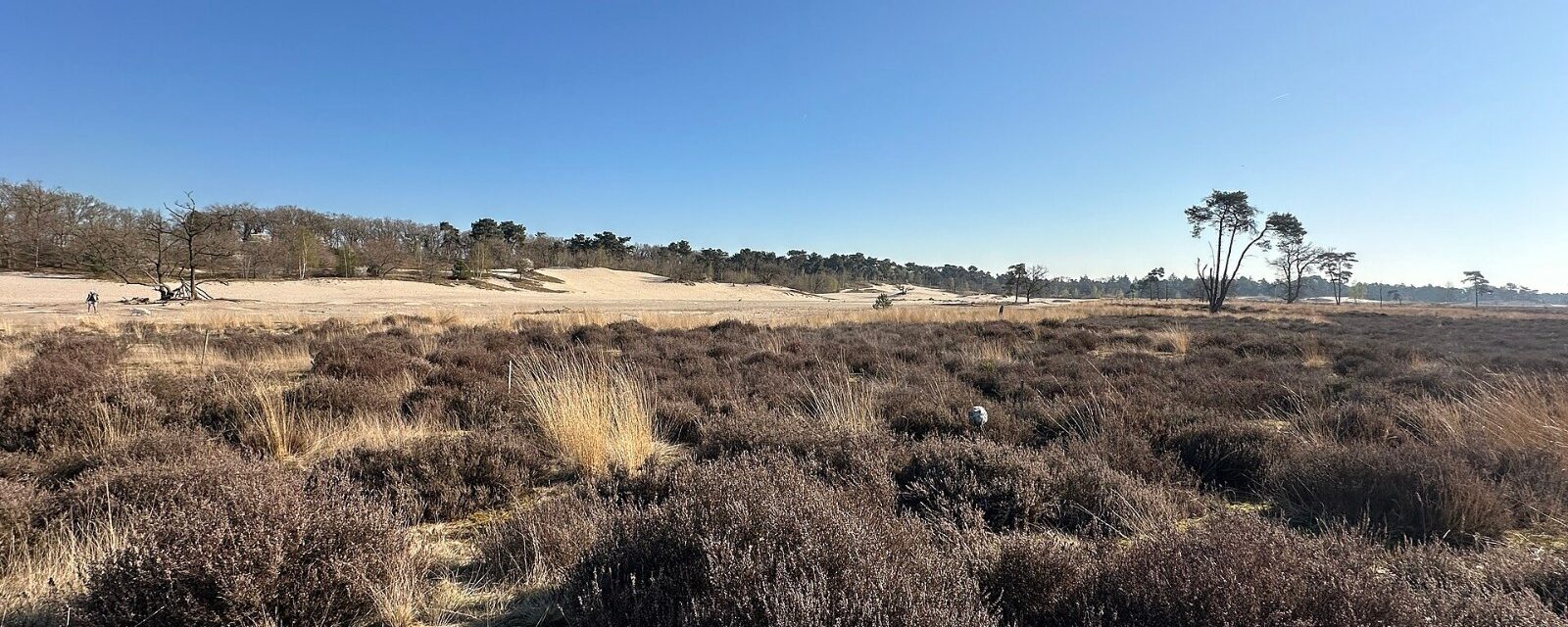
 📷 Foto: Klankbeeld / CC BY 4.0 via Wikimedia Commons.
Loonse en Drunense Duinen: where to see wildlife
Summer. Field crickets, mining bees and tiger beetles are summer species and the European Nightjar is a summer visitor. Allow for the heat: Natuurmonumenten reports that the difference between day and night temperature in the drift sand can reach fifty degrees Celsius. Early in the day is therefore more pleasant, and the animals are more active. Drift sand and woodland
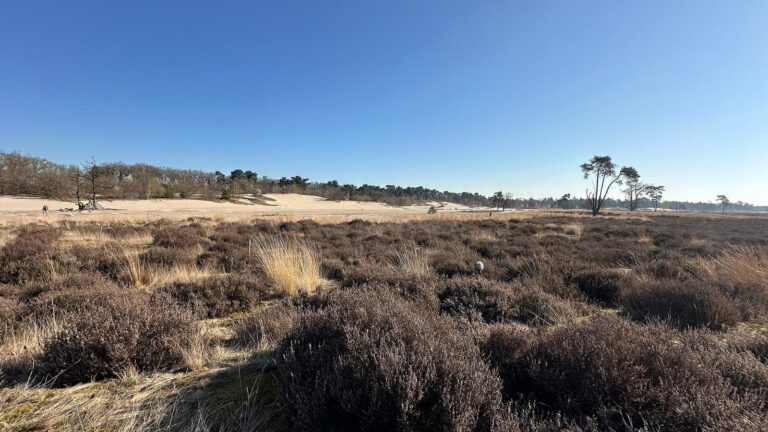
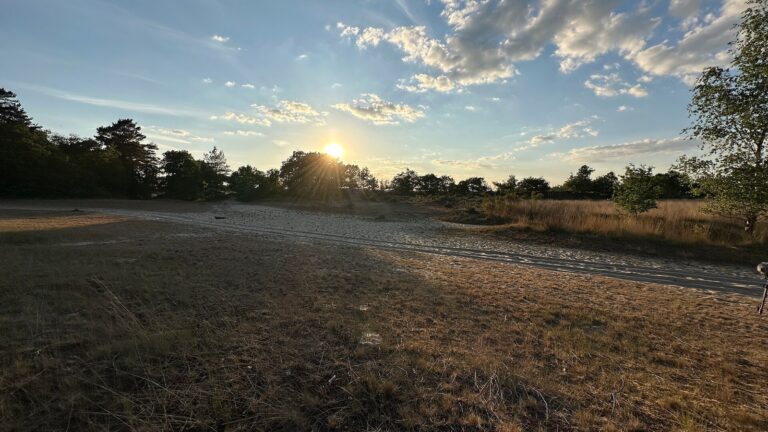
Loonse en Drunense Duinen — Natuurmonumenten calls this one of the largest drift sand areas in Western Europe, nicknamed the Brabantse Sahara. Of the fourteen hundred hectares of drift sand that lay here around 1850, two hundred and seventy hectares are left. The area has been protected since it was bought in 1921; trees that were buried by sand now show only their crowns above the dunes. Mainly here: Common lizard on the open, warm drift sand. Field crickets — Natuurmonumenten writes of chirping field crickets. Tiger beetles and mining bees; also the tiger beetles Cicindela maritima and Cicindela sylvatica, and the Grayling. Birds: European Nightjar, European Stonechat, Bluethroat, Water Rail, Black Woodpecker and Middle Spotted Woodpecker; along the Zwarte Bergroute Black, Great Spotted and European Green Woodpecker. In De Brand and De Leemkuilen northern crested newt and European tree frog. A shepherded flock of sheep keeps the heath short. Best period: Summer. Field crickets, mining bees and tiger beetles are summer species and the European Nightjar is a summer visitor. Allow for the heat: Natuurmonumenten reports that the difference between day and night temperature in the drift sand can reach fifty degrees Celsius. Early in the day is therefore more pleasant, and the animals are more active.
Which animals will you see here?
Also reported present in this area (290 species) presence reported
These species are known to occur here (NDFF), but nothing has been recorded yet about your chance of seeing them.
Amphibian (7)
Dragonfly (30)
Reptile (1)
Spider (6)
Grasshopper (23)
Butterfly (33)
Bird (159)
Mammal (land) (22)
Mammal (land/water) (2)
Mammal (bat) (7)
Walking routes
Wandelroute Zwarte Berg
Wandelroute Roestelberg
Uitkijkpunt Bosch & Duin
OV-wandelroute
Wandelroute Natuurpoort van Loon
Wandelroute Fellenoord
Hides and viewpoints
🔭 Viewpoint Bosch & Duin
Practical information
- Access: Walking on roads and paths; cycling only on the marked cycle paths. Mountain biking is allowed on marked trails with an mtb permit — that permit is compulsory. Horse riding on marked trails with a riding permit; in the open drift sand you may ride anywhere, but not through the patches of heath and the moss carpets. Carriage driving needs a licence as well as a riding permit. Groups of more than twenty people and paid activities need permission in advance. Metal detecting, magnet fishing and drones are forbidden. The paved roads and cycle paths are accessible to wheelchair users, and there is a paved wheelchair path from Bosch en Duin to the viewpoint. We found no fixed seasonal closures.
- Parking: Natuurmonumenten names the car park at Bosch en Duin, Schoorstraat 50 in Udenhout. Other starting points with an address: Herberg De Drie Linden (Giersbergen 8, Drunen), Natuurpoort Herberg Manege van Loon (Kloosterstraat 115-119, Loon op Zand) and Café Roestelberg (Roestelbergseweg 2, Kaatsheuvel). By public transport: from Tilburg Centraal take the bus towards Den Bosch and get off at the green stop in Loon op Zand.
- Dogs: On a lead and on the paths. Dogs may run free only at Bosch en Duin and on two off-lead routes.
- Facilities: No visitor centre of its own — the nearest is Bezoekerscentrum Oisterwijk, about eleven kilometres to the south. There is a Natuurpoort at Herberg Manege van Loon, Kloosterstraat 115-119 in Loon op Zand, and an information point at Hoofdstraat 78 in Kaatsheuvel. Food and drink at Herberg De Drie Linden (Giersbergen 8, Drunen), De Rustende Jager (Biezenmortel), Café Roestelberg (Kaatsheuvel) and Café-restaurant Bosch en Duin (Udenhout).
🌿 Rules in this area
Natuurmonumenten manages the site; the ranger is Irma de Potter. The Natura 2000 site document also names Brabants Landschap and private owners. The province of Noord-Brabant leads on Natura 2000. Note: Staatsbosbeheer is not named as a manager of this area in any source we consulted, and we could not find an official website or governing body for the national park. sets its own rules here. Stay on the paths, respect refuges and closures, keep dogs on a lead where that applies, and do not fly a drone — they are banned in almost every Dutch nature reserve.
Status: Verified · Last checked: 2026-10-28
Photo: Foto: Klankbeeld / CC BY 4.0 via Wikimedia Commons.