
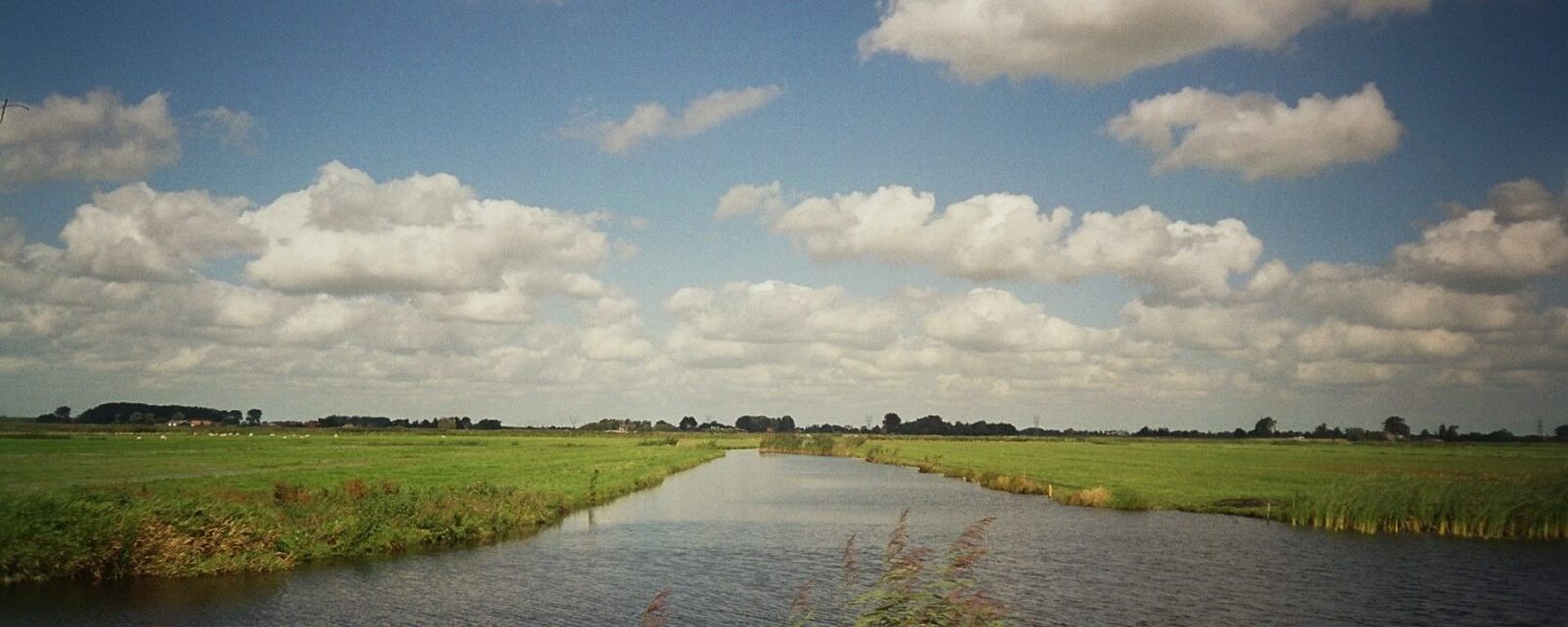
 📷 Foto: onbekende maker / Public domain via Wikimedia Commons.
Wormer- en Jisperveld: where to see wildlife
Spring, for the meadow birds. Natuurmonumenten: "spring is the best time for meadow birds. Canoeing or going out by whisper boat is possible all year." Autumn and winter for the wigeon. Note that the Oosteindepad is open precisely outside the meadow-bird season: from 15 July to 15 October. Peat meadow landscape
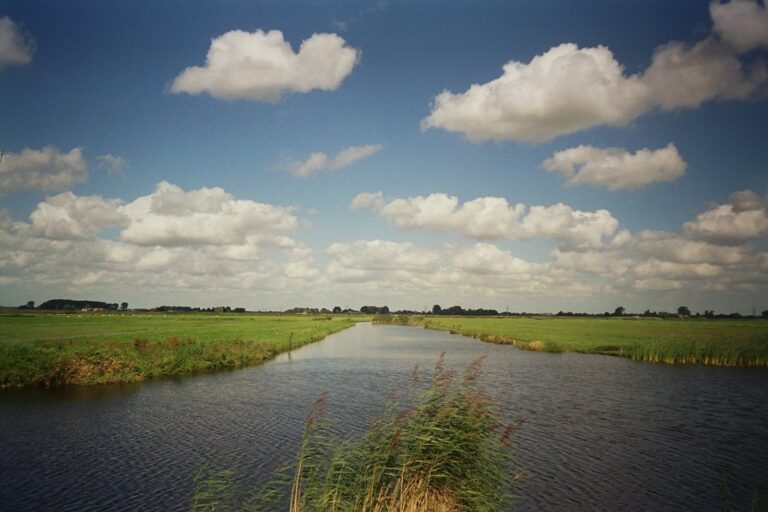
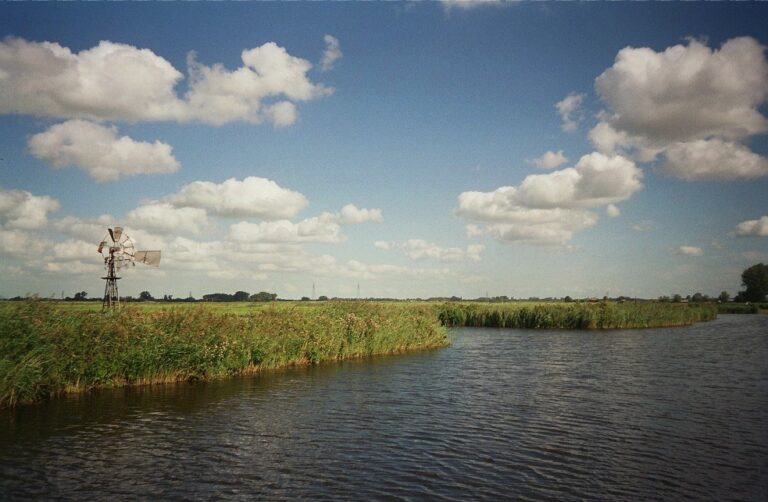
Wormer- en Jisperveld — Natuurmonumenten calls this the largest unbroken peat meadow landscape in Western Europe: hundreds of small fields with reed fringes and narrow ditches, one to two metres below sea level. Because many of the plots can only be reached over water, the land has always been farmed extensively — and that is exactly why the meadow birds are still there. Mainly here: Birds, according to Natuurmonumenten: Black-tailed Godwit (hundreds of breeding pairs a year), Northern Lapwing, Common Redshank, Eurasian Oystercatcher, Meadow Pipit, Eurasian Skylark, Northern Shoveler, Bearded Reedling, Bluethroat, Western Marsh Harrier, Black-headed Gull, Common Tern, Lesser Black-backed Gull, Eurasian Spoonbill, reed warbler, Sedge Warbler and Eurasian Wigeon (mainly autumn and winter). Natura 2000 targets: Eurasian Bittern (A021) and Ruff (A151) as breeding birds, Eurasian Wigeon (A050), Northern Shoveler (A056) and Black-tailed Godwit (A156) as non-breeding birds, Sedge Warbler (A295) as a proposed addition. Mammals: pond bat (H1318) and root vole (H1340), which occurs only in the Netherlands. Fish: bitterling, spined loach and bullhead. Waders on passage according to birdingplaces.eu (a user source): Wood Sandpiper, Ruff, Black Tern, Black-tailed Godwit, Common Greenshank, Common Sandpiper and Pied Avocet. For amphibians, reptiles, dragonflies and butterflies we found no source that links a species explicitly to this area. Best period: Spring, for the meadow birds. Natuurmonumenten: "spring is the best time for meadow birds. Canoeing or going out by whisper boat is possible all year." Autumn and winter for the wigeon. Note that the Oosteindepad is open precisely outside the meadow-bird season: from 15 July to 15 October.
Which animals will you see here?
Also reported present in this area (281 species) presence reported
These species are known to occur here (NDFF), but nothing has been recorded yet about your chance of seeing them.
Amphibian (6)
Dragonfly (19)
Reptile (2)
Spider (6)
Grasshopper (21)
Fish (18)
Butterfly (20)
Bird (160)
Mammal (large grazer) (1)
Mammal (land) (18)
Mammal (land/water) (2)
Mammal (bat) (8)
Walking routes
Kanoroute Wormer- en Jisperveld
Wandelroute door de Schaalsmeerpolder
Rondje Trickel
Oosteindepad
Fietsroute langs de Zaan, de Poel en ’t Zwet
Weidevogels in het Wormer- en Jisperveld
Hides and viewpoints
🔭 Bird hide by the Rondje Trickel
Practical information
- Access: Open from sunrise to sunset; the times differ from day to day. The Oosteindepad is open only from 15 July to 15 October. Drones are not allowed. One practical point that matters: many of the plots can only be reached over water, not on foot. The visitor centre and the excursion boat are wheelchair-friendly.
- Parking: At De Poelboerderij, Veerdijk 106, 1531 MB Wormer. TOP De Poel has a bicycle shed and parking and is open 24 hours. Natuurmonumenten says nothing about parking itself, and on parking charges we found no source.
- Dogs: Natuurmonumenten publishes only half a rule: "dogs are not allowed on the Oosteindepad because of the livestock." For the rest of the area there is nothing. A user source (birdingplaces.eu) reports that dogs have to be on a lead throughout the area. We give both, with the note that the site manager publishes no rule for most of the area. Assume on a lead and follow the signs.
- Facilities: Visitor centre De Poelboerderij, Veerdijk 106, Wormer. Whisper-boat excursions all year round. A water playground for children and Veenweidepark De Trickel. Canoe hire at the marina. The visitor centre and the excursion boat are wheelchair-friendly, with a paved path to the boat. Natuurmonumenten gives no information on food, drink or toilets; a local news item reports a new terrace. For public transport to De Poelboerderij we found no source; Purmerend bus station is a practical starting point for the cycle route.
🌿 Rules in this area
Natuurmonumenten and Staatsbosbeheer, plus private owners. For the visitor, Natuurmonumenten is the practical manager: they run the visitor centre De Poelboerderij and the excursion boat. Most of the Wormer- en Jisperveld is owned by Natuurmonumenten; the Kalverpolder is managed by Staatsbosbeheer and private owners. sets its own rules here. Stay on the paths, respect refuges and closures, keep dogs on a lead where that applies, and do not fly a drone — they are banned in almost every Dutch nature reserve.
Status: Verified · Last checked: 2026-10-29
Photo: Foto: onbekende maker / Public domain via Wikimedia Commons.