
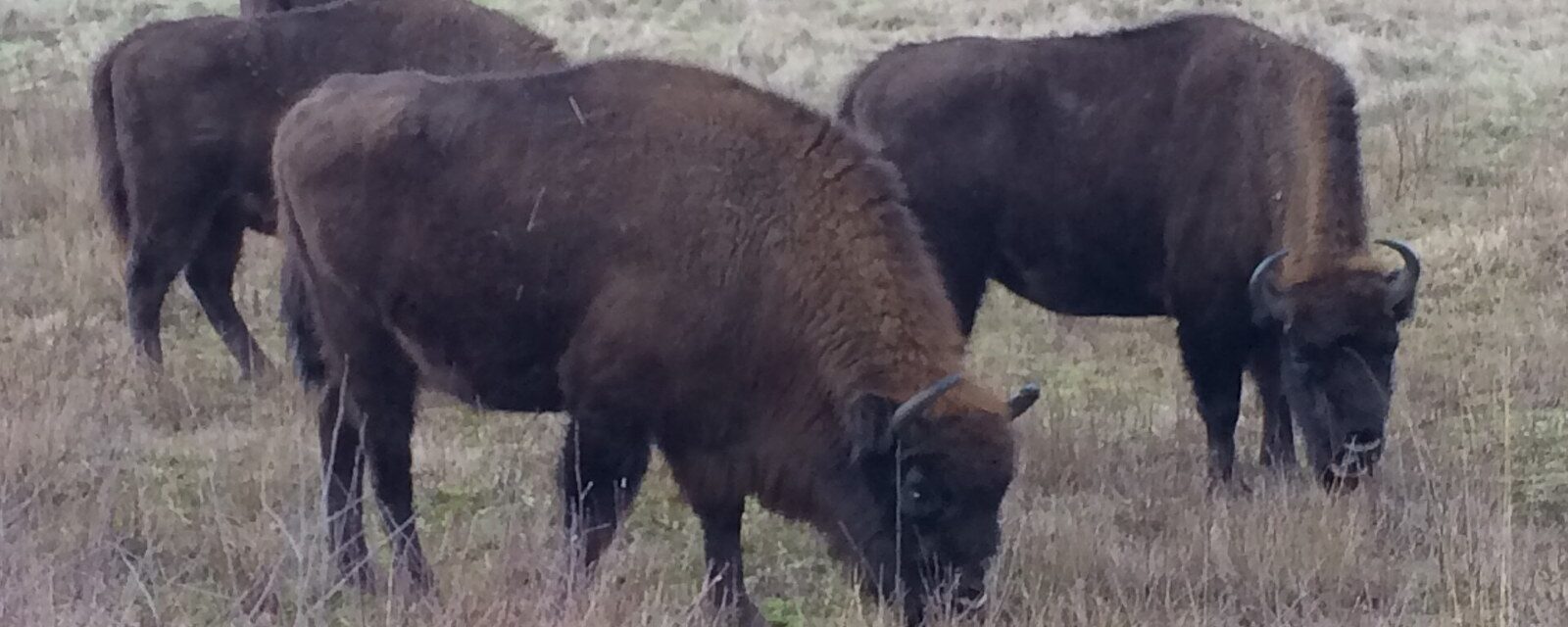
 📷 Foto: Taketa / CC BY-SA 4.0 via Wikimedia Commons.
De Maashorst: where to see wildlife
For the bison: 1 September to 15 March, because outside that period the path through the bison area is shut. The grazers are in the area all year, but then they can only be seen from the edges. Heath, pools and drift sand with large grazers
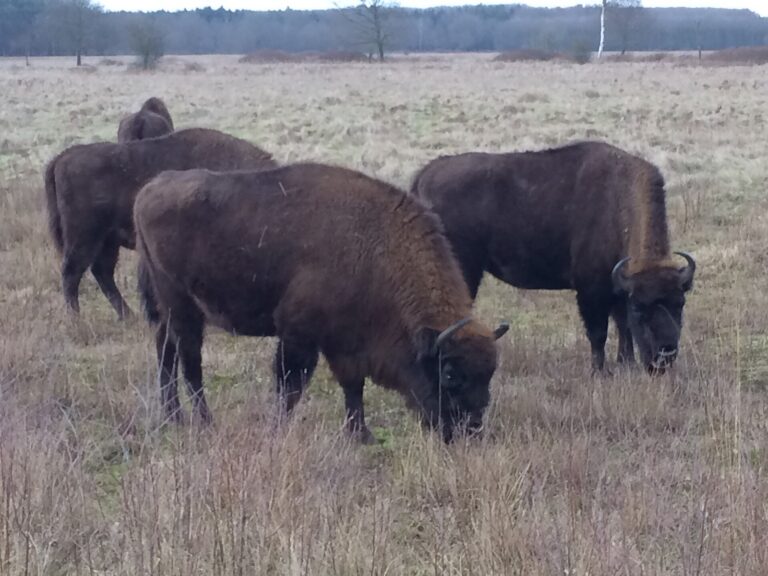
De Maashorst — Staatsbosbeheer: "De Maashorst is one of three places in the Netherlands where European bison roam." The Peelrandbreuk fault runs beneath the area, still active with about half a millimetre of movement a year; along that fault lie the wijstgronden, boggy and permanently wet high ground. An application has been submitted for UNESCO Geopark status. Mainly here: European bison, Tauros and Exmoor pony as large grazers, since 2016. Birds: for some years now Red-backed Shrike, Eurasian Skylark and Woodlark, Yellowhammer and European Nightjar have bred here; Northern Raven has bred here since 2012, after almost a hundred years of absence. Best period: For the bison: 1 September to 15 March, because outside that period the path through the bison area is shut. The grazers are in the area all year, but then they can only be seen from the edges.
Which animals will you see here?
Also reported present in this area (282 species) presence reported
These species are known to occur here (NDFF), but nothing has been recorded yet about your chance of seeing them.
Amphibian (9)
Dragonfly (21)
Reptile (2)
Spider (5)
Grasshopper (22)
Fish (4)
Butterfly (26)
Bird (164)
Mammal (land) (20)
Mammal (land/water) (2)
Mammal (bat) (7)
Walking routes
Boswachterspad Kanonsbergroute
Wandelpad door het wisentengebied
Facilities
Natuurcentrum De Maashorst, Erenakkerstraat 5 in Nistelrode. Nine off-lead areas for dogs. At every entrance there are boards with the visitor rules.
Practical information
- Access: Outside the grazing area the terrain is freely accessible on paths. Around the entrances there is a zone of about 500 metres without grazing. The path through the grazing area with the bison is open from 1 September to 15 March, between sunrise and sunset; in the breeding season that path is always closed. It can also shut temporarily when it is impassable, during works, or when rest suits the grazers better — if that lasts longer than a week, the site manager reports it on the website. Rules in the grazing area: stay on the path, keep 50 metres away, do not walk through the herds, give animals a wide berth, stay visible, do not shout, do not feed or stroke them and do not take selfies. If a grazer is standing on the path, you wait or you walk round it in a wide arc — then you may leave the path for a moment. ARK uses as a rule of thumb 25 metres for horses and cattle and 50 metres for bison; young animals need extra room. Activities and events must be notified at least six weeks in advance.
- Parking: Six official starting points: Natuurcentrum De Maashorst (Erenakkerstraat 5, Nistelrode), Bomenpark Heesch (Vorsselweg 3, Heesch), De Mastworp (Bedafseweg 22, Uden), De Kriekeput (Schaijkseweg 3A, Herpen), Camping De Heische Tip (Straatsven 4, Zeeland) and De BOSHUT (Udensedreef 14, Schaijk). The Kanonsbergroute starts at the car park on the Schaijksedreef in Nistelrode.
- Dogs: Mind this: the official sources contradict each other here. The most recent and most specific source (the area site, 25 August 2026, on the bison path) is the strictest: "dogs may not come along. Not on a lead either." Staatsbosbeheer says the same about the grazing area: dogs are not allowed there. The English visitor rules on that same area site, however, prescribe "Keep dogs on a leash" for the grazing area. Take the strictest reading: leave the dog outside the grazing area. Beyond it a dog may come along on a lead, with nine off-lead areas; outside those areas running free carries a fine of a hundred euros. ARK advises visitors with dogs to keep extra distance, because grazers see dogs as wolves.
🌿 Rules in this area
Five parties together: the municipalities of Bernheze, Oss and Maashorst, Staatsbosbeheer and the water board Aa en Maas. Staatsbosbeheer is the site manager; the ranger is Cindy Frishert. ARK Rewilding Nederland is involved in the natural grazing. sets its own rules here. Stay on the paths, respect refuges and closures, keep dogs on a lead where that applies, and do not fly a drone — they are banned in almost every Dutch nature reserve.
Status: Verified · Last checked: 2026-10-28
Photo: Foto: Taketa / CC BY-SA 4.0 via Wikimedia Commons.