
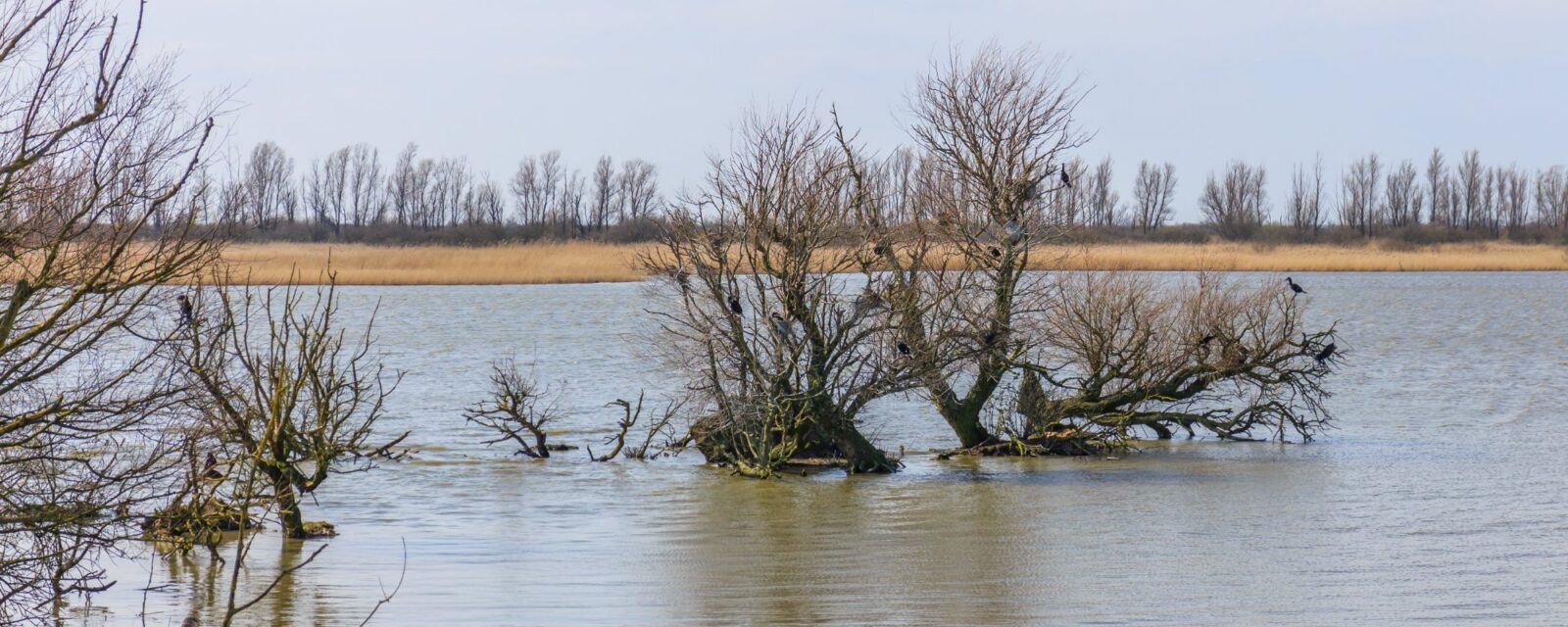
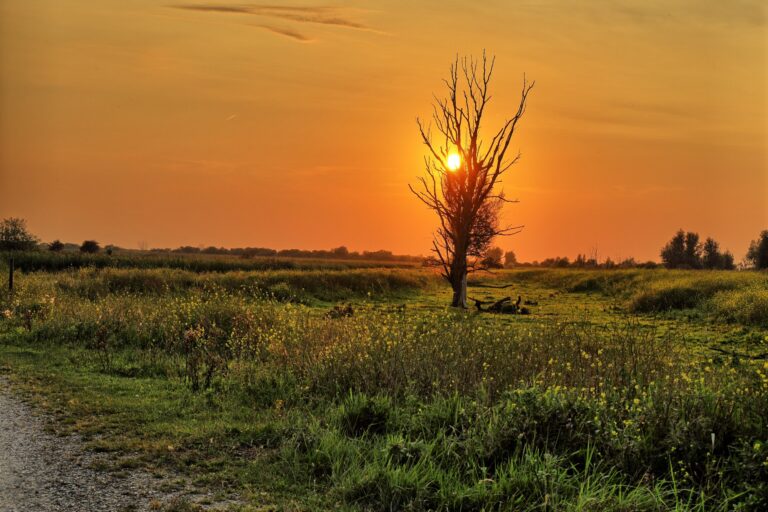
 📷 Dominicus Johannes Bergsma, CC BY-SA 4.0 (Wikimedia Commons)
Oostvaardersplassen: where to see wildlife
Worth the trip all year, but with completely different lead actors. Autumn: the red deer rut, from around mid-September to mid-October. This is the single most dramatic wildlife event in the Netherlands, and the busiest time here. Winter: geese and swans in very large numbers, and the bare trees make a perched White-tailed Eagle far easier to find — but remember the closures. Spring brings breeding birds and young animals; summer is for dragonflies and for the beaver at dusk. Whatever the month: early morning and late afternoon. In the middle of a bright day you will mostly see grass. Wetland and marsh
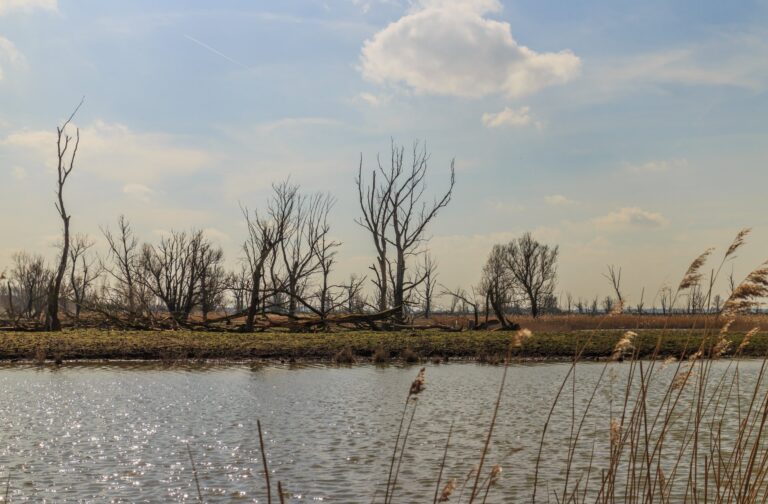
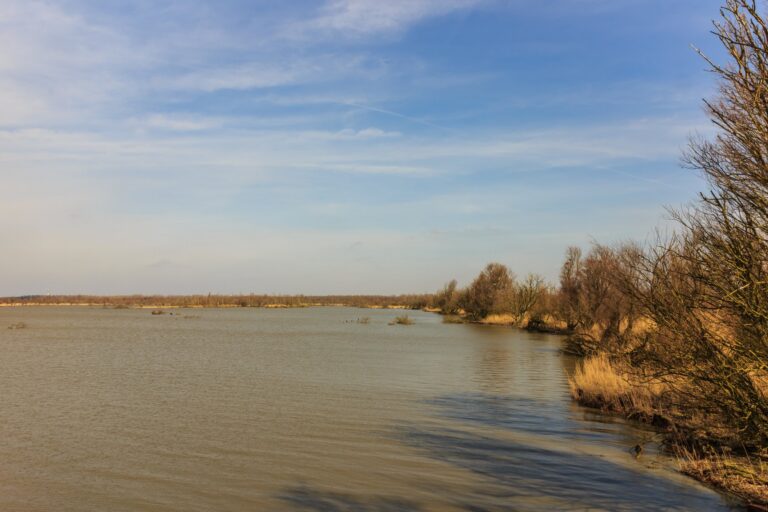
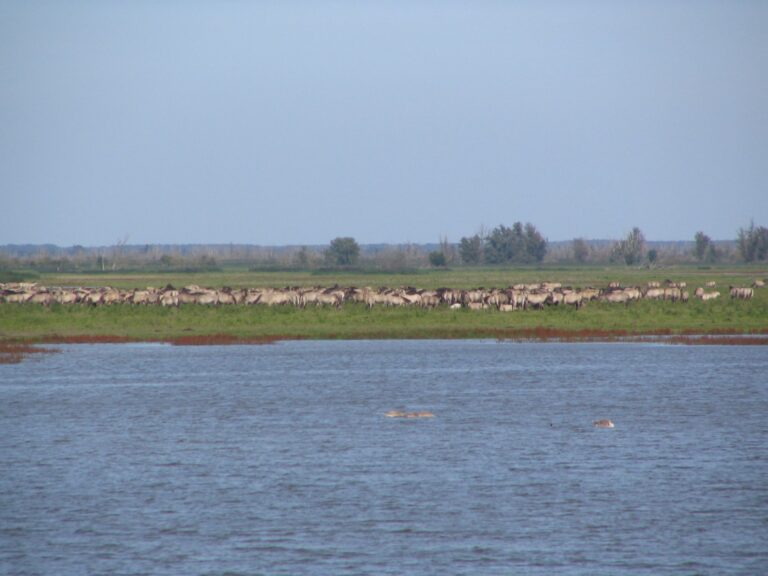
Oostvaardersplassen — The reserve exists by mistake. When the Flevopolder was pumped dry in 1968, this low wet corner was left unused. Staatsbosbeheer, who manage it, put it plainly: an industrial estate was planned, but when there turned out to be no need for one, nature took its chance. The most famous wildlife area in the Netherlands was meant to be a business park. It is worth knowing that before you go, because it explains the shape of the place: flat, fenced, bounded by a dyke, a railway and a motorway, and entirely man-made in outline even though almost nothing inside it was planted. Mainly here: White-tailed Eagle, konik horses, red deer, large grazers and herons. Best period: Worth the trip all year, but with completely different lead actors. Autumn: the red deer rut, from around mid-September to mid-October. This is the single most dramatic wildlife event in the Netherlands, and the busiest time here. Winter: geese and swans in very large numbers, and the bare trees make a perched White-tailed Eagle far easier to find — but remember the closures. Spring brings breeding birds and young animals; summer is for dragonflies and for the beaver at dusk. Whatever the month: early morning and late afternoon. In the middle of a bright day you will mostly see grass.
Which animals will you see here?
The species at the top are the ones with a peak month in November.
🦅 White-tailed Eagle
Good chanceverified🦅 Barnacle Goose
Good chance in seasonverified🦅 Greater White-fronted Goose
Good chance in seasonverified🦅 Bearded Reedling
With luckverified🦅 Great Egret
Good chancechance per source🦅 Eurasian Wigeon
Good chancechance per source🦅 European Golden Plover
With luckchance per source🦅 Northern Pintail
With luckchance per source🦅 Eurasian Teal
With luckchance per source🐄 Heck cattle
Good chanceverified🦅 Common Shelduck
Good chance in seasonverified🦫 Eurasian beaver
With luckverifiedAn assessed chance for 27 more species
🦌 Red deer
With luckverified🦫 Eurasian otter
Very rareverified🦅 Great Cormorant
Good chancechance per source🦅 Grey Heron
Good chancechance per source🦅 Common Buzzard
Good chancechance per source🦅 Great Crested Grebe
Good chancechance per source🦅 Greylag Goose
Good chancechance per source🦌 European hare
Good chancechance per source🦅 Mute Swan
Good chancechance per source🦅 Common Kestrel
Good chancechance per source🐄 Konik horse
With luckchance per source🦅 European Goldfinch
With luckchance per source🦌 Red fox
With luckchance per source🦅 Bluethroat
With luckverified🦅 Marsh Harrier
With luckverified🦅 Black-tailed Godwit
With luckverified🦅 Pied Avocet
With luckverified🦅 Eurasian Bittern
With luckverified🦅 Northern Lapwing
Good chancechance per source🦅 Gadwall
Good chancechance per source🦌 Roe deer
Good chancechance per source🦅 Reed Bunting
Good chancechance per source🦅 Eurasian Skylark
Good chancechance per source🦅 Eurasian Spoonbill
With luckchance per source🦅 Sedge Warbler
With luckchance per source🦅 Eurasian Curlew
With luckchance per source🦅 Water Rail
Rarechance per sourceThese species have an assessed chance with a source behind it. The list comes from the same database as the species pages.
Also reported present in this area (141 species) presence reported
These species are known to occur here (NDFF), but nothing has been recorded yet about your chance of seeing them.
Amphibian (3)
Dragonfly (15)
Reptile (1)
Grasshopper (4)
Fish (1)
Butterfly (18)
Bird (81)
Mammal (land) (13)
Mammal (land/water) (1)
Mammal (bat) (4)
Walking routes
Wandelroute Zeearend
📍 Start point on the map 🧭 Directions to the start (Google Maps)
Wandelroute Krater
📍 Start point on the map 🧭 Directions to the start (Google Maps)
Moeraspad
📍 Start point on the map 🧭 Directions to the start (Google Maps)
Dodaarspad
📍 Start point on the map 🧭 Directions to the start (Google Maps)
t Lange pad
📍 Start point on the map 🧭 Directions to the start (Google Maps)
Hides and viewpoints
🔭 De Zeearend
🔭 Grote Praambult
🔭 Kleine Praambult
🔭 Jan v.d. Boschpad
🔭 Roerdomp
🔭 De Schollevaar
🔭 De Brandgans
🔭 De Grauwe Gans
🔭 De Grote Zilverreiger
🔭 De Kluut
🔭 Keersluisplas
🔭 Wigbels Eiland
🔭 De Krakeend
🔭 De Poelruiter
Practical information
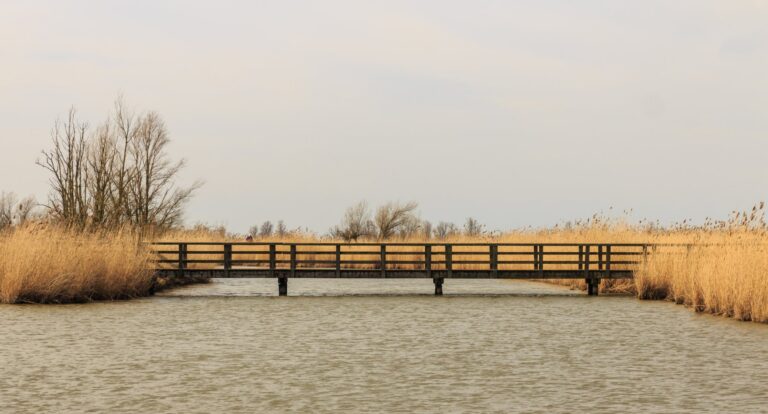
- Access: This is the expectation to adjust in advance: you cannot walk into the core of the reserve. Freely accessible, sunrise to sunset: Hollandse Hout, Kotterbos, Oostvaardersbos and Oostvaardersveld. The core area, where the herds are, is open on guided excursions only, and not in winter. In winter Staatsbosbeheer closes parts of the Driehoek, the Oostvaardersbos and the Kotterbos altogether. So the honest summary is that you watch this area from its edges and from its hides, not from inside it. That is a feature rather than a failing: the animals are undisturbed precisely because people are kept to the rim. Where to stand. Hide De Zeearend is the main one, a large two-storey hide at the Buitencentrum Oostvaardersplassen in Lelystad. Grote Praambult is a raised viewpoint on the Praamweg along the Almere–Lelystad railway, open when the Zeearend route is closed, which makes it the winter and early-spring option; Kleine Praambult is the smaller version of the same idea. Along the Oostvaardersdijk, hides and observation points are strung out, and that is the simplest place to scan open water. Getting here without a car is unusually easy for a major wildlife area. There is a railway station called Oostvaarders on the line between Almere and Lelystad, and both towns have direct trains from Amsterdam.
- Parking: Park at the Buitencentrum Oostvaardersplassen (Kitsweg 1, Lelystad) or at Natuurbelevingscentrum De Oostvaarders in Almere.
- Dogs: Allowed on a lead on the ’t Lange Pad walking route and on certain routes in the Hollandse Hout and the Kotterbos; not at the visitor centre.
- Facilities: Hides and observation points along the Oostvaardersdijk, the Buitencentrum Oostvaardersplassen in Lelystad and Natuurbelevingscentrum De Oostvaarders in Almere, both with parking, a cafe and toilets. There is a railway station called Oostvaarders on the Almere–Lelystad line.
🌿 Rules in this area
Staatsbosbeheer sets its own rules here. Stay on the paths, respect refuges and closures, keep dogs on a lead where that applies, and do not fly a drone — they are banned in almost every Dutch nature reserve.
Status: Verified · Last checked: 2026-07-31
Photo: Dominicus Johannes Bergsma, CC BY-SA 4.0 (Wikimedia Commons)
The large grazers: what happened, and what changed
If you have heard of this place in English, there is a fair chance it was through the winter of 2017–2018. It is worth setting out what actually happened, because the headlines of the time were not quite the same as the figures.
The reserve started in 1983 with 32 Heck cattle, 18 Konik horses and 40 red deer. For decades the herds were allowed to find their own level, with the food supply setting the ceiling. By October 2017 there were 5,230 large grazers.
Between 1 December 2017 and 30 April 2018, 3,226 of them died: 2,684 red deer, 467 horses and 75 cattle. Close to two out of every three animals in five months. The part that usually gets lost: 89 percent were shot by rangers, because they were judged unlikely to survive the winter, rather than dying of hunger where they stood. That does not make the number smaller. It does make it a different thing from what “starving wild horses” suggested, and anyone reading about this deserves the distinction.
What followed was a national argument and an international one. Ecologists disagreed in public and still do: Han Olff has argued that the mortality was what the carrying capacity of the land implies, and that our feelings about horses as domestic animals colour the reaction; Frank Berendse called the set-up “a big failure” and argued the area is simply too small to work the way it was meant to. We are not going to settle that here, and a wildlife guide is not the place to try.
What changed is concrete. The herds are no longer allowed to find their own level. Numbers are now steered by goals for the landscape and for biodiversity, which in practice means a ceiling well below what the grass would support. The Van Geel advice set targets of 230 Heck cattle, 450 Konik horses and 490 red deer; numbers have been brought down since 2019 and are held there by culling. By May 2023 there were around 1,100 large grazers in total. Animals above the target go to other areas where possible, and are shot or slaughtered where not.
Supplementary feeding, which used not to happen at all, is now possible: the trigger agreed with the province is an average Body Condition Score of 2 in the cattle, measured as a group average rather than on the worst animal. A herd manager and rangers do weekly rounds, and a specialist vet checks condition at least monthly. Shrubs and trees have been planted on seventeen sites, 150 hectares in all, to give shelter and variety in a landscape that had almost none.
Is it working? Partly, and not yet fully. A Wageningen Environmental Research report sent to the provincial council in December 2025 found that fewer grazers is having a positive effect — vegetation is returning, reed and rough growth are recovering, and some bird species are benefiting. The same researchers concluded that the grazers are still too numerous for the vegetation to recover completely, and that it is too early for firm conclusions. A review of the numbers is scheduled for 2029.
So: an experiment that went badly wrong, a correction that is measurably working, and an outcome that is still open. That is the honest state of it, and it is more interesting than either of the versions you will find in a headline.
What we are not sure about
- Current numbers per species. The most recent breakdown we can source is May 2023: roughly 500 red deer and around 600 Konik horses and Heck cattle together. Helicopter counts are made annually but we have not found a published figure for 2025 or 2026, so we are not quoting one.
- Whether the closures shift from year to year. Staatsbosbeheer gives January to mid-May for the Zeearend area, but closure dates can move with the season. Check before you travel.
Sources
Most of these sources are in Dutch, and the quotations on this page are our translations from the Dutch originals. One English source is listed last.
- Staatsbosbeheer — Large grazers in the Oostvaardersplassen (in Dutch): the current management, the Body Condition Score trigger for supplementary feeding, relocation and culling, and the monitoring rounds.
- NOS — More than 3,200 large grazers died last winter (7 May 2018, in Dutch): the October 2017 total, the mortality figures per species, and the 89 percent that were shot.
- NOS — No longer too many red deer and Konik horses (11 May 2023, in Dutch): the 2023 numbers and the planting of shelter.
- Omroep Flevoland — Fewer large grazers is good for the Oostvaardersplassen, but too early for full conclusions (4 December 2025, in Dutch): the Wageningen Environmental Research findings, the Van Geel target numbers, and the 2029 review.
- Euronews — Slaughter of starving wild horses divides the Netherlands (23 August 2018, in English): the founding numbers from 1983, the court case, and the disagreement between ecologists.
- Area-level occurrence on our Dutch pages is based on NDFF Flora & Fauna Verkenner open data alongside statements from Staatsbosbeheer. NDFF counts say something about presence, not about density or your chance of seeing an animal.
- All areas in English
- The Wadden Sea — the other region we have written up, and a very different kind of day.
- How we work — where our facts come from, and why we leave out the locations of vulnerable species.
- Wildlife in the Netherlands — the English starting point.