Where to see the Northern Shoveler in the Netherlands
Easy 🦅 Bird
Where and when do you see a Northern Shoveler? This species is easy to see, all year round.
How do you recognise a Northern Shoveler?
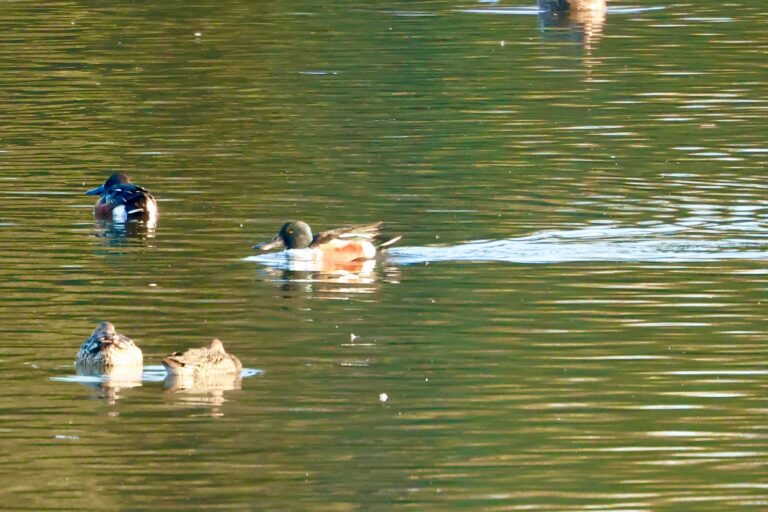
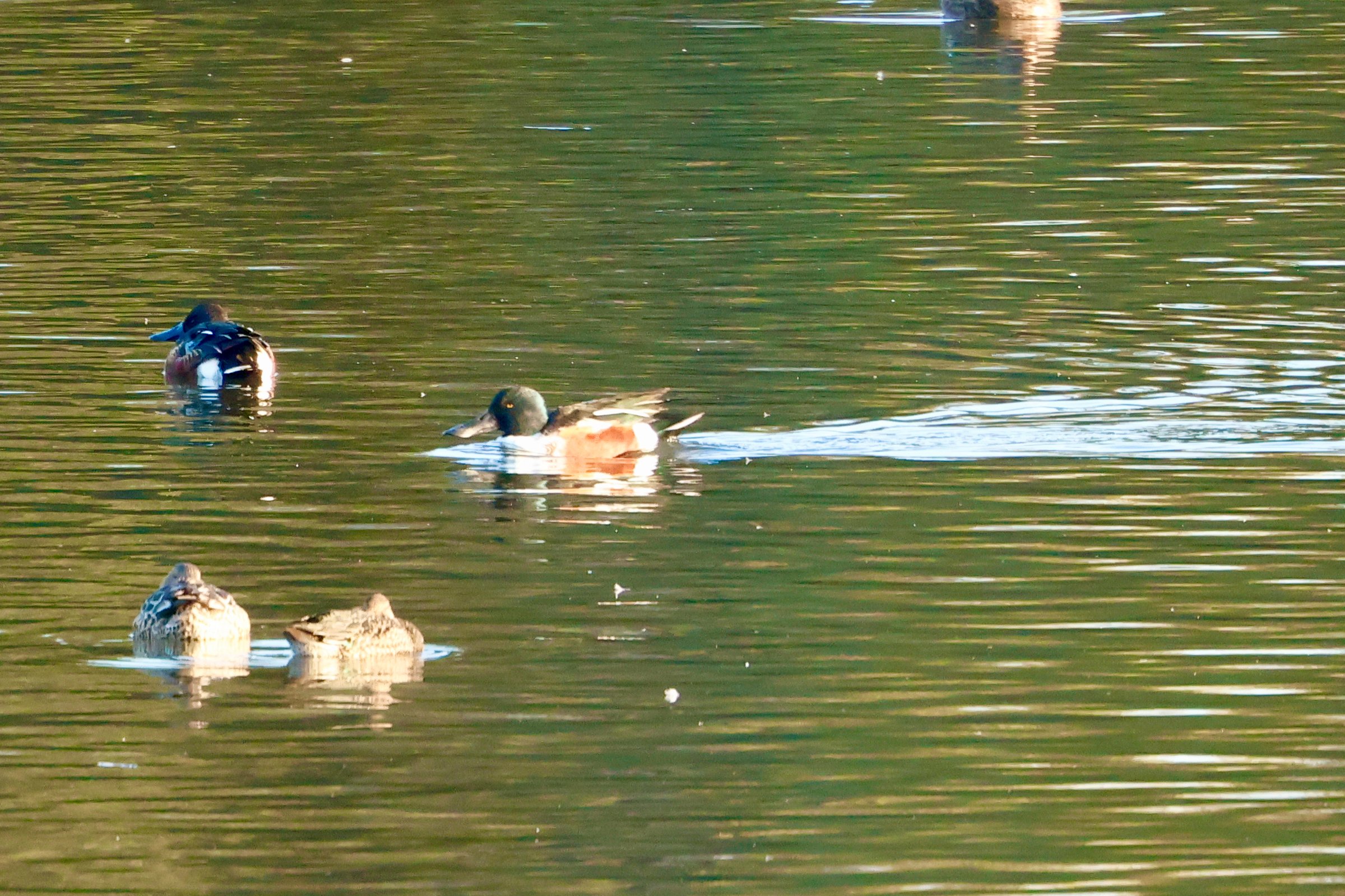
Wingspan 70 to 85 cm. A dabbling duck of 44 to 52 centimetres with an unmistakable broad, flat, spatula-shaped bill almost as long as the head. The male has a green head, a white breast and chestnut flanks; the female resembles a mallard but has that same giant bill.
What can you confuse a Northern Shoveler with?
Looks like: Mallard
- Mallard: The female resembles a mallard, but the broad spatula-shaped bill is unmistakable.
Where do you see this species in the Netherlands?
The whole country on shallow, nutrient-rich waters: peat meadow areas, shallow flooded plots, marshes and reserves with reed banks.
Habitat: Herb-rich, boggy grassland with shallow, nutrient-rich water; outside the breeding season shallow freshwater marshes in open landscape.
This is a common, widespread species: you can come across it in far more places than the areas listed below. Treat that list as a starting point rather than a full survey.
📍 Oostvaardersplassen
presence reported📍 Nationaal Park Lauwersmeer
presence reported📍 Amsterdamse Waterleidingduinen
With luck chance per source📍 Nationaal Park De Biesbosch
Good chance chance per source📍 Naardermeer
With luck chance per source📍 Nationaal Park Sallandse Heuvelrug
presence reported📍 Onlanden & Leekstermeer
With luck chance per source📍 Sint-Pietersberg & Zuid-Limburg
presence reported📍 Gelderse Poort & Millingerwaard
presence reported📍 Fochteloërveen
With luck chance per source📍 Nationaal Park Oosterschelde
presence reported📍 Zwin & Zeeuws-Vlaanderen
presence reported📍 Nationaal Park Weerribben-Wieden
presence reported📍 Nationaal Park Duinen van Texel
presence reported📍 Nationaal Park Dwingelderveld
presence reported📍 Nationaal Park De Alde Feanen
presence reported📍 Nationaal Park Zuid-Kennemerland
With luck chance per source📍 Nationaal Park De Groote Peel
presence reportedThese links come straight from our database, with the chance, the source and the evidence level for each area.
When is the best time?
Green = present · orange = peak period. The bar is generated from our database.
Best period: March to November, with the migration peak in autumn; some overwinter.
Best time of day: During the day.
Recent sightings
👁️ Where has this species been seen recently?
Check the current sightings on Waarneming.nl. A useful addition to our own verified information.
How to improve your chances
- Learn the calls first. You will hear most birds before you see them.
- Go in the first hour after sunrise, when the song is at its peak and the wind is still down.
- Use a hide or natural cover. Sitting still gets you more than walking closer.
- Keep the sun behind you. Against the light you see a silhouette and no colour.
🎒 What you need for this
Binoculars
Photography
Photograph it while it turns in circles and sieves: the bill half in the water and the rings around it tell the whole story of how this animal eats
🌿 Watching responsibly
Keep your distance, stay on the paths, and never lure animals with food or sound. Leave as soon as an animal becomes uneasy.
Status: Verified · Last checked: 2026-08-07
More photos