Where to see the Heck cattle in the Netherlands
Easy 🐄 Mammal (large grazer)
Where and when do you see Heck cattle? This species is easy to see, all year round.
How do you recognise Heck cattle?
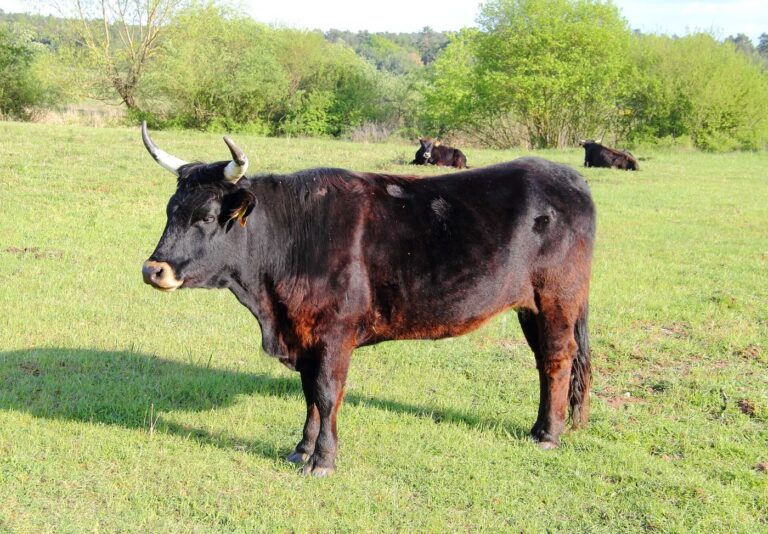
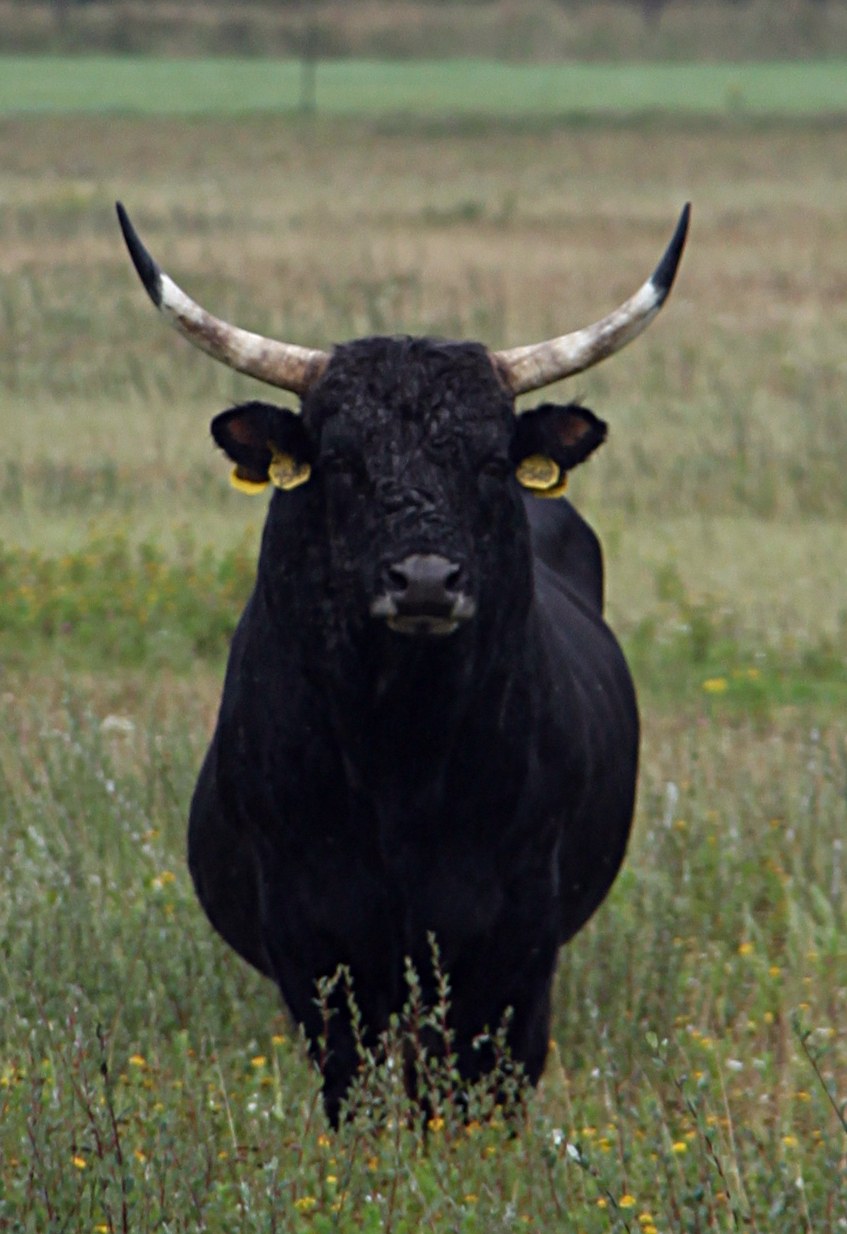
A heavy, dark ox with a striking pale ring around the muzzle and pale horns with dark tips that curve forward and up. Bulls are black to very dark brown, often with a rusty sheen over flank and shoulder; cows are more red-brown. Shoulder height is about 1.40 m for a bull and 1.30 m for a cow. The variation in colour and horn shape is wide — wider than in most cattle breeds, which follows from the way the breed came about. Managed animals carry ear tags.
What can you confuse Heck cattle with?
Looks like: Galloway cattle, Sayaguesa cattle, Highland cattle, European bison, Konik horse
- Sayaguesa cattle: the most confusing alternative — also black with a pale muzzle ring, but with slimmer horns that point more upward; in the Netherlands they graze at Planken Wambuis, not in the Oostvaardersplassen.
- Highland cattle: long-haired and usually red-brown, with wide horns and a fringe over the eyes; Heck cattle are short-haired and dark.
- European bison: a genuinely wild species with a high shoulder hump, short curved horns and a heavy forequarter, and no pale muzzle ring.
Where do you see this species in the Netherlands?
In the Netherlands they are best known from the Oostvaardersplassen, where the helicopter count of October 2025 came to 380 animals against a target of 300. Heck cattle graze elsewhere in the country too, but on 28 October 2026 we found no current, checkable overview of where, so we name no other areas.
📍 Oostvaardersplassen
Good chance verifiedThese links come straight from our database, with the chance, the source and the evidence level for each area.
When is the best time?
Green = present · orange = peak period. The bar is generated from our database.
Best period: Present all year. In spring and early summer the calves make the herd more conspicuous; in winter the low vegetation means you can often see the animals from further off.
Best time of day: During the day. They are visible the year round, and in the first and last light they stand out in the open more often.
Recent sightings
👁️ Where has this species been seen recently?
Check the current sightings on Waarneming.nl. A useful addition to our own verified information.
How to improve your chances
- Keep the wind in your face. Most mammals will smell you long before they see you.
- Arrive before sunrise and then stay put. Sitting still beats walking about.
- Wear muted colours, skip the scent, and put your phone on silent.
- Be patient. Expect to come back more than once before it works.
🎒 What you need for this
Binoculars; keep at least 25 metres away.
Photography
Shoot from the path and with a telephoto lens. The pale muzzle ring and the horn shape are the two features that tell a Heck cow from an ordinary one, and they come out best from the side or at a slight angle, in side light.
🌿 Watching responsibly
Keep your distance, stay on the paths, and never lure animals with food or sound. Leave as soon as an animal becomes uneasy.
Status: Verified · Last checked: 2026-10-28
More photos