
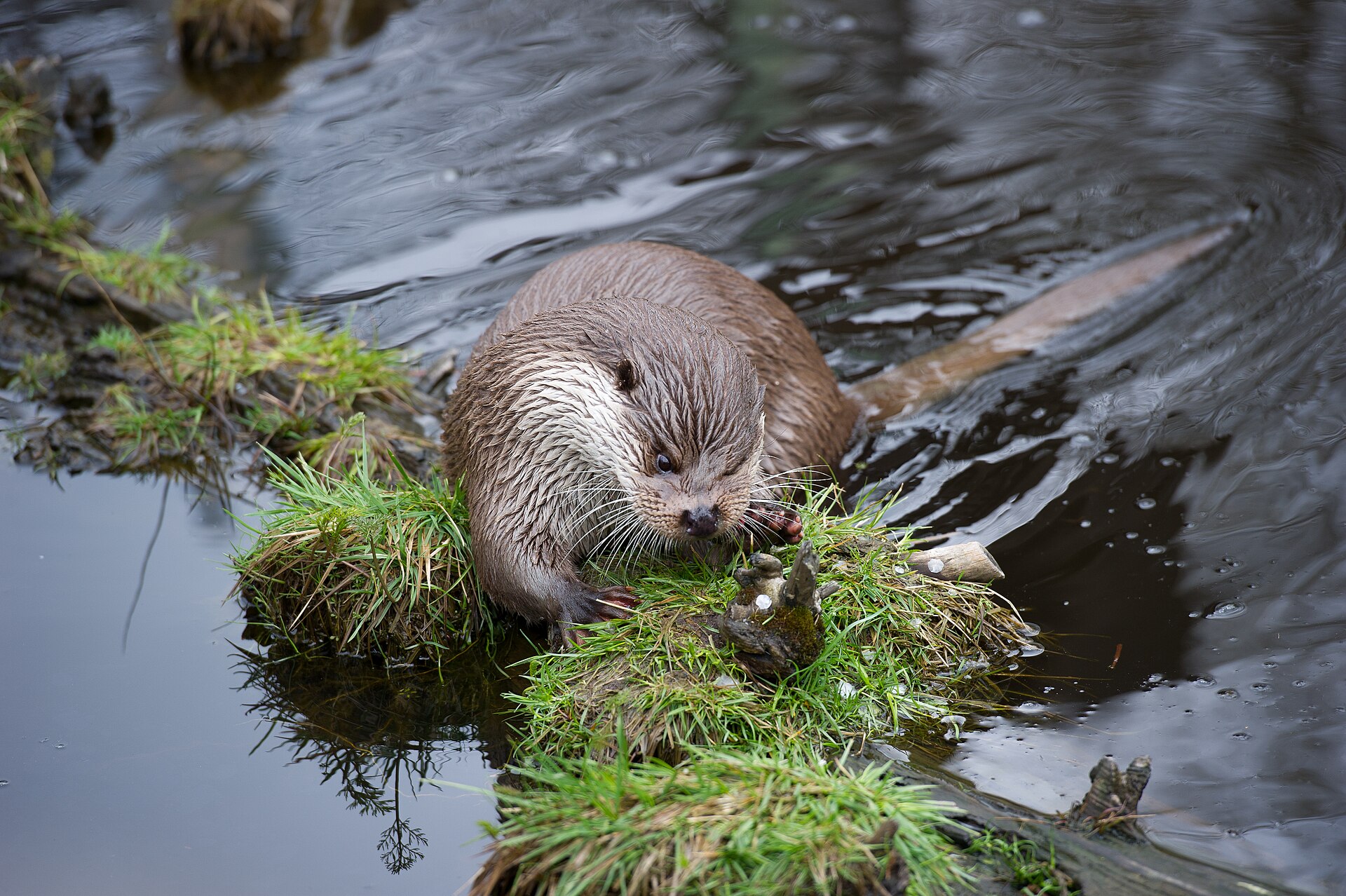
Where to see the Eurasian otter in the Netherlands
Rare 🦫 Mammal (land/water)
Where and when do you see a Eurasian otter? This species is rarely seen, all year round.
How do you recognise a Eurasian otter?
Slim and long-bodied, dark brown, with a thick tail that tapers to a point. In the water you usually see only a head with a low arch of back behind it and a trail of bubbles. The difference from a beaver is in the movement: an otter is fast and agile and dives constantly, while a beaver swims calmly and in a straight line.
What can you confuse a Eurasian otter with?
Looks like: Eurasian beaver, American mink
- Beaver: much heavier and more solidly built, with a broad flat tail instead of a tapering one, and swimming calmly in a straight line rather than fast and agile.
- American mink: much smaller, with a white chin patch and a thin tail.
What tracks does a Eurasian otter leave?
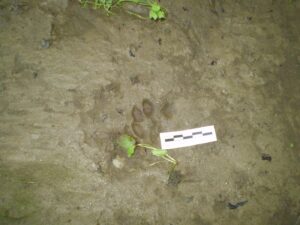
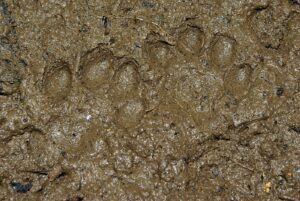
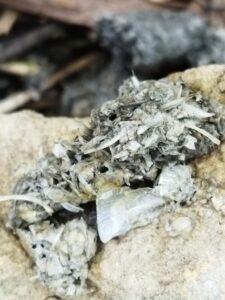
Tracks: the front foot is 55 mm wide and 60 to 65 mm long, the hind foot 55 to 60 mm wide and 60 to 90 mm long. Of the five toes usually only three print clearly, and the claws show well. Webbing appears only in thin snow or very soft mud. An otter rarely walks; it alternates trot and gallop, with bounds of 40 to 80 cm. Along banks you find trails and slides 15 to 30 cm wide at steep or slippery spots. Spraints: 10 to 15 mm thick and 2 to 10 cm long, dark green to black and tarry when fresh, with fish scales in them, and with a characteristic sweetish smell that puts people in mind of cod liver oil.
Where do you see this species in the Netherlands?
North-west Overijssel and Friesland form the core area, alongside the Gelderse Poort and parts of Groningen and Drenthe. The species had disappeared from the Netherlands by 1988 and has been gaining ground again since the reintroduction in the Weerribben and De Wieden in 2002.
📍 Nationaal Park Weerribben-Wieden
With luck verified📍 Oostvaardersplassen
Very rare verified📍 Nationaal Park De Alde Feanen
Rare chance per source📍 Onlanden & Leekstermeer
Rare verified📍 Gelderse Poort & Millingerwaard
Rare chance per source📍 Naardermeer
Very rare chance per source📍 Nationaal Park Dwingelderveld
presence reported📍 Nationaal Park Lauwersmeer
presence reported📍 Nationaal Park Sallandse Heuvelrug
presence reported📍 Fochteloërveen
Very rare chance per source📍 Ilperveld
presence reported📍 Zuidlaardermeergebied en Hunzedal
presence reported📍 Meijendel & Berkheide
presence reportedThese links come straight from our database, with the chance, the source and the evidence level for each area.
When is the best time?
Green = present · orange = peak period. The bar is generated from our database.
Best period: Present all year; otters do not hibernate and have no fixed breeding season. Signs are easiest to find in winter, when the banks are bare and the mud is soft.
Best time of day: Night and the first light of dawn. Realistically you do not sit and wait for an otter: you look for its signs. Seeing one yourself is largely a matter of luck, and no amount of effort makes it likely.
Recent sightings
👁️ Where has this species been seen recently?
Check the current sightings on Waarneming.nl. A useful addition to our own verified information.
How to improve your chances
- Keep the wind in your face. Most mammals will smell you long before they see you.
- Arrive before sunrise and then stay put. Sitting still beats walking about.
- Wear muted colours, skip the scent, and put your phone on silent.
- Be patient. Expect to come back more than once before it works.
🎒 What you need for this
Binoculars; a trail camera.
🌿 Watching responsibly
Keep your distance, stay on the paths, and never lure animals with food or sound. Leave as soon as an animal becomes uneasy.
Status: Verified · Last checked: 2026-10-20