
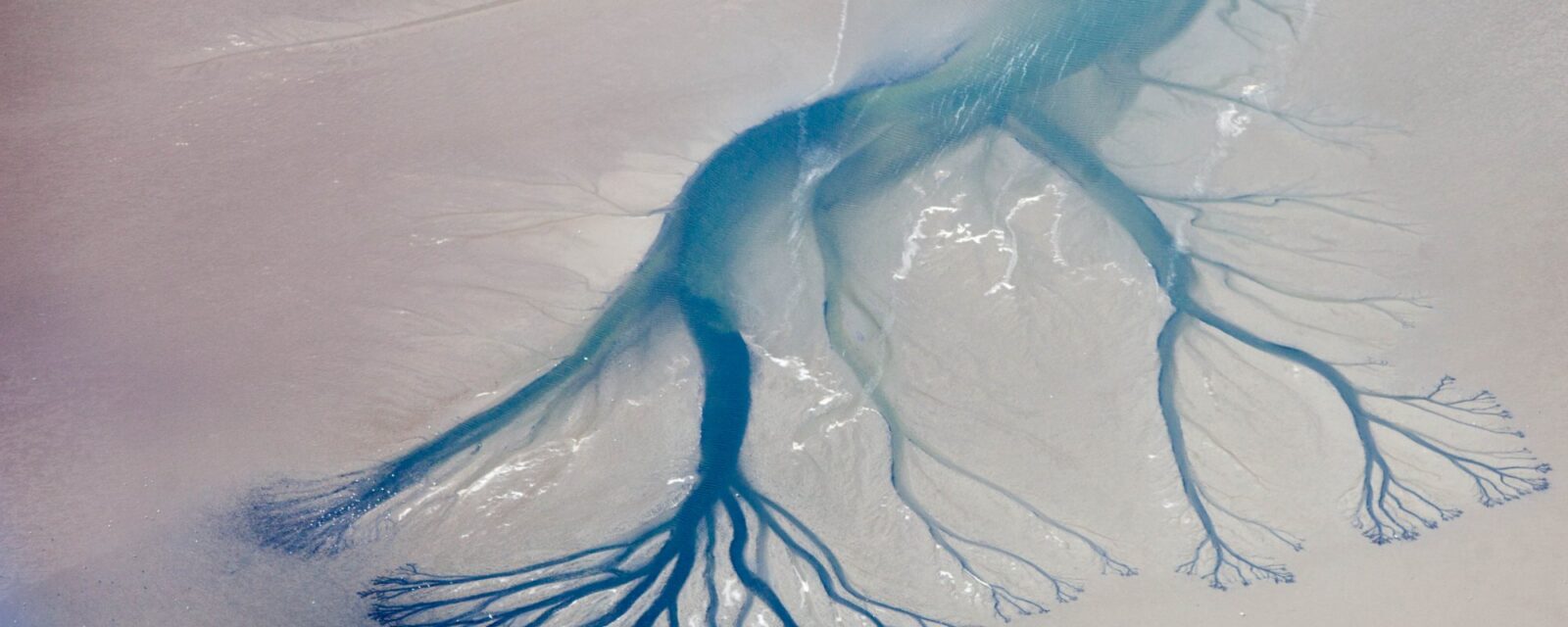
 📷 Jeroen Komen from Utrecht, Netherlands (Wikimedia Commons), CC BY-SA 2.0
Wadden Sea: where to see wildlife
Winter (November to February). Grey seal pups, born between roughly mid-November and mid-January. Geese in enormous numbers on the salt marshes and the grassland behind the dyke. The biggest high-tide roosts. Short days, hard wind, fewest people. Spring (March to May). March and April bring the largest numbers of grey seals hauled out, because they are moulting. From late April the breeding-bird season starts and more areas close. Migration peaks. Summer (June to August). Harbour seal pups, from mid-May onwards. The warden season on the closed banks is at its height. Busiest on the islands, and the ferries book up. Autumn (September to October). Southbound wader migration, with the flats at their fullest. Tidal area
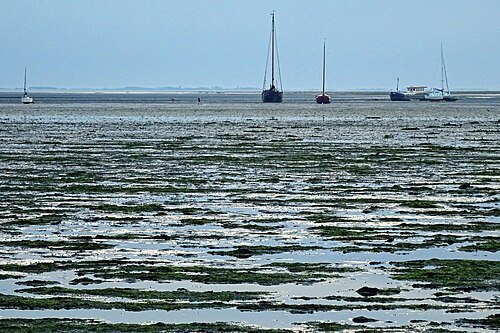
Wadden Sea — The Dutch Wadden Sea runs from Den Helder in the west to the German border east of Groningen, with a chain of inhabited islands — Texel, Vlieland, Terschelling, Ameland, Schiermonnikoog — between it and the North Sea. Behind those islands lies a shallow tidal system of channels, mudflats and sandbanks. It is a UNESCO World Heritage site and a Natura 2000 area, shared with Germany and Denmark, which is why most of the research you will find counts the whole international Wadden Sea rather than the Dutch part alone. Three things follow from the geography, and they shape every visit. Most of the area is neither land nor open water: it is flats that are dry for part of the day, and that is where the food is, which is why the bird numbers here are internationally significant. The best wildlife sits furthest from the coast — seals rest on banks out in the middle, not against the dyke, and that inaccessibility is the reason they are there. And much of it is closed, on purpose: the three uninhabited Rottum islands are off limits to everyone but their managers, where since 1991 the aim has been as much undisturbed space as possible for plants, seals and birds. Mainly here: Bar-tailed Godwit, Red Knot, oystercatcher, eider, Brant goose and harbour seal. Best period: Winter (November to February). Grey seal pups, born between roughly mid-November and mid-January. Geese in enormous numbers on the salt marshes and the grassland behind the dyke. The biggest high-tide roosts. Short days, hard wind, fewest people. Spring (March to May). March and April bring the largest numbers of grey seals hauled out, because they are moulting. From late April the breeding-bird season starts and more areas close. Migration peaks. Summer (June to August). Harbour seal pups, from mid-May onwards. The warden season on the closed banks is at its height. Busiest on the islands, and the ferries book up. Autumn (September to October). Southbound wader migration, with the flats at their fullest.

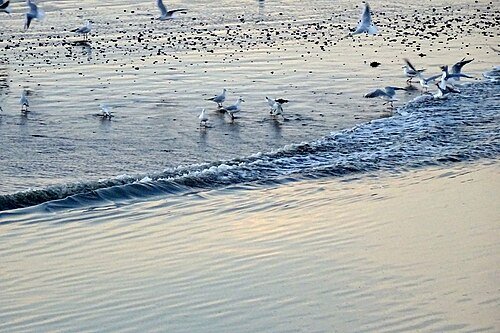


Which animals will you see here?
The species at the top are the ones with a peak month in November.
🦅 Greater White-fronted Goose
Good chance in seasonverified🦭 Harbour porpoise
With luckverified🦅 Dunlin
Good chancechance per source🦅 Barnacle Goose
Good chancechance per source🦅 Common Eider
Good chancechance per source🦅 Ruddy Turnstone
Good chancechance per source🦅 European Herring Gull
Good chancechance per source🦅 European Golden Plover
Good chance in seasonchance per source🦅 Northern Pintail
Good chance in seasonchance per source🦅 Brant
Good chance in seasonchance per source🦅 Eurasian Wigeon
Good chance in seasonchance per source🦅 Greater Scaup
Good chance in seasonchance per sourceAn assessed chance for 46 more species
🦅 Eurasian Teal
Good chance in seasonchance per source🦅 Grey Plover
Good chance in seasonchance per source🦅 Razorbill
With luckchance per source🦅 Bearded Reedling
With luckchance per source🦅 Hen Harrier
With luckchance per source🦅 Northern Gannet
With luckchance per source🦅 Red-breasted Merganser
With luckchance per source🦅 Snow Bunting
With luckchance per source🦅 Short-eared Owl
With luckchance per source🦅 White-tailed Eagle
With luckchance per source🦅 Common Guillemot
With luckchance per source🦭 Grey seal
Good chanceverified🦭 Harbour seal
Good chance in seasonverified🦅 Great Cormorant
Good chancechance per source🦅 Common Shelduck
Good chance in seasonchance per source🦅 Northern Goshawk
Rarechance per source🦅 Black-tailed Godwit
Good chance in seasonverified🦅 Meadow Pipit
Good chancechance per source🦅 Black-headed Gull
Good chancechance per source🦅 Eurasian Oystercatcher
Good chancechance per source🦅 Eurasian Curlew
Good chancechance per source🦅 Sanderling
Good chance in seasonchance per source🦅 Sandwich Tern
Good chance in seasonchance per source🦅 Red Knot
Good chance in seasonchance per source🦅 Lesser Black-backed Gull
Good chance in seasonchance per source🦅 Pied Avocet
Good chance in seasonchance per source🦅 Eurasian Spoonbill
Good chance in seasonchance per source🦅 Rock Pipit
Good chance in seasonchance per source🦅 Purple Sandpiper
Good chance in seasonchance per source🦅 Whimbrel
Good chance in seasonchance per source🦅 Bar-tailed Godwit
Good chance in seasonchance per source🦅 Common Redshank
Good chance in seasonchance per source🦅 Common Tern
Good chance in seasonchance per source🦅 Common Ringed Plover
With luckchance per source🦅 Black-legged Kittiwake
With luckchance per source🦅 Little Tern
With luckchance per source🦅 Twite
With luckchance per source🦅 Common Greenshank
With luckchance per source🦅 Arctic Skua
With luckchance per source🦅 Little Stint
With luckchance per source🦅 Curlew Sandpiper
With luckchance per source🦅 Arctic Tern
With luckchance per source🦅 Shore Lark
With luckchance per source🦅 Spotted Redshank
With luckchance per source🦅 Kentish Plover
Rarechance per source🦅 Grey Phalarope
Very rarechance per sourceThese species have an assessed chance with a source behind it. The list comes from the same database as the species pages.
Also reported present in this area (19 species) presence reported
These species are known to occur here (NDFF), but nothing has been recorded yet about your chance of seeing them.
Amphibian (1)
Butterfly (2)
Bird (16)
Walking routes
Boswachterspad Posthuiswad – Kroon s Polder (Vlieland)
📍 Start point on the map 🧭 Directions to the start (Google Maps)
Boswachterspad Landerumheide en Waterplak (Terschelling)
📍 Start point on the map 🧭 Directions to the start (Google Maps)
Boswachterspad Roosduinen en Landweerdijk (Ameland)
📍 Start point on the map 🧭 Directions to the start (Google Maps)
Trekvogelroute (Schiermonnikoog)
📍 Start point on the map 🧭 Directions to the start (Google Maps)
PolderPracht (Schiermonnikoog)
📍 Start point on the map 🧭 Directions to the start (Google Maps)
Hides and viewpoints
🔭 Bird hide Westerplas (Schiermonnikoog)
🔭 Viewpoint Bank van Banck (Schiermonnikoog)
🔭 Viewpoint Oerdblinkert (Ameland)
🔭 Bird hide Kroon’s Polders (Vlieland)
🔭 Wadwachterhut (Texel)
🔭 Viewing screen Noarderleech
🔭 Tempel Noard-Fryslan Butendyks
🔭 Viewpoint Peazemerlannen
🔭 Bird hide De Kiekkaaste
🔭 Bird hide Polder Breebaart
🔭 Bird screen Balgzandpolder
🔭 Viewing tower Balgzandpolder
🔭 Bird hide Van Ewijcksluis
Practical information
- Access: This is not an ordinary walking area. Walking out onto the flats is allowed only with a permit or with a licensed guide: channels fill faster than you can walk and the landscape changes with every tide. Large parts are vulnerable breeding and resting ground and are closed in whole or in part, for a season or all year. Always respect those closures. From a boat. This is the honest answer for seals. Trips to the seal banks leave from Oudeschild on Texel, from Den Helder and from Lauwersoog, and they sail on the tide rather than to a fixed timetable. From a ferry. The most underrated viewpoint in the region, and it costs nothing extra. The ferries to the five inhabited islands run through channels that pass close to sandbanks. You stand high above the water, and you make the crossing twice. Bring binoculars and stay on deck. From the dyke. Variable, and we will not oversell it. The sea dykes at Wierum, Holwerd and Noordpolderzijl, and the Afsluitdijk, look out over the flats. Around high water you have a real chance of roosting waders; for seals you are mostly hoping for a head in a channel. On the islands. Each island is a day in itself, with dunes, salt marsh and beach on top of the Wadden side. Texel has Ecomare, the island’s museum and seal rescue centre. Schiermonnikoog and Terschelling are the quietest. On every island the Wadden side is the wildlife side; the North Sea beach is for weather. For Purple Sandpiper, turnstone and Rock Pipit you want stony coast instead: piers, harbour moles and basalt revetments.
- Parking: Depends on how you arrive: at the ferry ports of Den Helder, Harlingen, Holwerd and Lauwersoog, at visitor centres such as Ecomare on Texel and the World Heritage Centre near Lauwersoog, or at the dyke accesses along the mainland coast. The islands often restrict car traffic, so check before you go.
- Dogs: Keep dogs on a lead at all times. Birds nest on the salt marshes and beaches in nests you only see once you are standing on them, and at a high-tide roost one loose dog puts thousands of birds to flight in a single go — birds that then cannot feed. In many closed breeding and resting areas dogs are not allowed at all.
- Facilities: Guided mudflat walking, bird boats and seal trips, salt marshes and hides along the coast, and visitor centres on the islands and on the mainland coast — among them Ecomare on Texel and the World Heritage Centre near Lauwersoog.
🌿 Rules in this area
Various bodies; UNESCO World Heritage sets its own rules here. Stay on the paths, respect refuges and closures, keep dogs on a lead where that applies, and do not fly a drone — they are banned in almost every Dutch nature reserve.
Status: Verified · Last checked: 2026-07-31
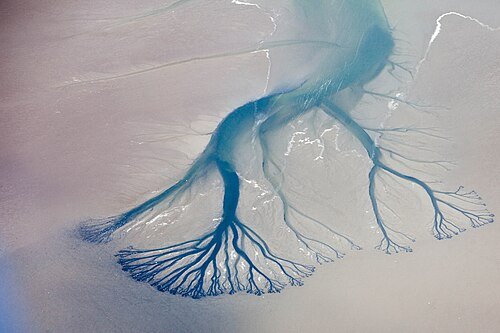
Photo: Jeroen Komen from Utrecht, Netherlands (Wikimedia Commons), CC BY-SA 2.0
The tide is the timetable
If you take one thing from this page, take this: plan around the water, not around your morning. Rijkswaterstaat publishes high and low water times per measuring station, and the stations differ by more than an hour along the coast, so use the one nearest where you are going — Den Helder, Harlingen, Lauwersoog or Schiermonnikoog.
Two opposite moments matter, and a single tidal cycle gives you both:
- Low water is for seals. The banks they haul out on only emerge as the water drops. At high tide there is no bank.
- High water is for waders. As the flats flood, the birds feeding on them are pushed up against the dyke into dense high-tide roosts. It lasts an hour or two, and it is the most spectacular hour on the Wadden.
Wind counts twice. It cancels boat trips, and it changes how much bank stays above water for the animals to lie on. A strong north-westerly with a high tide can submerge banks that are normally dry.
The rules
The shared code here is the Wadden code of conduct (“Ik pas op het Wad”), used by the site managers, Rijkswaterstaat and recreational boating. For wildlife it comes down to distance, and it is worth knowing that the code gives you a signal rather than a number: the moment a seal raises its head, you are too close to the group; when the first birds take off, you are too close to the flock.
The national figure comes from elsewhere. The Dutch Seal Agreement, signed in 2020, asks for at least thirty metres, and A Seal in Stellendam confirms to us that this applies all year, not only in the pupping seasons. Use both: thirty metres is what you plan with, the raised head is what you watch for.
Beyond that: never walk towards resting animals, do not anchor or dry out near them, keep dogs on a lead, do not exceed 20 km per hour by boat, and stay out of closed areas. Drones and kites are not allowed — the code explains why in one line: Wadden birds think they are seeing a bird of prey, and a drone over a roost or a seal bank puts everything into the water at once.
This is enforced. On Richel, the sandbank east of Vlieland, 36 wardens kept watch over the 2025 season from late April to late August, monitoring on 125 days; twenty-three people were approached for entering the closed area, and of sixty dogs counted, six were off the lead.
If you find a seal on the beach
Keep your distance and call rather than act. A pup lying alone is often not orphaned — seal mothers leave their young for long stretches. Never pick it up, never put it back in the sea.
- On Texel: call Ecomare directly, +31 222 317741. Ecomare only takes in seals from Texel, and there is no animal ambulance for wild animals on the island.
- Everywhere else: call 144, the Dutch national animal emergency number. It applies to all seals, not only pups. A trained seal warden comes out and confers with the rescue centre.
What we are not sure about
- Whether the seal boat operators sail in December and January. None of the three publishes a sailing season or a winter break. Phoning is the only reliable route.
- Whether the seal screen at Punt van Reide stands through the winter of 2026/2027. VisitGroningen says “from spring to autumn” without naming months.
Sources
These sources are in Dutch, and the quotations on this page are our translations from the Dutch originals.
- Wadden code of conduct — “Ik pas op het Wad” (pdf) (in Dutch): the full code, including seals, dogs, speed and drones.
- Dutch Seal Agreement (in Dutch): the thirty-metre distance and the 144 procedure.
- Rijkswaterstaat — The Rottums (in Dutch): why the three uninhabited islands are closed.
- Rijkswaterstaat — Warden season on Richel (in Dutch): supervision figures for 2025.
- Wageningen Marine Research — Grey seal population and harbour seal population (both in Dutch): the counts, the method and the caveat that a count is an index.
- Ecomare — A seal on the beach (in Dutch): what to do and the Texel number.
- VisitGroningen — Seal screen at Punt van Reide (in Dutch): location, season and best moment.
- A Seal, Stellendam — animal care department, by email, 18 November 2026: that the thirty metres applies all year and that all seals can be reported via 144.
- Seal watching in the Dutch Wadden Sea: the practical day plan, with boat trips, fares and the pup-on-the-beach procedure.
- All species in English: the thirteen written up so far.
- How we work: where our facts come from and why we leave out the locations of vulnerable species.
- Wildlife in the Netherlands: the English starting point.