
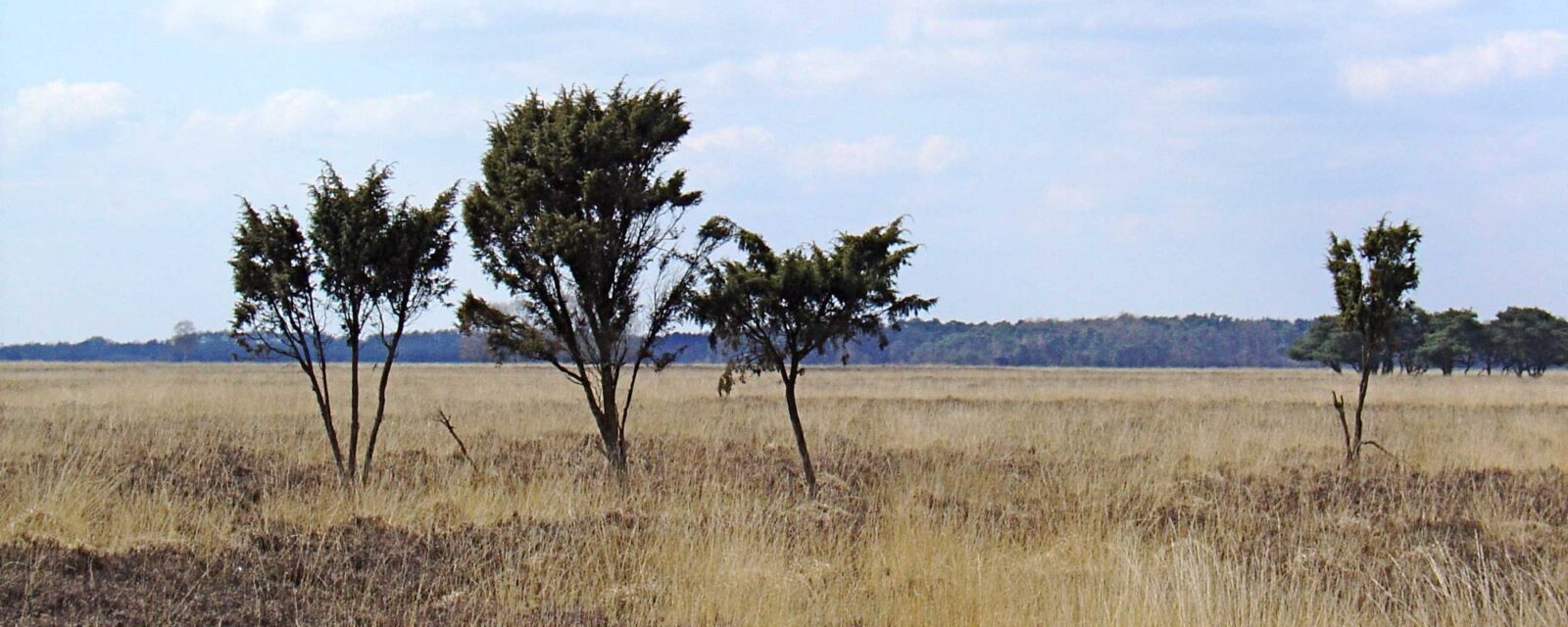
 📷 Gouwenaar (Wikimedia Commons), Public domain
Nationaal Park Dwingelderveld: where to see wildlife
Spring is the time for reptiles: on sunny mornings in March, April and May the lizards and snakes are active. In August the heather turns purple, the finest month simply to be there. In autumn cranes pass over and sometimes stop over in the area; in winter the Great Grey Shrike is the speciality. Heath & pools
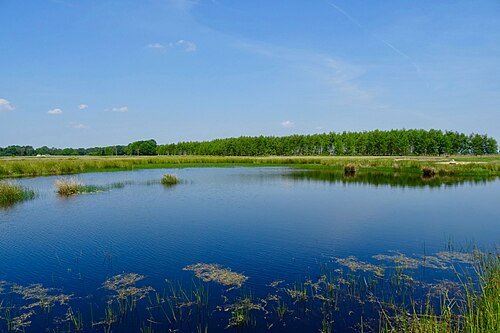
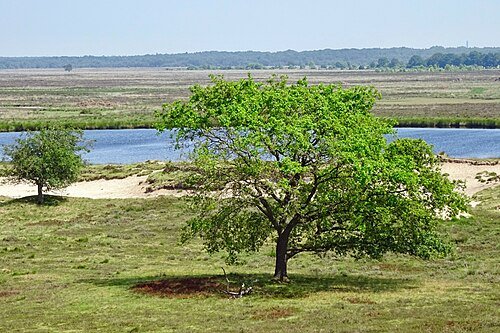
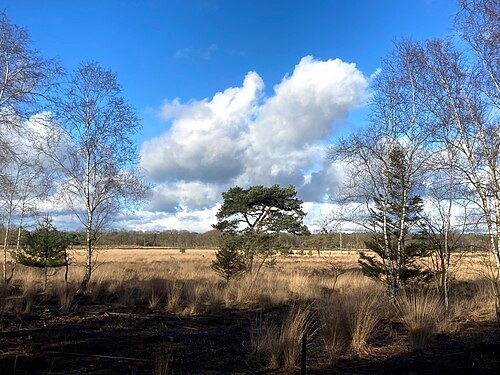
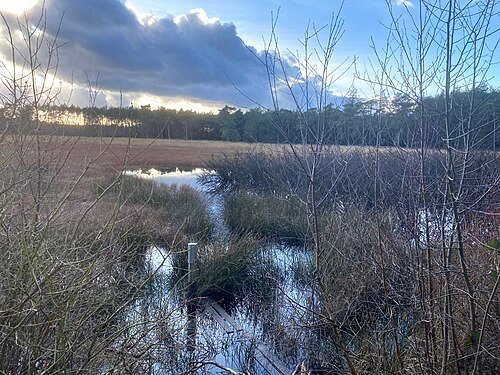
Nationaal Park Dwingelderveld — The largest wet heath in Western Europe. That combination of damp heath, pools and blown sand produces a community of reptiles and heathland birds that has hardly an equal in the Netherlands. Mainly here: Adder, Great Grey Shrike, Common Crane (on migration), reptiles. Best period: Spring is the time for reptiles: on sunny mornings in March, April and May the lizards and snakes are active. In August the heather turns purple, the finest month simply to be there. In autumn cranes pass over and sometimes stop over in the area; in winter the Great Grey Shrike is the speciality.
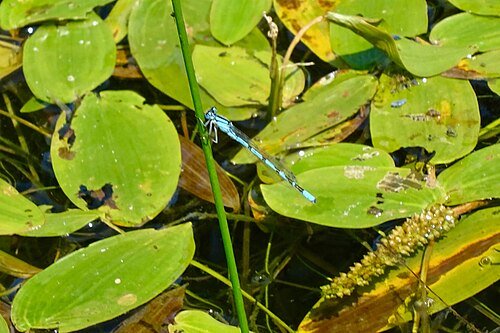
Which animals will you see here?
The species at the top are the ones with a peak month in November.
🦅 Common Crane
With luckverified🦅 Hen Harrier
Good chance in seasonchance per source🦅 Great Grey Shrike
Good chance in seasonchance per source🦅 Rough-legged Buzzard
Good chance in seasonchance per source🦅 Merlin
Good chance in seasonchance per source🦅 Peregrine Falcon
Good chance in seasonchance per source🦅 Black Woodpecker
With luckchance per source🦌 European badger
Very rareverified🦎 Viviparous lizard
With luckchance per source🦌 Roe deer
With luckchance per source🦎 Sand lizard
With luckchance per sourceThese species have an assessed chance with a source behind it. The list comes from the same database as the species pages.
Also reported present in this area (167 species) presence reported
These species are known to occur here (NDFF), but nothing has been recorded yet about your chance of seeing them.
Amphibian (6)
Dragonfly (30)
Reptile (1)
Spider (3)
Grasshopper (9)
Fish (1)
Butterfly (27)
Bird (61)
Mammal (land) (22)
Mammal (land/water) (2)
Mammal (bat) (5)
Walking routes
Wandelroute Dwingelderveld
📍 Start point on the map 🧭 Directions to the start (Google Maps)
Jac. P. Thijsse Wandelroute
📍 Start point on the map 🧭 Directions to the start (Google Maps)
Familiepad Dwingelderveld
📍 Start point on the map 🧭 Directions to the start (Google Maps)
Familiepad Spier
📍 Start point on the map 🧭 Directions to the start (Google Maps)
Koelevaartsveen
📍 Start point on the map 🧭 Directions to the start (Google Maps)
Hides and viewpoints
🔭 Bird observation hide Davidsplassen
🔭 Bird observation wall Holtveen
Practical information
- Access: Accessible all year between sunrise and sunset, on the paths. Freely accessible along walking and cycle paths; at the information point near Spier there is a wheelchair-accessible path.
- Parking: Park at the visitor centre Dwingelderveld (Benderse 22, Ruinen) and at the various entrances (among them Spier).
- Dogs: Welcome, on a lead, on the paths.
- Facilities: Visitor centre Dwingelderveld (Ruinen), a hide by the Davidsplassen and Theehuys Anserdennen (Ansen) for refreshments; walking and cycle routes.
🌿 Rules in this area
Natuurmonumenten / Staatsbosbeheer sets its own rules here. Stay on the paths, respect refuges and closures, keep dogs on a lead where that applies, and do not fly a drone — they are banned in almost every Dutch nature reserve.
Status: Verified · Last checked: 2026-07-31
Photo: Gouwenaar (Wikimedia Commons), Public domain