
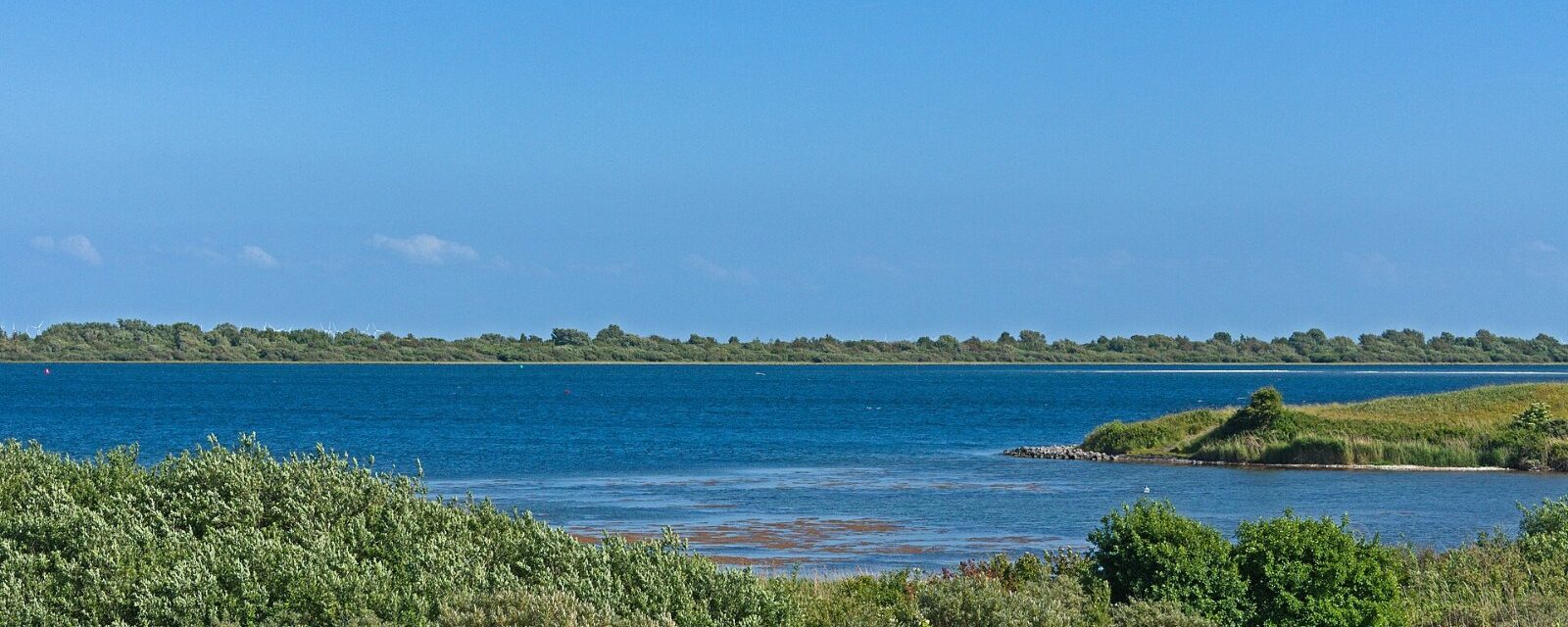
 📷 Foto: Ymblanter / CC BY-SA 4.0 via Wikimedia Commons.
Grevelingenmeer: where to see wildlife
Winter to early spring for the flamingos, which winter here and usually stay into the spring. Outside 15 March to 15 August for the islands, which are closed then. Winter along the Brouwersdam for diving ducks and divers: at ebb the current draws fish and with them birds. Enclosed salt lake
Grevelingenmeer — This is the largest salt-water lake in Europe, created when the Brouwersdam closed it off in 1971. Since the spring of 2022 a pair of White-tailed Eagles has stayed on the Slikken van Flakkee; in 2025 they raised three young, while two earlier breeding attempts in the region failed. Chilean and Greater Flamingos have wintered here for decades. On Hompelvoet the rare autumn lady’s-tresses grows. Mainly here: White-tailed Eagle (breeding since 2022, three young in 2025), flamingos as winter visitors, root vole, Slavonian Grebe, Black-necked Grebe, Little Egret, Eurasian Spoonbill, Brant, Barnacle Goose, Common Goldeneye, Red-breasted Merganser, Peregrine Falcon, Grey Plover, Bar-tailed Godwit, Ruddy Turnstone. Breeding birds: Western Marsh Harrier, Pied Avocet, Common Ringed Plover, Kentish Plover, Sandwich Tern, Common Tern, Little Tern. Large grazers: Shetland ponies, Fjord horses and Heck cattle. Best period: Winter to early spring for the flamingos, which winter here and usually stay into the spring. Outside 15 March to 15 August for the islands, which are closed then. Winter along the Brouwersdam for diving ducks and divers: at ebb the current draws fish and with them birds.
Which animals will you see here?
Also reported present in this area (33 species) presence reported
These species are known to occur here (NDFF), but nothing has been recorded yet about your chance of seeing them.
Spider (5)
Grasshopper (12)
Fish (16)
Walking routes
Wandelroute Slikken van Flakkee — geel
Wandelroutes Slikken van Flakkee — blauw en rood
Wandelroute Slikken van Flakkee — oranje
Hides and viewpoints
🔭 Bird hide Slikken van Flakkee (yellow route)
🔭 Two bird screens Slikken van Flakkee
🔭 Small viewing tower Battenoord
🔭 Flamingo viewpoint Grevelingendam
Practical information
- Access: It differs from place to place. Most areas are accessible all year, but the Staatsbosbeheer map uses four categories: not accessible, limited access, land section on paths only, and not accessible during the breeding season (15 March to 15 August inclusive). Hompelvoet is closed in that period. Over paved paths and roads the area is accessible to wheelchair users. Mind one current extra closure: the upper part of the orange footpath on the Slikken van Flakkee is closed "until further notice" because of the breeding White-tailed Eagles, and that is enforced. It has no end date — check the situation on the spot.
- Parking: Free, all year, in the car parks by the Grevelingendam, the Slikken van Flakkee and the Brouwersdam including the Kabbelaarsbank. For the flamingos you park on the Grevelingendam along the Strandweg.
- Dogs: Dogs are welcome in many places, on a lead or off it — watch the signs. On the nature islands they must be on a lead. On the recreation islands they may run free, but under control. Dog mess has to be cleared up everywhere.
- Facilities: Showers and toilets by the Brouwersdam on the Kabbelaarsbank, the Punt van Goeree and on the Grevelingendam. At the West-Repart dive site a jetty with a chair lift, suitable for people with reduced mobility. Public moorings with a berthing-fee arrangement from 1 April to 1 November. A bird hide along the yellow route on the Slikken van Flakkee, two bird screens, and a small viewing tower by the little harbour of Battenoord.
🌿 Rules in this area
Responsibility for management lies with the Natuur- en Recreatieschap De Grevelingen, while Staatsbosbeheer carries out the work. The Ministry of Infrastructure and Water Management leads on the Natura 2000 management plan. The leaflet of ground rules is published jointly by Staatsbosbeheer and Rijkswaterstaat. sets its own rules here. Stay on the paths, respect refuges and closures, keep dogs on a lead where that applies, and do not fly a drone — they are banned in almost every Dutch nature reserve.
Status: Verified · Last checked: 2026-10-28
Photo: Foto: Ymblanter / CC BY-SA 4.0 via Wikimedia Commons.