
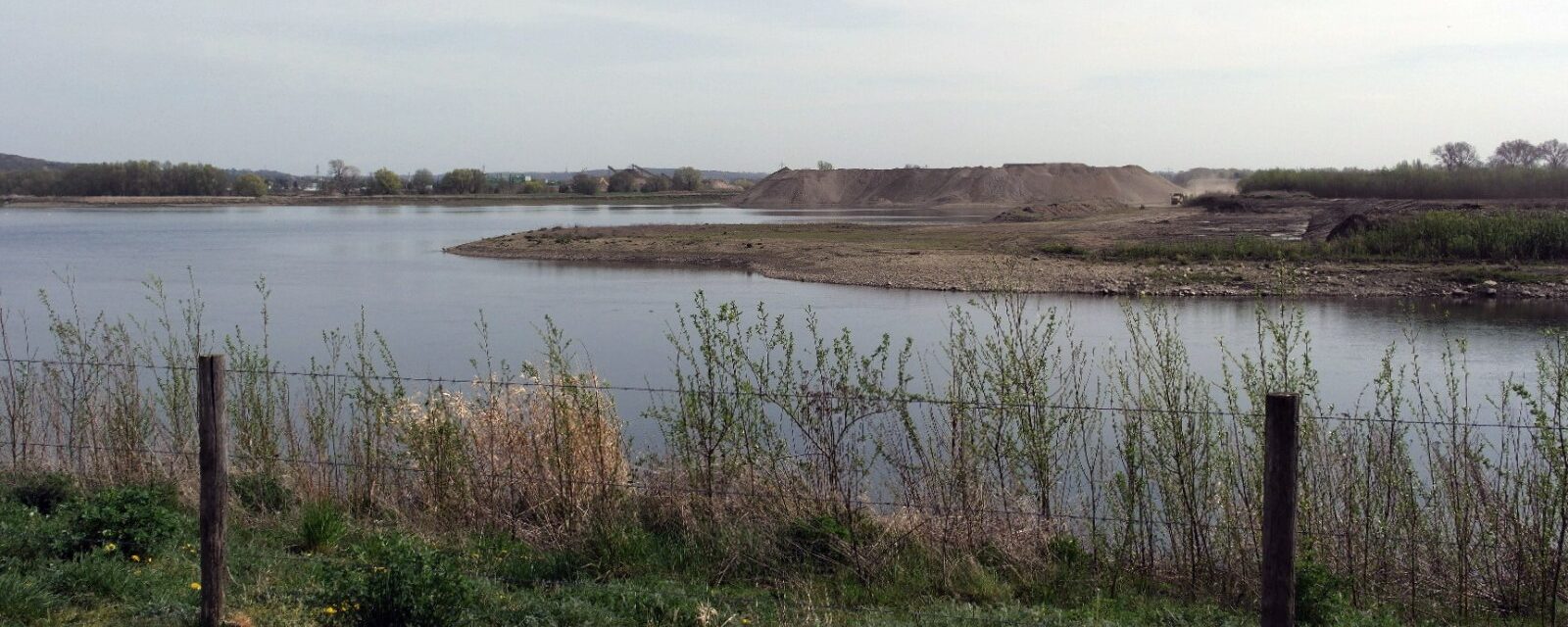
 📷 Foto: Kleon3 / CC BY-SA 4.0 via Wikimedia Commons.
Grensmaas: where to see wildlife
Spring is the best: that is when the current-loving fish spawn on the gravel banks and the Sand Martins and Little Ringed Plovers are back. Birdwatching is worthwhile all year; for waterbirds on the lakes winter is good. Gravel river
Grensmaas — This is the only gravel river the Netherlands has. The shifting gravel banks at Kotem, around Meers and Maasband, by the bridge at Maaseik and at the mouth of the Geul are important spawning places for chub and barbel. The Grensmaas project delivers more than 1,000 hectares of new nature; almost all eleven intervention sites are finished, with work at Grevenbicht and Schipperskerk running into 2027. Mainly here: Fish: chub, gudgeon and bleak are numerous; barbel, common nase and ide are common; dace is rare; bullhead is increasing. Also beaver, badger, wild boar, wildcat, natterjack toad, Red-backed Shrike, Sand Martin, Little Ringed Plover and Common Kingfisher. Best period: Spring is the best: that is when the current-loving fish spawn on the gravel banks and the Sand Martins and Little Ringed Plovers are back. Birdwatching is worthwhile all year; for waterbirds on the lakes winter is good.
Which animals will you see here?
Also reported present in this area (24 species) presence reported
These species are known to occur here (NDFF), but nothing has been recorded yet about your chance of seeing them.
Spider (5)
Grasshopper (9)
Fish (10)
Walking routes
Rondje Molenplas
Wandelpad langs de Molenplas
Het Klauwenpad (struinroute)
Lange afstandswandeling RivierPark Maasvallei
Hides and viewpoints
🔭 Viewing tower Molenplas
🔭 Viewing tower Walburg
🔭 Bird observation point Den Deyler
🔭 Bird watching spot ’t Schaor
Practical information
- Access: This is roaming country: you may walk freely, off the paths as well, from sunrise to sunset. Natuurmonumenten: "while roaming you may come and go as you please." Cycling, mountain biking and barbecuing are not allowed, and drones are unwelcome. In the fenced sections Galloway cattle and Konik horses roam free; you may go in there, but always keep at least 25 metres away and leave the animals in peace. The roaming country is not suitable for pushchairs, wheelchairs or people who are less steady on their feet; the semi-paved exceptions are the footpath along the Molenplas and the path along the Maas at Grevenbicht. At high water areas are closed — check that in advance.
- Parking: Natuurmonumenten has fixed car parks at Koningssteen-Kollegreend (Grote Heggerlaan), Molenplas (Hompesche Molen and Prior Gielenstraat), Walburg (Walburgisstraat), Visserweert (Illikhoven), Elba-Grevenbicht (Burgemeester Kotenplein), Nattenhoven (Berger Maasstraat), Maasband (Maasbanderkerkweg) and Meers (Kloosterstraat). For the viewing tower by the Molenplas you park on the Verlengde Oude Maasweg; from there it is 300 to 400 metres on foot.
- Dogs: On a lead, with both site managers. Natuurmonumenten: "the dog may come along, provided it is on a lead." Staatsbosbeheer: "dogs are welcome, provided they are on a lead." For the plots managed by Rijkswaterstaat no dog policy was found.
- Facilities: Viewing tower Walburg near Ohé en Laak, a viewpoint and bird watching spot at the Molenplas near Stevensweert, a bird observation point Den Deyler near Grevenbicht, a bird watching spot ’t Schaor near Maasband. Info Point Grensmaas by café De Witte Borstel in Meers. A foot and bicycle ferry to Belgium from Aan de Maas. Food and drink at the Hompesche Molen (Stevensweert), Maasoever (Nattenhoven) and De Witte Borstel (Meers), among others.
🌿 Rules in this area
Layered. Rijkswaterstaat is the water manager and leads on Natura 2000. The new nature areas are managed by Rijkswaterstaat, Staatsbosbeheer or Natuurmonumenten. Staatsbosbeheer manages Borgharen, Itteren and Geulle aan de Maas, among others; Natuurmonumenten manages Molenplas, Walburg, Koningssteen, Visserweert, Grevenbicht, Nattenhoven, Maasband and Meers, among others. The Consortium Grensmaas carries out the project but is not a site manager. sets its own rules here. Stay on the paths, respect refuges and closures, keep dogs on a lead where that applies, and do not fly a drone — they are banned in almost every Dutch nature reserve.
Status: Verified · Last checked: 2026-10-28
Photo: Foto: Kleon3 / CC BY-SA 4.0 via Wikimedia Commons.