
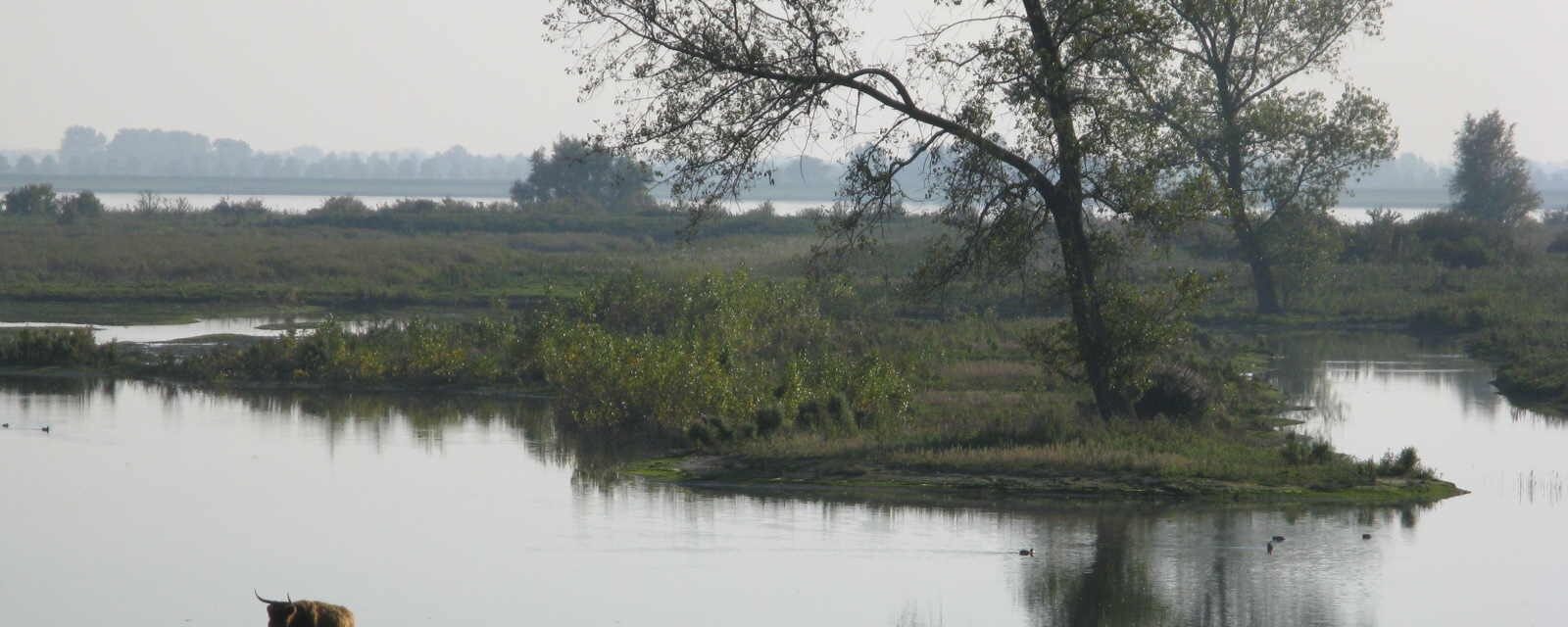
 📷 Foto: Ceinturion / CC BY-SA 3.0 via Wikimedia Commons.
Haringvliet & Hollands Diep: where to see wildlife
All year, with two peaks. In winter there are Common Shelduck, Northern Shoveler and Eurasian Teal by Tiengemeten; in spring and autumn avocets, curlews, oystercatchers, herons and spoonbills. Ospreys are seen mainly on passage in late summer and autumn, diving over the Haringvliet. By the Zwartkopmeeuw hide thousands of swallows gather in autumn. Closed-off sea arm & freshwater basin
Haringvliet & Hollands Diep — One decision changed this whole system. Rijkswaterstaat: "since 2019 we have kept the Haringvliet sluices ajar." Since then tens of millions of fish have passed through the sluices. The nature restoration came out of the Droomfondsproject Haringvliet, a partnership of Wereld Natuur Fonds, Natuurmonumenten, ARK Natuurontwikkeling, Sportvisserij Nederland, Staatsbosbeheer and Vogelbescherming. Mainly here: Migratory fish: sea lamprey, river lamprey, allis shad, twaite shad, salmon, and besides those bitterling and bullhead. Birds: Eurasian Spoonbill, White-tailed Eagle, Osprey, Little Tern, Mediterranean Gull, Pied Avocet, Greater Scaup. Mammals: beaver and root vole. Best period: All year, with two peaks. In winter there are Common Shelduck, Northern Shoveler and Eurasian Teal by Tiengemeten; in spring and autumn avocets, curlews, oystercatchers, herons and spoonbills. Ospreys are seen mainly on passage in late summer and autumn, diving over the Haringvliet. By the Zwartkopmeeuw hide thousands of swallows gather in autumn.
Which animals will you see here?
Also reported present in this area (31 species) presence reported
These species are known to occur here (NDFF), but nothing has been recorded yet about your chance of seeing them.
Spider (5)
Grasshopper (10)
Fish (16)
Walking routes
Rondwandeling Groote Gat
Pad naar Vogelobservatorium Tij
Beverroute Tiengemeten
Historische Polderwandeling Tiengemeten
Hides and viewpoints
🔭 Bird observatory Tij
🔭 Bird hide Kluut (Vogelboulevard)
🔭 Bird hide Zwartkopmeeuw (Vogelboulevard)
🔭 Bird hide Visarend (Vogelboulevard)
🔭 Bird hide Lepelaar (Vogelboulevard)
Practical information
- Access: The Kluut hide on the Vogelboulevard is accessible to people with a physical disability; the walk to the bird screen by the Meneersche plaat is not wheelchair-accessible. The path to Tij has steps and cannot be taken with a wheelchair or a walker. Tiengemeten can only be reached by ferry; the ferry runs daily between 10am and 5pm, on the hour. Note: the viewing tower at Ooltgensplaat is temporarily closed according to Staatsbosbeheer — check that before you set out.
- Parking: Free in the car park of the Stellendam marina for Tij (mind the barrier at the harbour entrance). For Tiengemeten: the ferry car park, Nieuwendijk 1, Zuid-Beijerland. At the Vogelboulevard: car park Vogelboulevard Hellegatsplaten; at the Paardengat you park along the road.
- Dogs: It differs from place to place. Staatsbosbeheer: dogs on a lead are welcome in many areas on Goeree-Overflakkee unless the signs say otherwise, but all the bird hides and the viewing tower of the Vogelboulevard are closed to dogs, and at the Groote Gat a dog may not come along at all. At Vogelobservatorium Tij dogs are not allowed, not even on a lead. On Tiengemeten they may come along on a lead on the paths, except in the Speelnatuur play area.
- Facilities: Vogelboulevard Hellegat-Ventjagersplaten with four bird hides and a viewing tower (Staatsbosbeheer). Vogelobservatorium Tij by the Scheelhoek, with a fixed telescope, free to visit all year between sunrise and sunset (Natuurmonumenten). A visitor centre on Tiengemeten, Tuesday to Sunday from 10.15am to 4.45pm, closed on Mondays.
🌿 Rules in this area
Shared: Rijkswaterstaat, Staatsbosbeheer, Natuurmonumenten and private owners. Note that this list of managers comes from the Natura 2000 site documents of 2006; a more recent list could not be found. sets its own rules here. Stay on the paths, respect refuges and closures, keep dogs on a lead where that applies, and do not fly a drone — they are banned in almost every Dutch nature reserve.
Status: Verified · Last checked: 2026-10-28
Photo: Foto: Ceinturion / CC BY-SA 3.0 via Wikimedia Commons.