
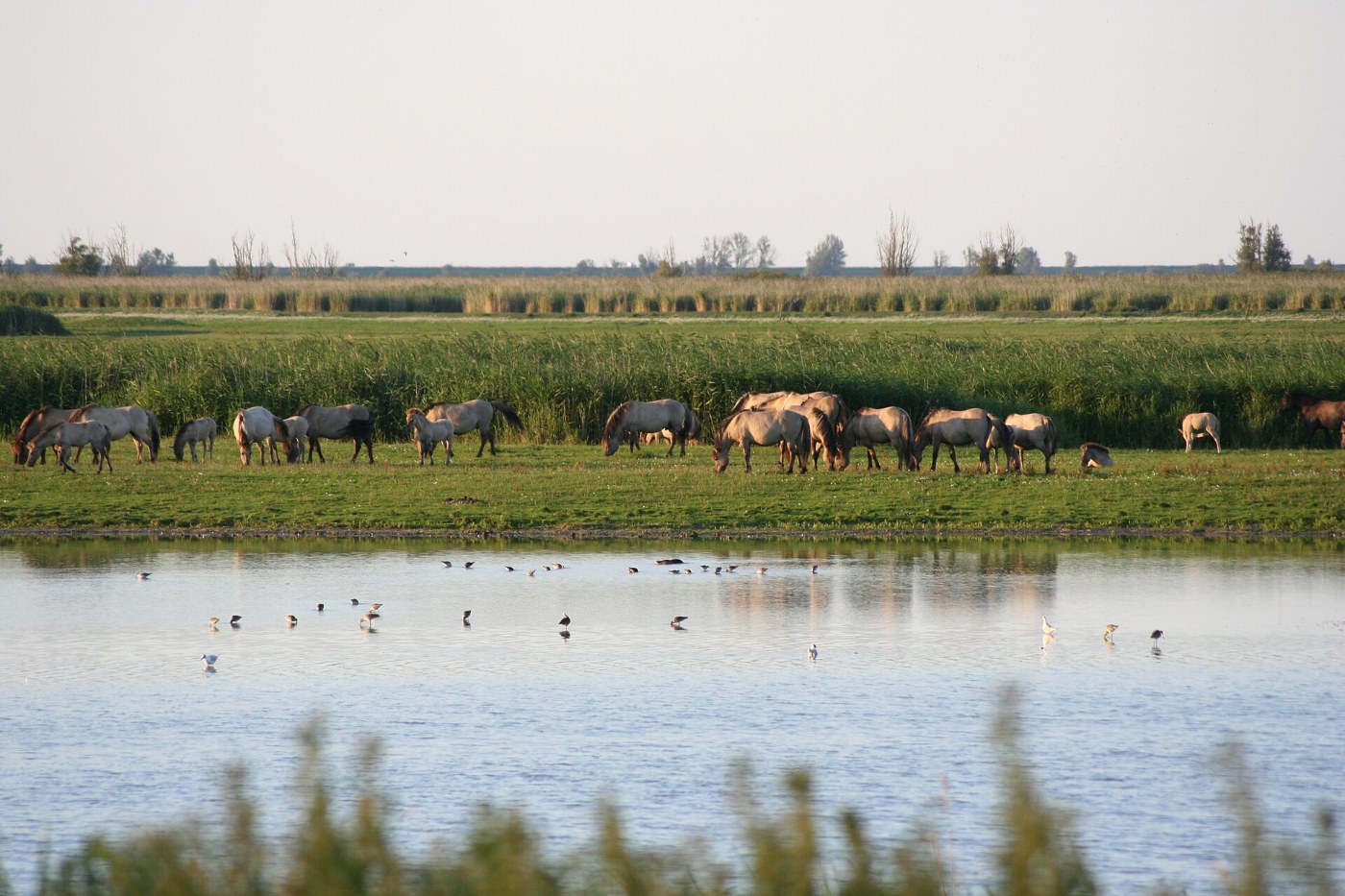
Red deer in the Oostvaardersplassen: where to see them, and when
The Oostvaardersplassen is the only area in the Netherlands where you see hundreds of red deer standing in an open, treeless landscape — not a wood where you peer between the trunks, but a plain where a herd of fifty animals is simply visible. From mid-October to the end of December it is at its best: the grass is short, the tall vegetation is gone, the animals move to the open parts, and the walking route to the best hide is still open. On 1 January that route closes until mid-May.
This article says where to stand, at what hour, what closes and when, and what the excursions cost. All practical details were checked on 21 October 2026 and come with their source attached — prices, opening hours and closures are the first things to go out of date.
What makes the Oostvaardersplassen different from the Veluwe
Anyone wanting to see red deer in the Netherlands thinks of the Veluwe. There they stand in woodland and on heath, and you see them the moment they cross a clearing. In the Oostvaardersplassen it is the other way round: the whole area is open. It is reclaimed seabed that was never laid out as farmland, and grazing by large herds keeps the grassland short. So you are not looking for an animal among the trees, you are scanning a plain with binoculars.
That has a flip side you need to know beforehand. The core area, where the herds actually roam, is not freely accessible. Outside the winter season Staatsbosbeheer allows only excursions there. What is freely accessible are the edges: Hollandse Hout, Kotterbos, Oostvaardersbos and Oostvaardersveld. From those edges and from the hides you look into the area. That is not second best — the De Zeearend hide has a clear view of more than 2.5 kilometres, and that is more open space than you ever get in one glance on the Veluwe.
Since 2018 the Oostvaardersplassen has been part of Nieuw Land National Park, together with the Lepelaarplassen, the Marker Wadden and the Markermeer. For the visitor that mainly matters when combining a day out, on which more below.
How many red deer there are, and why that number differs by season
This is the figure most people are after, and it is less clear-cut than it looks — because two different kinds of number are in circulation.
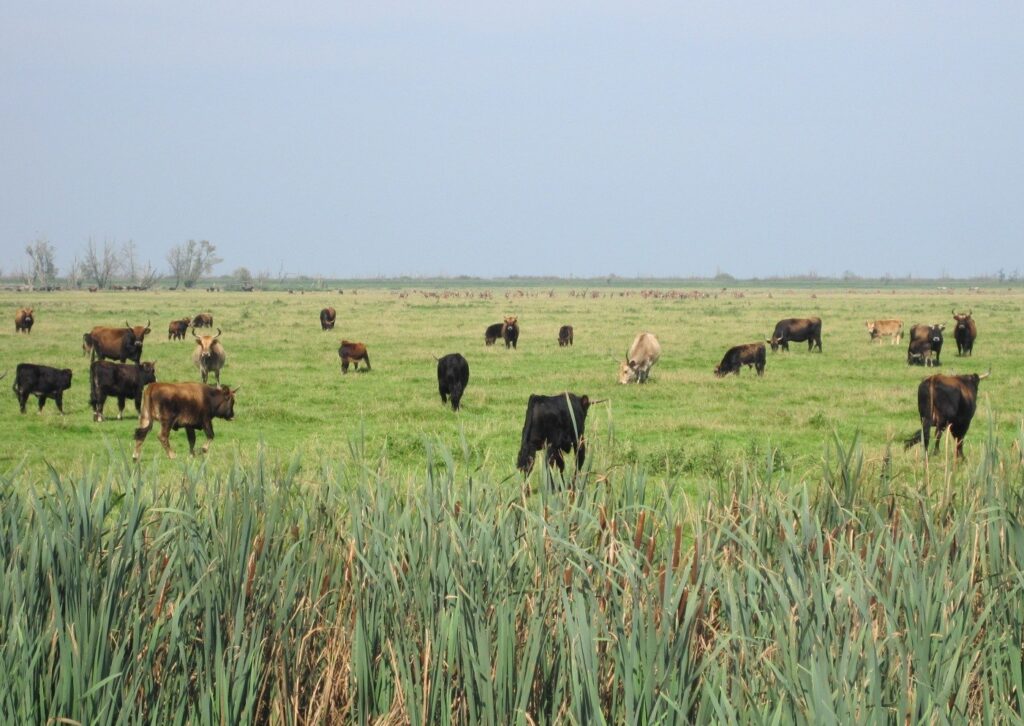
In its annual report on 2025, Staatsbosbeheer writes that the October 2025 count, carried out by helicopter with thermal imaging cameras, came out at 770 red deer, 420 Konik horses and 380 Heck cattle: 1,570 animals in total. The target is 1,100 animals in spring. That difference is not an error but the system: the annual increase is taken out of the area, so there are more animals in autumn than in spring.
In July 2026, in a news item about genetic research, Staatsbosbeheer gives the numbers 500 red deer, 300 Konik horses and 300 Heck cattle, with 500 as the desired number of red deer. Add those three and you get exactly 1,100. So those are the spring targets, not a new count.
For you as a visitor that means something concrete: in October, November and December there are more red deer in the area than at any other time of year. That is one of the reasons this is the right moment.
The best period: mid-October to the end of December
Four things coincide in those months.
- The vegetation is low. Reed and rough growth is flattened or grazed away, and an animal a metre and a half at the shoulder stands out above it.
- The numbers are at their highest, for the reason above.
- The routes are still open. The Zeearend walking route is closed from January to mid-May, because the Driehoek is then closed for management and serves as a quiet zone for the large grazers. The De Roerdomp observation tower is also closed in that period. Staatsbosbeheer also reports that in winter, and sometimes for a few weeks in spring, parts of the Driehoek, the Oostvaardersbos and the Kotterbos close, including the walking routes there. Those closures are announced with a news item and with signs in the area.
- The light is low. In November the sun is at an angle all day, which on a treeless plain is the difference between a silhouette and an animal with structure.
The rut is not a reason to come now: it is over. The journal Zoogdier places the peak “between mid-September and early October”. Anyone wanting to hear the roaring must come in September next year — the article on the red deer rut is ready for that. The fallow deer rut is still running right now, but you see that elsewhere.
What you do see in autumn and winter: segregated herds
Outside the rut, red deer live in herds segregated by sex. Vroege Vogels wrote about it in 2021, with animal ecologist Hugh Jansman as source: “In summer and winter red deer form separate herds segregated by sex.” The males “stand together in smaller or larger herds”. The female herds are families: “Several generations stand together: grandmother, daughters, granddaughters and the calves form a herd.” Male calves stay in those for about two years, until their antlers start to grow.
That is exactly what you see on a November day, and it makes the watching more fun: a group of antler-bearers only in one place and a family group with calves in another is not coincidence but the normal winter picture. As winter progresses, the female herds also split up by family “when food becomes scarce”.
A set of antlers can, according to Zoogdier, grow to 120 centimetres across and 15 kilos in weight. On an open plain in low light that is still visible at hundreds of metres.
The best time of day
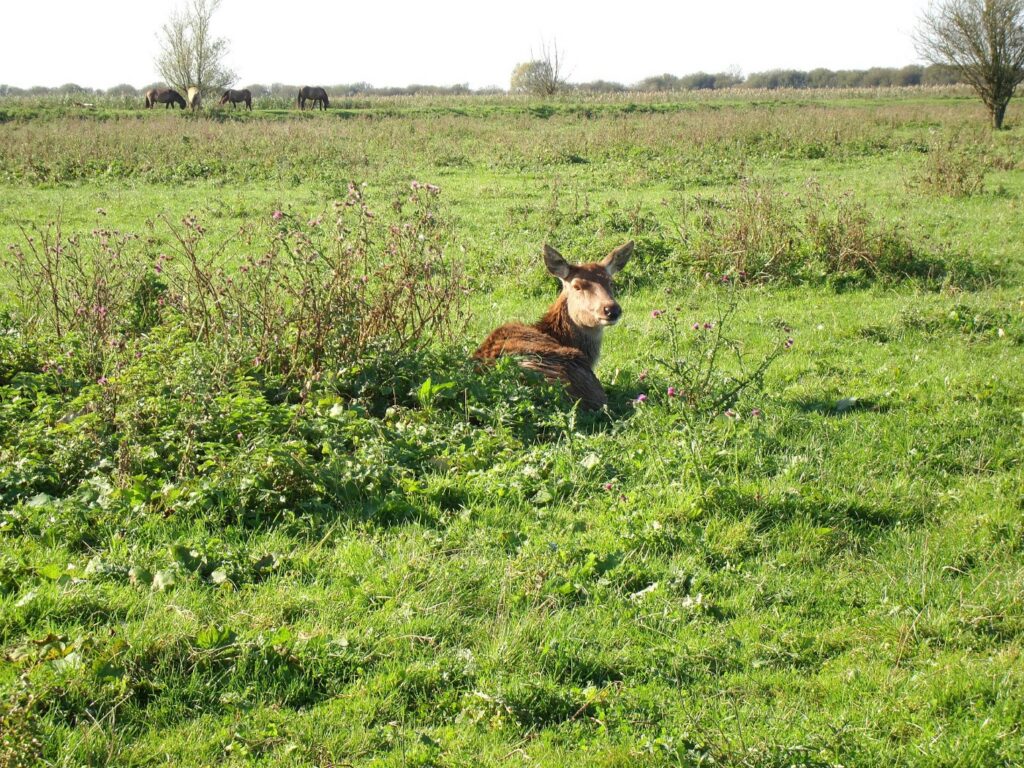
The first and the last hour of light. For the Zeearend walking route Staatsbosbeheer writes that you stand a chance of a red deer “especially on a morning walk”. Zoogdier gives the reason: red deer forage at times with little human activity, and rest and ruminate in between in places where nobody comes.
In practice that means in November: be inside before eight, or stay for the last two hours before sunset. The latter is easier to sustain in the Oostvaardersplassen than elsewhere, because the hides are out of the wind. Do note the closing time: from mid-May to 31 December the area is open from sunrise to sunset, so you have to be out before dark.
Fog is not a lost morning. On a plain, fog removes the background, and then the animals stand out rather than disappear.
Where to stand, Lelystad side: the De Zeearend hide
This is the best spot in the area, and it is also the easiest.
You start at the Buitencentrum Oostvaardersplassen, Kitsweg 1 in Lelystad. From there it is about a quarter of an hour’s walk to the hide, along a marked route. De Zeearend is a large observation hide with two floors and a clear view of more than 2.5 kilometres over the plain and the reed marsh. The hide is wheelchair accessible.
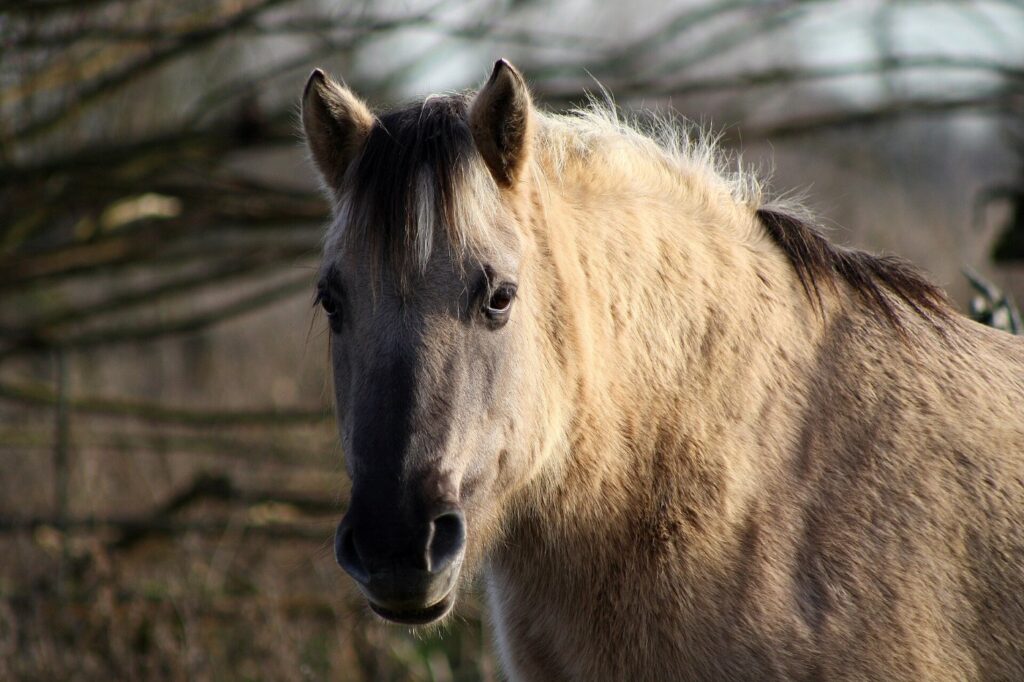
The complete Zeearend walking route is 5 kilometres and passes the Wigbels Eiland bird screen. For that route Staatsbosbeheer names, besides the large grazers, harriers hunting low over the Driehoek, and Bearded Reedlings, European Goldfinches and Sedge Warblers in the reed and the bushes. On the way you may come across a harem of Konik horses; the site manager’s instruction is then: stay at least 25 metres away.
So the route is closed from January to mid-May. Anyone who wants to do this does it now.
Where to stand, Almere side: De Oostvaarders and the Oostvaardersbos
On the western side lies the De Oostvaarders nature experience centre, Oostvaardersbosplaats 1 in Almere. According to VisitAlmere it is open every day from 10.00 am to 5.00 pm. On the first floor there is a panorama room with binoculars with which you look out into the area. That is the only place in this story where you look at the plain indoors, warm and seated — with children or in rough weather that is no small consideration.
Around the centre lie the Oostvaardersbos and the Fluitbos, with the Jan v.d. Boschpad as a raised viewpoint. Bear in mind that parts of the Oostvaardersbos can close in winter.
The Almere side is the sensible choice if you are coming from the Randstad and don’t have a whole day. The Lelystad side is the choice if you really want to see the animals.
The Praamweg, the Praambulten and the train
Along the Praamweg, next to the Almere–Lelystad railway line, lie the Grote Praambult and the Kleine Praambult: two viewpoints from which you look over the area without walking. For anyone unsteady on their feet or short of time, that is the quickest chance.
And then the tip that costs nothing: the train between Almere and Lelystad runs along the edge of the area. Sit on the right side and look out. You won’t see antlers in detail, but you will see whether the herds are in the open parts that day — useful information before you decide where to stand.
The freely accessible edges: Oostvaardersveld, Kotterbos and Hollandse Hout
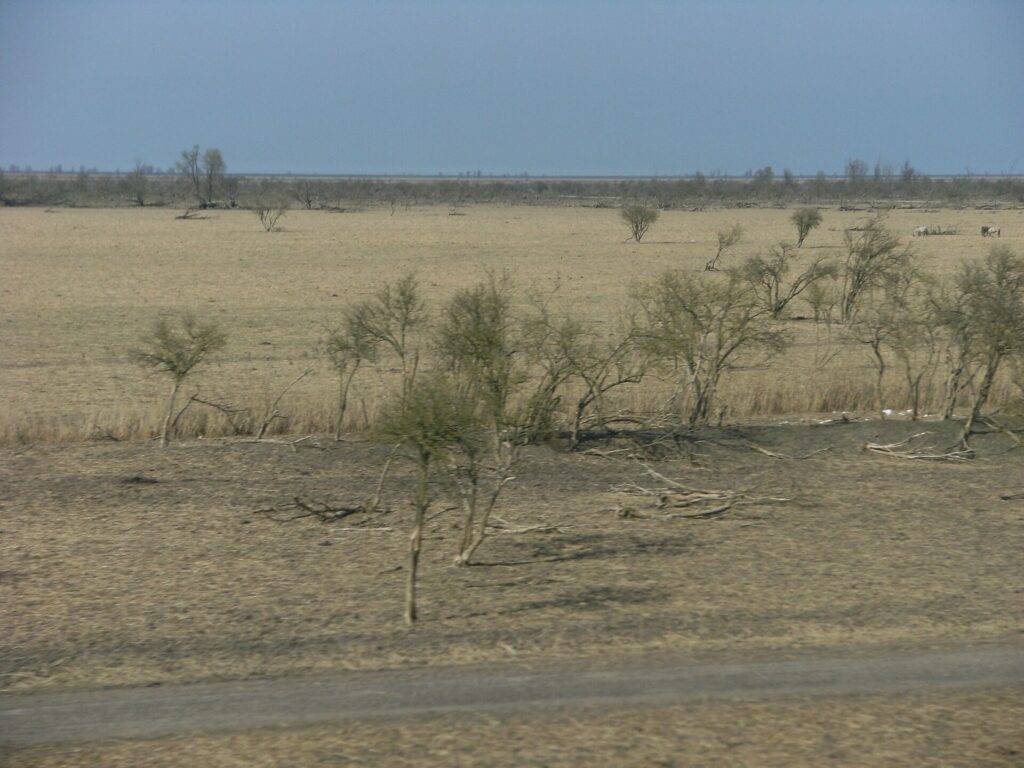
Staatsbosbeheer lists Hollandse Hout, Kotterbos, Oostvaardersbos and Oostvaardersveld as freely accessible in principle. Those are the parts where you can wander on your own.
- Oostvaardersveld — the smallest and the friendliest, with a viewpoint by the cattle grids. Good for a first visit and with children.
- Kotterbos — woodland and rough ground, with a viewing mound. There are more small animals here than on the plain.
- Hollandse Hout — young poplar wood, the quietest of the three, and the place where dogs are allowed on part of the routes.
Staatsbosbeheer is honest about what you can expect here: the large grazers — red deer, Konik horse and Heck cattle — are visible, but smaller animals like red fox, roe deer and European hare take more looking for. That matches what this site says elsewhere: don’t look for the animal, look for the place where the animal has to come.
What else you see: White-tailed Eagle, raptors and winter visitors
The White-tailed Eagle is the species the area owes its reputation to. In 2006 the first Dutch pair bred here, and since then the species has spread across the country — Vroege Vogels reported for 2023 that 36 pairs started a nest, that 32 were successful and that those raised 45 young. That is the figure for 2023, not for now. The hide is not called De Zeearend for nothing, but it is no guarantee: count on patience and binoculars. We deliberately name no nest locations here.
Further into autumn and winter: Western Marsh Harrier above the reed, Common Buzzard on the posts, Peregrine Falcon and Common Kestrel, Short-eared Owl at falling dusk, and large numbers of geese and ducks on the marsh. In autumn starlings gather in the reed to roost — see how to find a starling murmuration. The Eurasian Spoonbill, which the area is known for in spring, is long gone to Africa by then.
If the weather turns in from the north-east, the area can suddenly fill with winter visitors: Fieldfares and Redwings in the woodland edges, and sometimes Common Cranes passing over — though you see those better in the Fochteloërveen or the Dwingelderveld, see the crane article.
Excursions: the eco-cart and the ranger walks
You can only reach the core area with a guide, outside the winter season.
Through the Oostvaardersplassen by eco-cart. Two hours, with a Staatsbosbeheer guide, departing from the Lelystad side. Age 12 and up. Suitable for people with a physical disability, provided you can get into the eco-cart yourself. Dogs are not permitted. Staatsbosbeheer adds practical instructions worth following: wear wind- and waterproof clothing without conspicuous colours, use no perfume, and bring binoculars or hire a pair at the visitor centre. Booking is via the ticket webshop; you can add a lunch. The price is not stated on the page.
Ranger excursions. Staatsbosbeheer also runs themed walks, for instance Birds of prey of the Oostvaardersplassen, from the Buitencentrum. On DagjeWeg.nl that was listed at €17.50 per person, with the explicit note that the price is indicative and may change; the date given there (5 September 2026) has since passed. That walk partly follows unsurfaced paths and is not accessible for people with a physical disability; dogs are not allowed. The route is chosen on the day itself, so every excursion is different.
Questions about excursions go via the Buitencentrum: 0320-254585 (choose 1), available Tuesday to Sunday from 10 am to 4 pm, or oostvaardersplassen@staatsbosbeheer.nl.
Prices and dates checked on 21 October 2026. Check them again just before you go — this is the most perishable part of this article.
Getting there and parking
By car to the Buitencentrum. On the A6 (Amsterdam–Emmeloord) take exit 10 towards Lelystad via the Larserdreef, turn left onto the Torenvalkweg and follow it to the Knardijk. Turn right there; after the railway viaduct the visitor centre with car park is on your left. Address for the navigation: Kitsweg 1, 8218 AA Lelystad.
By public transport. Frankly that is awkward to the Lelystad side: the nearest bus stop is a good hour’s walk from the visitor centre. The workable solution is the bike: hire an OV-fiets at Lelystad Centrum station, and it is then about half an hour’s cycling to the visitor centre via the Buizerdweg and the Knardijk. OV-fietsen are also available at Almere Centrum station; from there you are closer to the Almere side.
Buitencentrum opening hours. VisitFlevoland gives, for April to October, Tuesday to Sunday 10.00 am–7.00 pm, and for November to March, Tuesday to Sunday 10.00 am–4.00 pm; closed Mondays, except in July and August. On that same page there is also a general schedule of 10.00 am–5.00 pm that contradicts it. So check the times before you drive. The area itself is open until 31 December from sunrise to sunset.
Staying nearby
For a morning in the Oostvaardersplassen you don’t need to sleep far away. The logical places are Lelystad (closest to the Buitencentrum, and to the morning route to the hide), Almere (handy for the western side and with the best train connection), and for anyone making a long weekend of it Dronten or the edge of the Veluwe, so that on the second day you are standing in woodland instead of on a plain.
There are no booking links on this site, and that stays that way until we have used a provider ourselves. What is worth arranging in advance: somewhere to sleep where you can get out of the door at half past six in the morning without missing breakfast. In November that is the difference between standing in the first light and not.
With children, and accessibility
With young children the order is: De Oostvaarders in Almere first (panorama room, indoors, binoculars), then a short round through the Oostvaardersveld. A quarter of an hour’s walk to a hide and sitting still there only works from about the age of eight. The eco-cart has an age limit of 12.
For wheelchair users more is possible than you might expect. From the visitor centre a wheelchair-accessible boardwalk runs through the reed, with the Blauwborst viewing screen along it. The De Zeearend hide is wheelchair accessible. The Driehoek is described by Staatsbosbeheer as well accessible for people with a physical disability. The ranger walk over unsurfaced paths emphatically is not.
Dogs. Dogs on the lead are allowed on the ‘t Lange Pad walking route, and on part of the routes in Hollandse Hout and Kotterbos. They are not allowed at the Buitencentrum or on the routes that start there. Nor in the eco-cart.
Watching responsibly: distance, paths and the herd
The large grazers in the Oostvaardersplassen are not tame. They are free-living animals used to people on a path and not to people beside it. For the Konik horse harems Staatsbosbeheer names a minimum distance of 25 metres; treat that as the floor, and allow more for red deer with calves.
Keep to the paths, even where the fence looks low. The core area is not closed off to hide the animals but to give them peace; that is the same reason the Driehoek closes in winter. And leave the drone at home. The general rules are on responsible wildlife watching.
If you want to give something back to the area: submit your records. A herd of sixty red deer with a date and a place is usable information, and it costs you nothing.
The management and the court case: what to know before you go
The Oostvaardersplassen has been the subject of debate for years, and anyone who goes there will sooner or later be presented with it. Here is what is actually going on.
The province of Flevoland had granted an exemption permitting the killing of red deer from January 2024 through December 2028, down to a target population of five hundred animals. That exemption was annulled on 11 February 2026 by the Administrative Jurisdiction Division of the Council of State. In an interim ruling of July 2025 the Division had already held that the province had not made it plausible that “a population of five hundred red deer in the Oostvaardersplassen would be sufficiently genetically diverse”. In September 2025 the province then added five conditions, including a scientific study of genetic diversity. The Division held that the outcome of that study had to be awaited first: under the Nature Conservation Act an exemption may only be granted if no harm is done to the “favourable conservation status”, and that assessment may not depend on uncertain research results that only become available after the culling has begun. The Provincial Executive of Flevoland must decide on the application again.
That study now exists. The Institute for Biodiversity and Ecosystem Dynamics of the University of Amsterdam found “few signs of inbreeding”; according to the study, the red deer of the Oostvaardersplassen are among the genetically most diverse populations in Western Europe, and the Konik horses and Heck cattle are genetically more diverse than common horse and cattle breeds. The researchers consider the current numbers sufficient and see “no need to increase the numbers”, with the recommendation to repeat the research periodically. Staatsbosbeheer published that on 2 July 2026.
What has been decided since then is not in the sources we were able to check on 21 October 2026. So this is a live case, not a closed chapter.
One thing that often comes up and that is unambiguous: for the winter of 2024–25 Staatsbosbeheer writes that the condition of the large grazers “remained sufficiently good” and that there was “therefore no need” to provide supplementary feed.
Combine it with
The Oostvaardersplassen rarely fills a whole day — after the morning light the activity drops away. Three combinations that work:
- The rest of Nieuw Land National Park. The Lepelaarplassen are on the Almere side; you reach the Marker Wadden by boat from Lelystad, though sailings are limited in winter.
- The Lauwersmeer or the Drents-Friese Wold, if you are heading north anyway and making a weekend of it.
- The Veluwe, for the contrast: the same species in woodland instead of on a plain. There are also mouflon there, which don’t occur here.
If you want something completely different on the water in the same period: seals and harbour porpoises in the Oosterschelde is a day trip with a comparable rhythm — except that there the tide sets your hour instead of the light.
Frequently asked questions
Can you just walk among the red deer in the Oostvaardersplassen?
No. The core area where the herds roam is accessible only on an excursion, and outside the winter season. The edge areas Hollandse Hout, Kotterbos, Oostvaardersbos and Oostvaardersveld are freely accessible in principle, and from the hides you look into the core area.
How many red deer are there in the Oostvaardersplassen?
The October 2025 helicopter count with thermal imaging cameras came out at 770 red deer, alongside 420 Konik horses and 380 Heck cattle. The spring target is 1,100 animals in total, 500 of them red deer. So there are more in autumn than in spring.
What is the best time of year to see red deer?
Mid-October to the end of December: the vegetation is low, the numbers are at their highest and the routes are still open. From January to mid-May the Zeearend walking route is closed and parts of the Driehoek, the Oostvaardersbos and the Kotterbos are shut. For the rut you need to come in September, not now.
What time of day is best?
The first hour after sunrise or the last two hours before sunset. Staatsbosbeheer names the morning walk explicitly as the best moment for a red deer. The area is open from sunrise to sunset.
Which hide is the best?
De Zeearend, a quarter of an hour’s walk from the Buitencentrum in Lelystad. Two floors, a clear view of more than 2.5 kilometres, wheelchair accessible. Note that the route to it is closed from January to mid-May.
Can my dog come?
On the lead on the ‘t Lange Pad walking route and on part of the routes in Hollandse Hout and Kotterbos. Not at the Buitencentrum, not on the routes that start there, and not in the eco-cart.
What does an excursion cost?
For the eco-cart (two hours, age 12 and up) no price is given on the Staatsbosbeheer page; booking is via the ticket webshop. A ranger walk was listed on DagjeWeg.nl at €17.50 per person, indicative. Check prices just before you go.
Are red deer still being culled?
The exemption that permitted it was annulled by the Council of State on 11 February 2026, because the outcome of the genetic study had to be awaited first. That study was published in July 2026 and found little inbreeding. The Provincial Executive of Flevoland must decide again; what has been decided since, we could not establish on 21 October 2026.
Further reading at the source
- Staatsbosbeheer, Oostvaardersplassen — toegankelijkheid: which parts are freely accessible, the winter closures, dogs, hides and wheelchair accessibility. In Dutch.
- Staatsbosbeheer, Wandelroute Zeearend: 5 kilometres, the hide with its 2.5 km clear view, the closure from January to mid-May, and the 25 metres’ distance from the Konik horses. In Dutch.
- Staatsbosbeheer, Jaarrapportage Oostvaardersplassen 2025: the October 2025 helicopter count and the spring target of 1,100 animals. In Dutch.
- Staatsbosbeheer, Grote grazers in de Oostvaardersplassen zijn genetisch gezond (2 July 2026): the University of Amsterdam research and the numbers per species. In Dutch.
- Council of State, Provincie Flevoland moet opnieuw beslissen op aanvraag voor doden van edelherten (11 February 2026): the ruling and the reasoning. In Dutch.
- Staatsbosbeheer, Met de ecokar door de Oostvaardersplassen: duration, age limit, accessibility and the practical instructions. In Dutch.
- Vroege Vogels (BNNVARA), Roedel van edelherten verdeeld op geslacht (4 July 2021): the segregated herds in summer and winter. In Dutch.
- Diemer Vercayie, Zoogdier 28-3: the rut peak, the antler measurements and the seasonal habitat. In Dutch.
- VisitFlevoland and VisitAlmere: opening hours of the Buitencentrum and of the De Oostvaarders nature experience centre. In Dutch.
- Vogelkijkhut.nl, De Zeearend: location, coordinates, walking time and access. In Dutch.
- Wildlife watching on the Veluwezoom — the same species in woodland and heath instead of open plain, and without a fence.
- Oostvaardersplassen area page — which species have been recorded, with the chance of each.
- Red deer — identification, size, sound and distribution.
- Seeing red deer during the rut — for anyone wanting to hear the roaring, in September.
- The fallow deer rut — runs later in the year than the red deer’s.
- White-tailed Eagle and Western Marsh Harrier — the two raptors you see here most often.
- Konik horse — the area’s second large grazer.
- Winter visitors from the north and autumn bird migration.
- Recognising tracks and signs — in the wet clay of Flevoland prints stand out sharply.
- Otter or beaver? — for the water at the edges of the area.
- Seals and harbour porpoises in the Oosterschelde — the other day trip of this autumn.
- Wildlife calendar November and December — what else there is to see that month.
- Responsible wildlife watching — distance, paths and submitting records.