Where to see the Eurasian Magpie in the Netherlands
Easy 🦅 Bird
Where and when do you see a Eurasian Magpie? This species is easy to see, all year round.
How do you recognise a Eurasian Magpie?
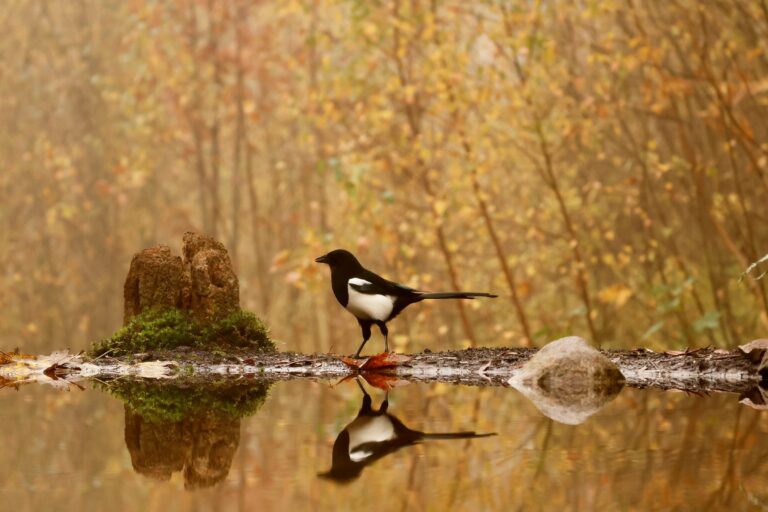
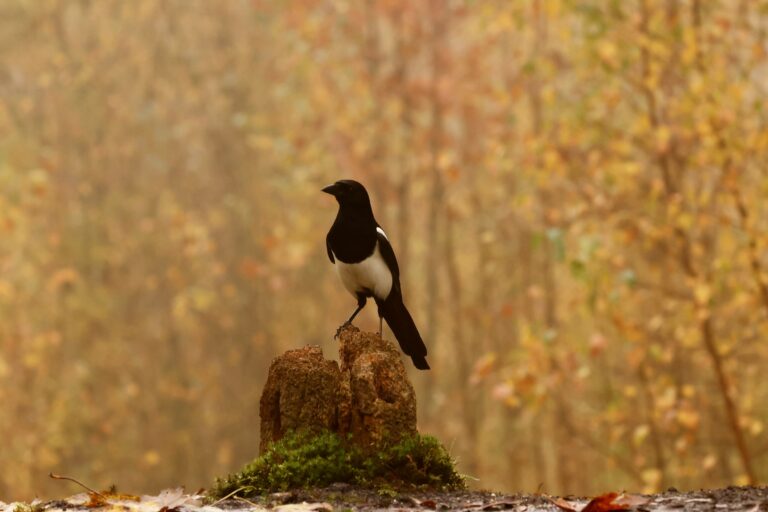
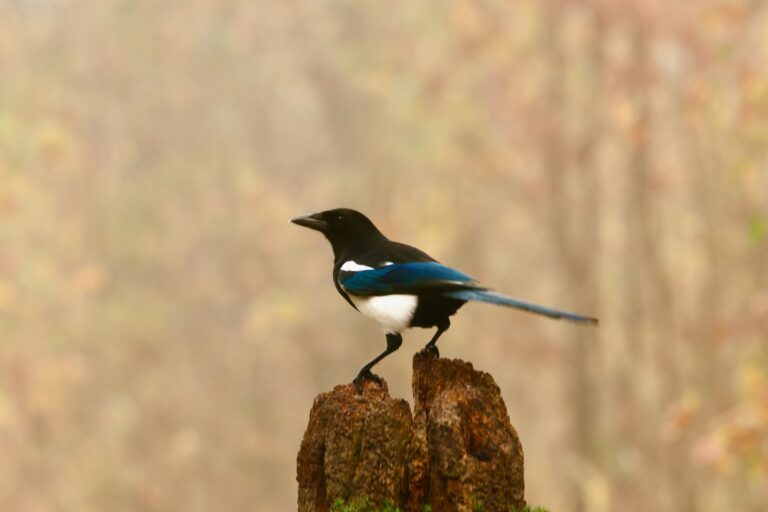
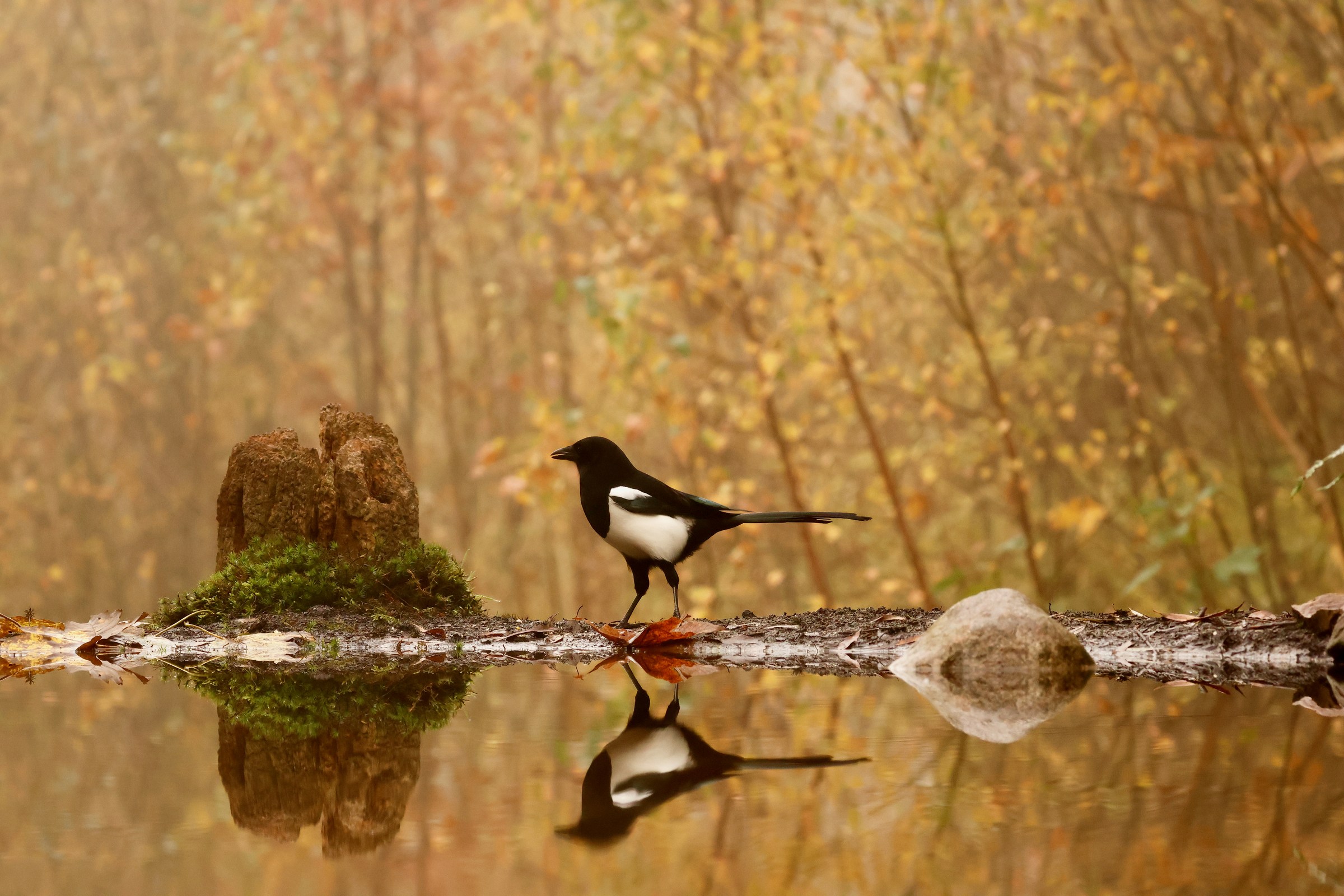
Length 46 to 50 cm, wingspan 52 to 60 cm. Black and white and unmistakable, with a long tail that glosses green and purple in the sun. In flight the alternating wingbeat stands out, and the large white patches in the wing. It walks confidently across lawns and roofs, often two or three at a time.
What does a Eurasian Magpie sound like?
Recording: Spyros Papanastasiou, CC0, via Wikimedia Commons
Where do you see this species in the Netherlands?
Almost the whole of the Netherlands, with a clear preference for villages, towns and the fringes of built-up areas.
Habitat: Half-open landscape with trees and shrubs, and above all built-up areas. It builds a large, domed nest of twigs, often clearly visible high in a tree.
This is a common, widespread species: you can come across it in far more places than the areas listed below. Treat that list as a starting point rather than a full survey.
📍 Blauwe Kamer
presence reported📍 Zouweboezem
presence reported📍 Oostelijke Vechtplassen
presence reported📍 Noordhollands Duinreservaat
presence reported📍 Wormer- en Jisperveld
presence reported📍 Ilperveld
presence reported📍 De Dollard
presence reported📍 Zuidlaardermeergebied en Hunzedal
presence reported📍 Meijendel & Berkheide
presence reported📍 Voornes Duin
presence reported📍 Kampina & Oisterwijkse Vennen
presence reported📍 De Maashorst
presence reported📍 Strabrechtse Heide & Beuven
presence reported📍 Loonse en Drunense Duinen
presence reported📍 Schoorlse Duinen
presence reported📍 Haringvlietsluizen
presence reported📍 Vismigratierivier Afsluitdijk
presence reported📍 De Putten bij Camperduin
presence reportedThese links come straight from our database, with the chance, the source and the evidence level for each area.
When is the best time?
Green = present · orange = peak period. The bar is generated from our database.
Best period: Present all year. In winter the nests are easy to see because the trees are bare; in February and March they are repaired and extended.
Best time of day: All day. The magpie is one of the most visible wild birds in the Netherlands and behaves hardly shyly.
Recent sightings
👁️ Where has this species been seen recently?
Check the current sightings on Waarneming.nl. A useful addition to our own verified information.
How to improve your chances
- Learn the calls first. You will hear most birds before you see them.
- Go in the first hour after sunrise, when the song is at its peak and the wind is still down.
- Use a hide or natural cover. Sitting still gets you more than walking closer.
- Keep the sun behind you. Against the light you see a silhouette and no colour.
Photography
White burns out quickly: underexpose, or work in cloudy weather
🌿 Watching responsibly
Keep your distance, stay on the paths, and never lure animals with food or sound. Leave as soon as an animal becomes uneasy.
Status: Verified · Last checked: 2026-08-08
More photos