
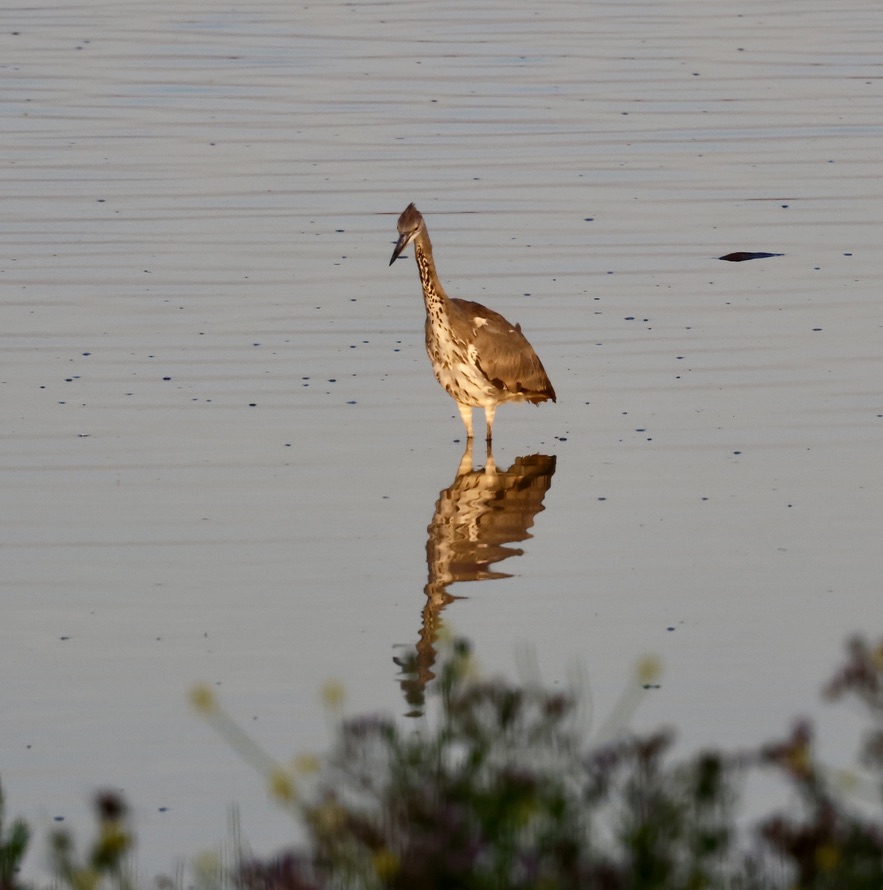
Juvenile Purple Heron standing in shallow water, with its reflection
📷 Bas de Bruin — Oostvaardersplassen

Where to see the Purple Heron in the Netherlands

Ardea purpurea · Purple Heron

Rare 🦅 Bird Sensitive species · R3

🛡️ No exact locations, on purpose

This is a sensitive species. We deliberately show no nest sites, and during the breeding season (March to July) we are extra careful about exact spots. Why we do that.

Where and when do you see a Purple Heron? This species is rarely seen, from April to September.

How do you recognise a Purple Heron?

Length 78 to 90 cm, wingspan 120 to 150 cm. A slender, dark heron with reddish brown tones in the neck and flanks and fine black streaking on the neck. It is smaller and darker than the Grey Heron and looks lankier in flight, with legs trailing lower. Among reeds its colour makes it almost invisible.

What does a Purple Heron sound like?

Recording: Sudipto Roy, CC BY-SA 3.0, via Wikimedia Commons

Where do you see this species in the Netherlands?

The large reed marshes of western and central Netherlands, with the Nieuwkoopse Plassen, the Naardermeer and the Zouweboezem as well-known strongholds.

How certain is this? verified chance per source presence reported Links that do not clear the bottom threshold are not published. How we decide that.
Natuurmonumenten
Nationwide period: April to September. The Purple Heron winters in Africa and is here only in the summer half of the year; in August you often see young birds turning up scattered away from the colonies.

📍 Nationaal Park De Alde Feanen

With luck chance per source
Nationaal Park De Alde Feanen and It Fryske Gea, the site manager
Nationwide period: April to September. The Purple Heron winters in Africa and is here only in the summer half of the year; in August you often see young birds turning up scattered away from the colonies.

📍 Naardermeer

Good chance in season chance per source
Natura 2000 target · 60 breeding pairs
Nationwide period: April to September. The Purple Heron winters in Africa and is here only in the summer half of the year; in August you often see young birds turning up scattered away from the colonies.

📍 Planken Wambuis

presence reported
NDFF open data, 434 records 2016-2026
Nationwide period: April to September. The Purple Heron winters in Africa and is here only in the summer half of the year; in August you often see young birds turning up scattered away from the colonies.

📍 Blauwe Kamer

presence reported
NDFF open data
Nationwide period: April to September. The Purple Heron winters in Africa and is here only in the summer half of the year; in August you often see young birds turning up scattered away from the colonies.

📍 Zouweboezem

presence reported
NDFF open data
Nationwide period: April to September. The Purple Heron winters in Africa and is here only in the summer half of the year; in August you often see young birds turning up scattered away from the colonies.

📍 Oostelijke Vechtplassen

presence reported
NDFF open data
Nationwide period: April to September. The Purple Heron winters in Africa and is here only in the summer half of the year; in August you often see young birds turning up scattered away from the colonies.
NDFF open data
Nationwide period: April to September. The Purple Heron winters in Africa and is here only in the summer half of the year; in August you often see young birds turning up scattered away from the colonies.

📍 Wormer- en Jisperveld

presence reported
NDFF open data
Nationwide period: April to September. The Purple Heron winters in Africa and is here only in the summer half of the year; in August you often see young birds turning up scattered away from the colonies.

📍 Ilperveld

presence reported
NDFF open data
Nationwide period: April to September. The Purple Heron winters in Africa and is here only in the summer half of the year; in August you often see young birds turning up scattered away from the colonies.
NDFF open data
Nationwide period: April to September. The Purple Heron winters in Africa and is here only in the summer half of the year; in August you often see young birds turning up scattered away from the colonies.

📍 Meijendel & Berkheide

presence reported
NDFF open data, 2.378 records 2016-2026
Nationwide period: April to September. The Purple Heron winters in Africa and is here only in the summer half of the year; in August you often see young birds turning up scattered away from the colonies.

📍 De Maashorst

presence reported
NDFF open data, 165 records 2016-2026
Nationwide period: April to September. The Purple Heron winters in Africa and is here only in the summer half of the year; in August you often see young birds turning up scattered away from the colonies.

📍 Loonse en Drunense Duinen

presence reported
NDFF open data, 108 records 2016-2026
Nationwide period: April to September. The Purple Heron winters in Africa and is here only in the summer half of the year; in August you often see young birds turning up scattered away from the colonies.

📍 Schoorlse Duinen

presence reported
NDFF open data, 654 records 2016-2026
Nationwide period: April to September. The Purple Heron winters in Africa and is here only in the summer half of the year; in August you often see young birds turning up scattered away from the colonies.

📍 Haringvlietsluizen

presence reported
NDFF open data, 515 records 2016-2026
Nationwide period: April to September. The Purple Heron winters in Africa and is here only in the summer half of the year; in August you often see young birds turning up scattered away from the colonies.

📍 De Putten bij Camperduin

presence reported
NDFF open data, 1.683 records 2016-2026
Nationwide period: April to September. The Purple Heron winters in Africa and is here only in the summer half of the year; in August you often see young birds turning up scattered away from the colonies.

These links come straight from our database, with the chance, the source and the evidence level for each area.

When is the best time?

Green = present · orange = peak period. The bar is generated from our database.

Best period: April to September. The Purple Heron winters in Africa and is here only in the summer half of the year; in August you often see young birds turning up scattered away from the colonies.

Best time of day: During the day, with morning and evening the best moments, when birds fly between the colony and the feeding grounds.

Recent sightings

👁️ Where has this species been seen recently?

Check the current sightings on Waarneming.nl. A useful addition to our own verified information.

Current sightings on Waarneming.nl →

Note: for sensitive species the source already blurs or withholds sightings. We do not reproduce exact locations.

How to improve your chances

  • Learn the calls first. You will hear most birds before you see them.
  • Go in the first hour after sunrise, when the song is at its peak and the wind is still down.
  • Use a hide or natural cover. Sitting still gets you more than walking closer.
  • Keep the sun behind you. Against the light you see a silhouette and no colour.

🎒 What you need for this

Binoculars, telephoto lens

🌿 Watching responsibly

Keep your distance, stay on the paths, and never lure animals with food or sound. Leave as soon as an animal becomes uneasy. This is a sensitive species. We deliberately show no nest sites, and during the breeding season (March to July) we are extra careful about exact spots.

Sources: Sovon; Vogelbescherming Nederland (vogelgids), geraadpleegd 02-11-2026
Status: Verified · Last checked: 2026-08-08

More photos
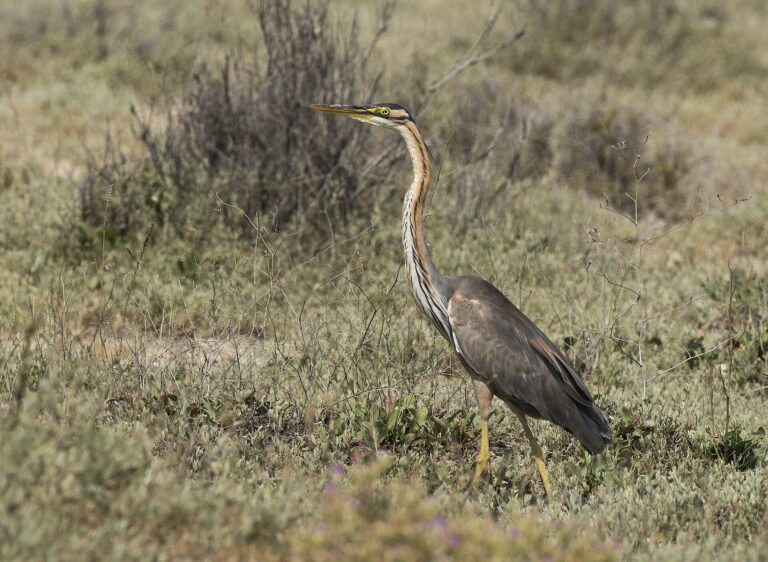
Purperreiger
Photo: Zeynel Cebeci, CC BY-SA 4.0 (Wikimedia Commons)