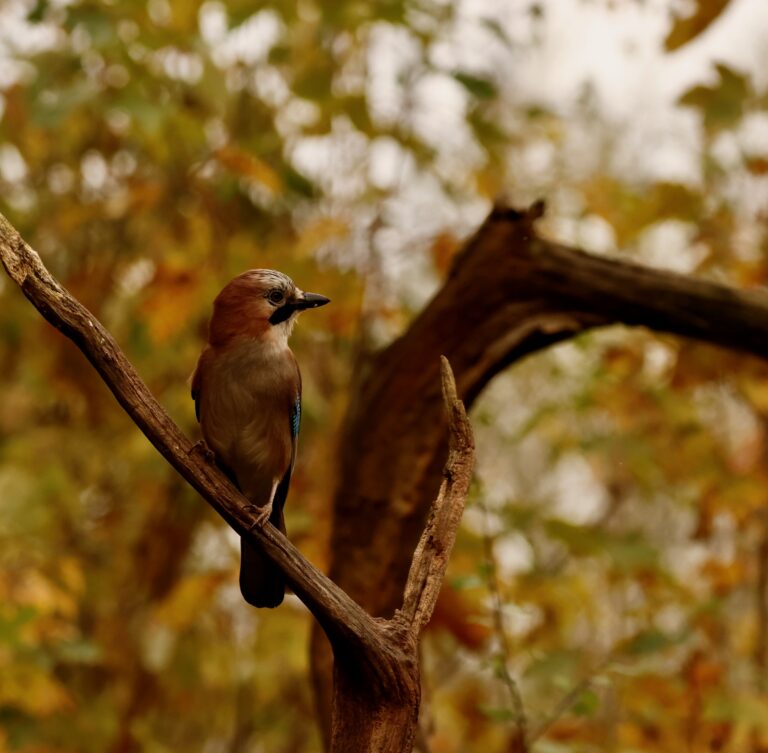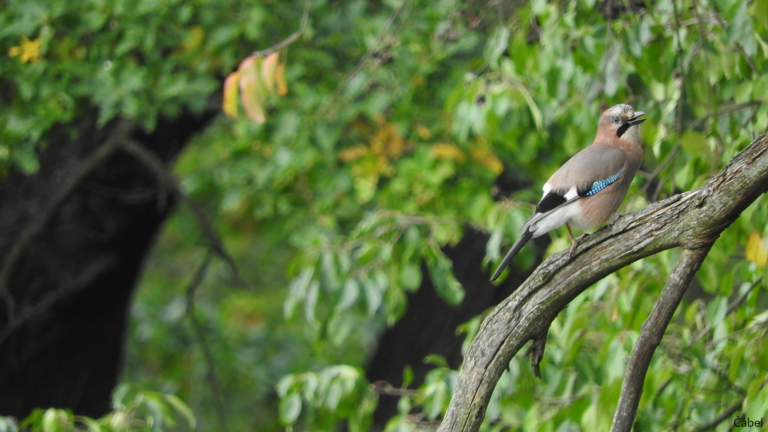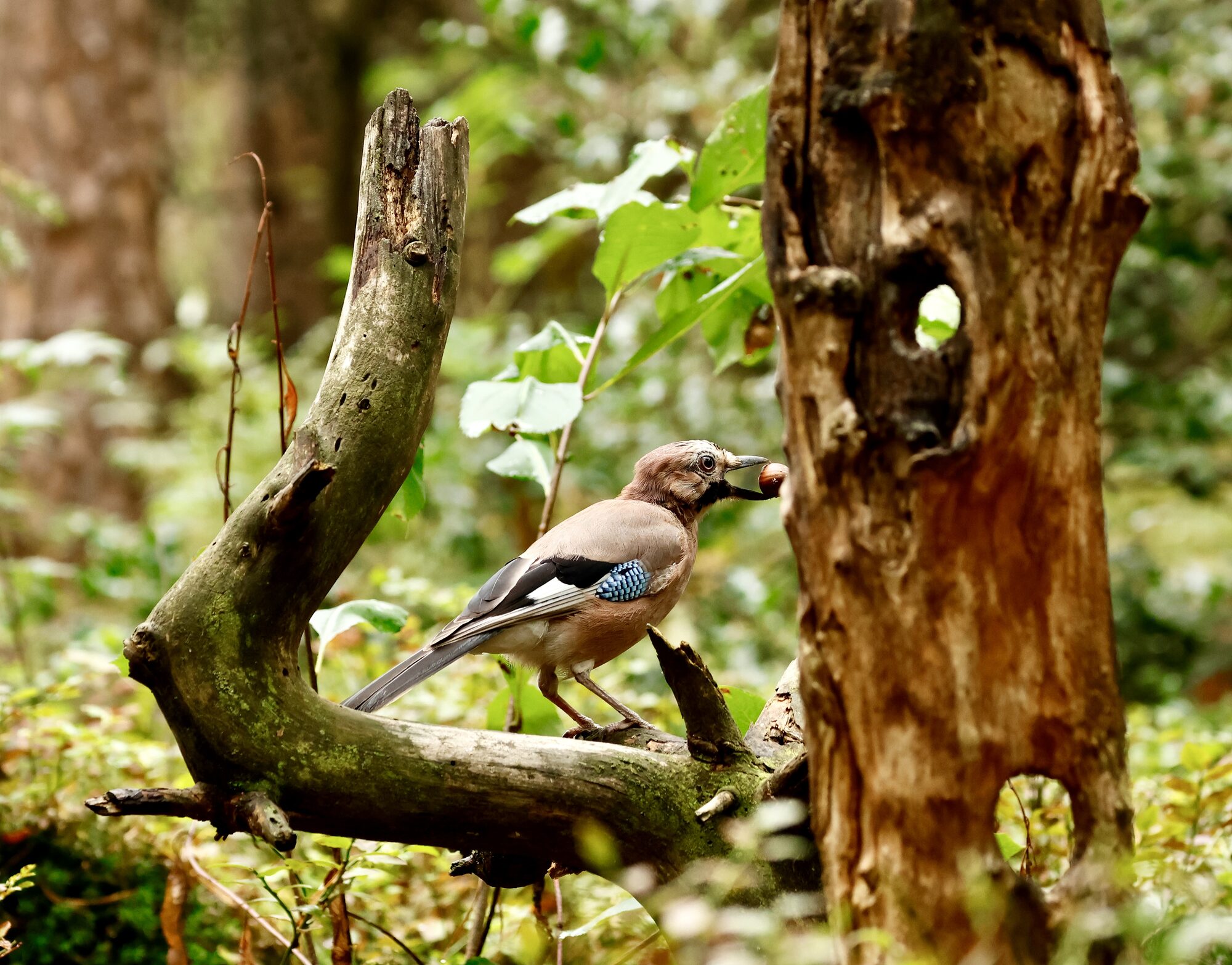
Eurasian Jay on a dead branch with an acorn in its bill, the blue barred wing panel visible
📷 Bas de Bruin — bos bij Hattemerbroek

Where to see the Eurasian Jay in the Netherlands

Garrulus glandarius · Eurasian Jay

Easy 🦅 Bird

Where and when do you see a Eurasian Jay? This species is easy to see, from September to November.

How do you recognise a Eurasian Jay?

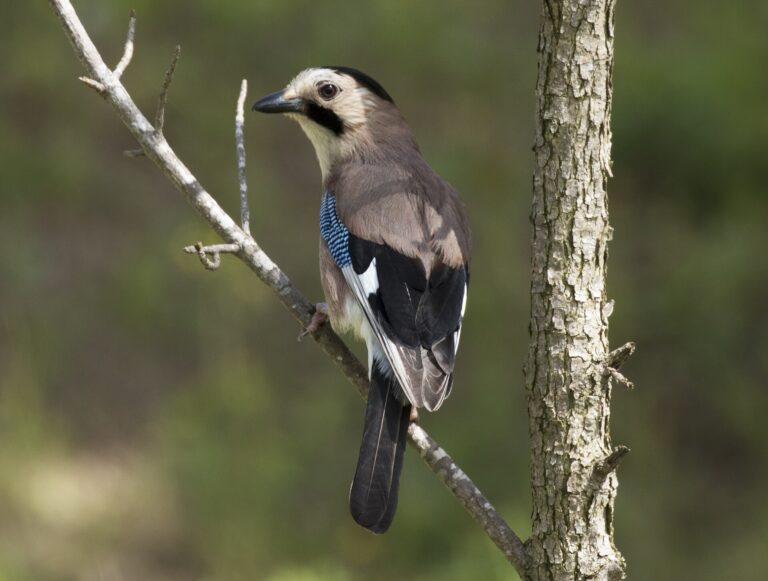
Length 32 to 36 cm, wingspan 50 to 60 cm. A pinkish brown member of the crow family with a striking blue chequered panel on the wing, a white rump and a black moustache. In flight the white rump against the black tail is what stands out most. Its call is a hoarse, far-carrying krair — often the first alarm in the wood when somebody approaches.

What does a Eurasian Jay sound like?

Recording: Vladimir Yu. Arkhipov, Arkhivov, CC BY-SA 3.0, via Wikimedia Commons

Where do you see this species in the Netherlands?

Almost the whole of the Netherlands, in woodland, parks and gardens with mature trees.

Habitat: Deciduous and mixed woodland with oaks, and parks and gardens with old trees. Acorns are its most important winter food, which makes oaks decisive for where it occurs.

This is a common, widespread species: you can come across it in far more places than the areas listed below. Treat that list as a starting point rather than a full survey.

How certain is this? verified chance per source presence reported Links that do not clear the bottom threshold are not published. How we decide that.

📍 Nationaal Park Veluwezoom

Good chance verified
Own fieldwork
Nationwide period: Present all year, with October and November the most conspicuous months: it then collects acorns and buries them in scattered caches to find again later.

📍 Blauwe Kamer

presence reported
NDFF open data
Nationwide period: Present all year, with October and November the most conspicuous months: it then collects acorns and buries them in scattered caches to find again later.

📍 Zouweboezem

presence reported
NDFF open data
Nationwide period: Present all year, with October and November the most conspicuous months: it then collects acorns and buries them in scattered caches to find again later.

📍 Oostelijke Vechtplassen

presence reported
NDFF open data
Nationwide period: Present all year, with October and November the most conspicuous months: it then collects acorns and buries them in scattered caches to find again later.
NDFF open data
Nationwide period: Present all year, with October and November the most conspicuous months: it then collects acorns and buries them in scattered caches to find again later.

📍 Wormer- en Jisperveld

presence reported
NDFF open data
Nationwide period: Present all year, with October and November the most conspicuous months: it then collects acorns and buries them in scattered caches to find again later.

📍 Ilperveld

presence reported
NDFF open data
Nationwide period: Present all year, with October and November the most conspicuous months: it then collects acorns and buries them in scattered caches to find again later.
NDFF open data
Nationwide period: Present all year, with October and November the most conspicuous months: it then collects acorns and buries them in scattered caches to find again later.

📍 Landgoed Ennemaborg

presence reported
NDFF open data
Nationwide period: Present all year, with October and November the most conspicuous months: it then collects acorns and buries them in scattered caches to find again later.

📍 Meijendel & Berkheide

presence reported
NDFF open data, 8.457 records 2016-2026
Nationwide period: Present all year, with October and November the most conspicuous months: it then collects acorns and buries them in scattered caches to find again later.

📍 Voornes Duin

presence reported
NDFF open data, 281 records 2016-2026
Nationwide period: Present all year, with October and November the most conspicuous months: it then collects acorns and buries them in scattered caches to find again later.
NDFF open data, 3.719 records 2016-2026
Nationwide period: Present all year, with October and November the most conspicuous months: it then collects acorns and buries them in scattered caches to find again later.

📍 De Maashorst

presence reported
NDFF open data, 4.333 records 2016-2026
Nationwide period: Present all year, with October and November the most conspicuous months: it then collects acorns and buries them in scattered caches to find again later.
NDFF open data, 2.155 records 2016-2026
Nationwide period: Present all year, with October and November the most conspicuous months: it then collects acorns and buries them in scattered caches to find again later.

📍 Loonse en Drunense Duinen

presence reported
NDFF open data, 2.799 records 2016-2026
Nationwide period: Present all year, with October and November the most conspicuous months: it then collects acorns and buries them in scattered caches to find again later.

📍 Schoorlse Duinen

presence reported
NDFF open data, 2.265 records 2016-2026
Nationwide period: Present all year, with October and November the most conspicuous months: it then collects acorns and buries them in scattered caches to find again later.

These links come straight from our database, with the chance, the source and the evidence level for each area.

When is the best time?

Green = present · orange = peak period. The bar is generated from our database.

Best period: Present all year, with October and November the most conspicuous months: it then collects acorns and buries them in scattered caches to find again later.

Best time of day: Early morning. In October and November it is conspicuous all day, when it is carrying acorns back and forth.

Recent sightings

👁️ Where has this species been seen recently?

Check the current sightings on Waarneming.nl. A useful addition to our own verified information.

Current sightings on Waarneming.nl →

How to improve your chances

  • Learn the calls first. You will hear most birds before you see them.
  • Go in the first hour after sunrise, when the song is at its peak and the wind is still down.
  • Use a hide or natural cover. Sitting still gets you more than walking closer.
  • Keep the sun behind you. Against the light you see a silhouette and no colour.

Photography

Shy, but in the acorn season predictable along fixed flight routes

🌿 Watching responsibly

Keep your distance, stay on the paths, and never lure animals with food or sound. Leave as soon as an animal becomes uneasy.

Sources: Sovon / Vogelbescherming / Zodion / Vlinderstichting; Vogelbescherming Nederland (vogelgids), geraadpleegd 02-11-2026
Status: Verified · Last checked: 2026-08-08

More photos
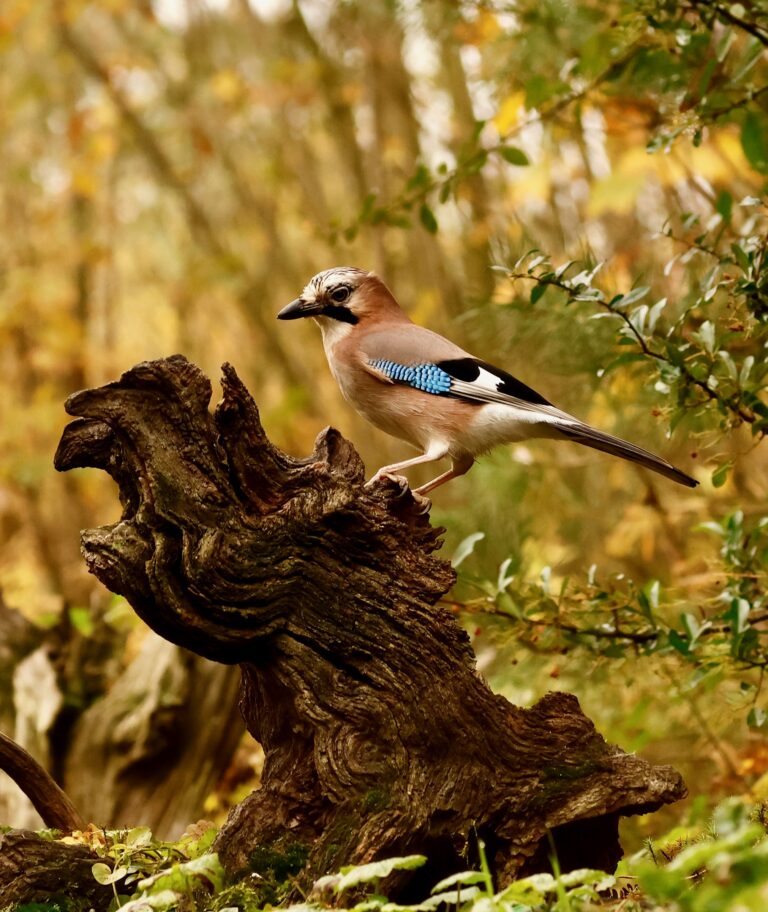
Gaai op een grillige boomstronk, met het blauwe vleugelveld zichtbaar
Photo: Bas de Bruin — fotohut HBN-1XL (Han Bouwmeester), Twente, 30 oktober 2026
Gaai zittend op een kale, gebogen tak
Photo: Bas de Bruin — fotohut HBN-1XL (Han Bouwmeester), Twente, 30 oktober 2026
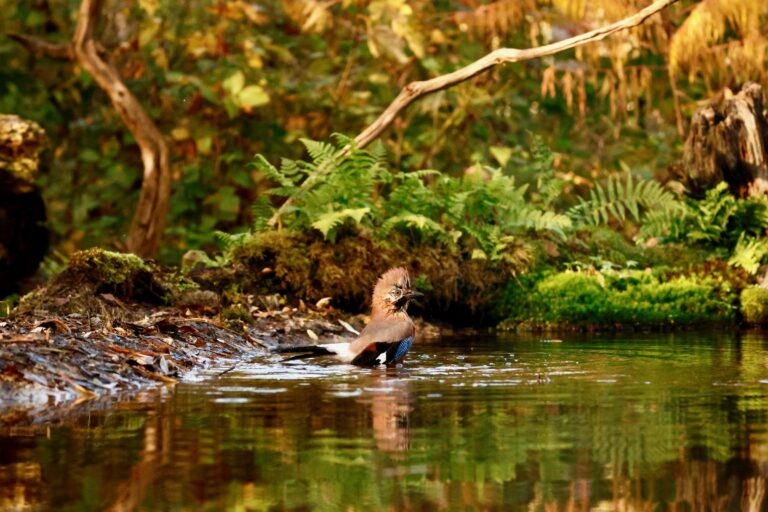
Gaai in ondiep water met opgezette kuifveren
Photo: Bas de Bruin — fotohut HBN-1XL (Han Bouwmeester), Twente, 30 oktober 2026
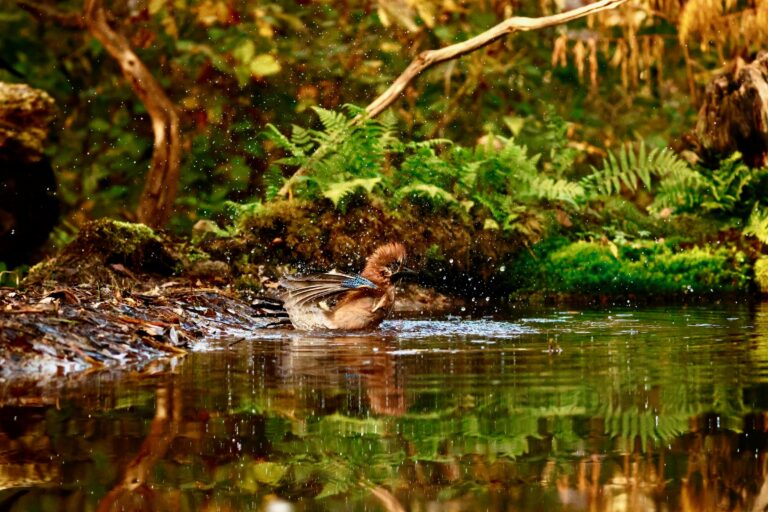
Gaai die zich droog schudt, met opspattend water
Photo: Bas de Bruin — fotohut HBN-1XL (Han Bouwmeester), Twente, 30 oktober 2026
Gaai
Photo: Zeynel Cebeci, CC BY-SA 4.0 (Wikimedia Commons)
Gaai
Photo: Jablíček1023, CC BY-SA 4.0 (Wikimedia Commons)