
Wild animals are not equally visible all year. This calendar shows, month by month, which species are worth going out for in the Netherlands, in order of how good your chances are.
Wildlife calendar
What can you see in April?
Wild animals are not equally visible all year. This calendar shows, month by month, which species are actually worth going out for.
April
7 of 147 speciesIn order of how good your chances are.
April is the month the cast becomes complete. Every week a species arrives that wasn't there the week before, and by the end of the month the wood is full of sounds you couldn't hear in March. It is also the month when you have to watch your behaviour most, because everything is busy with the same thing: breeding.
The singers arrive
The Bluethroat arrives from Africa at the end of March and sings in full in April and May; the Willow Warbler comes from mid-April, the Common Nightingale sings from April to June and then mainly in the first weeks after arrival, and the Common Cuckoo can be heard from April to June — its call falls almost silent as soon as the eggs are laid. The Common Swift brings up the rear at the end of the month. Anyone wanting to learn song should start now: in April one species is added each week, so you can pick them up one at a time instead of as a wall of sound all at once.
Fox cubs, at a generous distance
From mid-April to early June the cubs of the red fox play outside the earth. According to the species page that is the most promising period of the year — and at the same time precisely the period to keep a generous distance. A vixen moving her young because someone came too close is the most costly disturbance you can cause. Watch with binoculars from a path, stay seated, and leave before it gets uncomfortable.
The cold-blooded come up
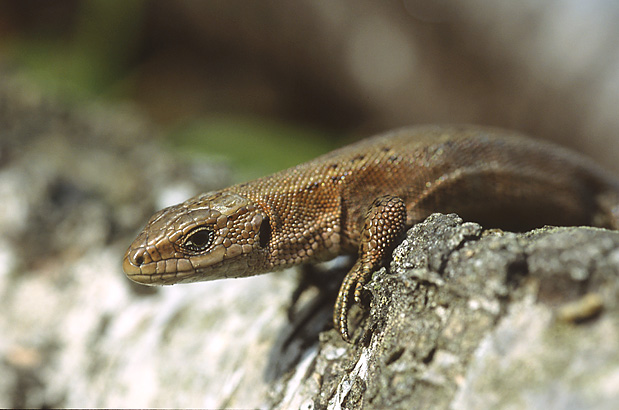
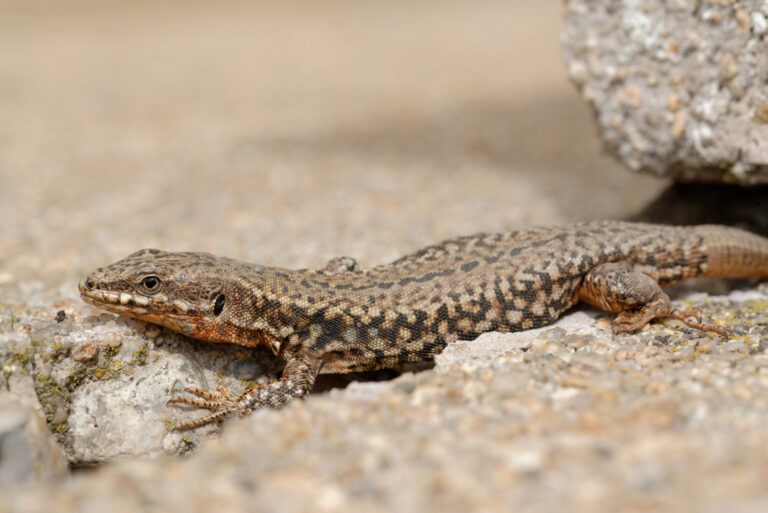
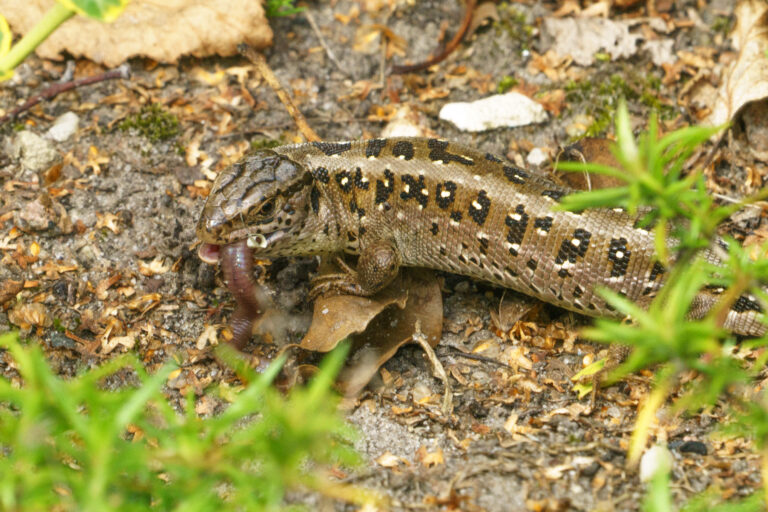
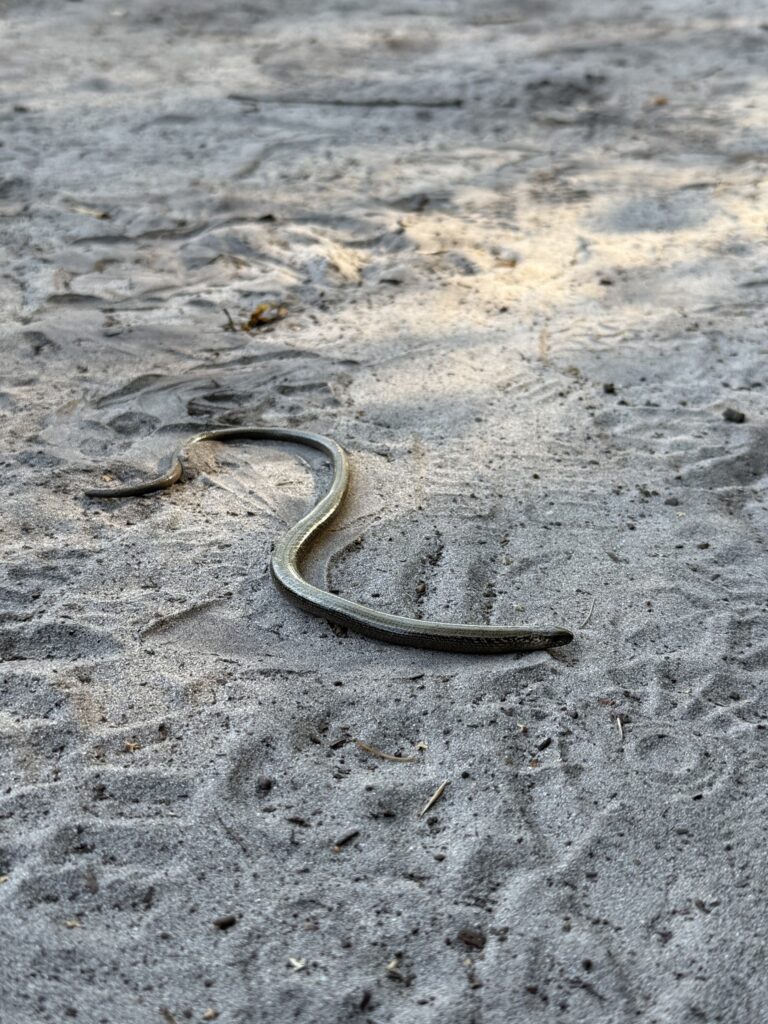
April is the start for reptiles and amphibians. The sand lizard is at its best from April to June, and then especially the male: in the mating season he is bright green. The viviparous lizard and the slow worm can be seen from April to September; look for them on sunny mornings after a cool night, because then they have to warm up first and stay put for longer. In the water the smooth newt goes about its business from late March to June, with the peak in April and early May.
A chorus whose location we don't name
April to June is the chorus period of the European tree frog: on warm evenings dozens of males call at once, a rattling sound that carries far. For this species we name no location and no area at all — it is on the Sensitive Species List with the heaviest condition, just like the Long-eared Owl. Why we do that is on responsible wildlife watching.
And the mammals
The European badger is at its most active from April to October, after a winter in which it barely came above ground. The bats emerge from hibernation: Daubenton's bat, serotine bat and common noctule are in the air again from April. And the European hare is still in its mating season in April, so the boxing on hind legs continues.
Where to go
For song and woodpeckers, old deciduous woodland: Veluwezoom, the Leuvenumse Bossen or the Utrechtse Heuvelrug. For Bluethroat and reed birds, the marsh: Weerribben-Wieden or the Oostvaardersplassen. For lizards, the dry sandy soils of De Hoge Veluwe or Zuid-Kennemerland.
Practicalities
In April the first hour after sunrise is the best time of the whole year: it is still cool, it is full of song, and there is almost nobody about. Keep dogs on the lead and keep to the paths — this is the month in which one step off the path can cost a nest. And from now on ticks are active again.
- All species in English
- Areas in English
- Wildlife in the Netherlands, the English starting point.