
Sand lizard in the Netherlands
📷 Jerzystrzelecki, CC BY-SA 4.0 (Wikimedia Commons)

Where to see the sand lizard in the Netherlands

Lacerta agilis · Sand lizard

Rare 🦎 Reptile

Where and when do you see a sand lizard? This species is rarely seen, from April to June.

How do you recognise a sand lizard?

A stocky lizard with a short head and a coarse pattern of brown blotches with white centres. In spring the male's flanks are bright green — the only Dutch lizard with that colour, and unmistakable. The female stays brown and blotched.

What can you confuse a sand lizard with?

  • The Dutch name duinhagedis, dune lizard, is not a separate species but the name often used in the coastal dunes for the sand lizard. Staatsbosbeheer, for instance, writes about duinhagedissen in the Schoorlse Duinen. The official Dutch name is zandhagedis, Lacerta agilis; there is only one species. In the field, though, it can be confused with the viviparous lizard: that one is slimmer, more finely marked and lacks the bright green that the male sand lizard has on its flanks in spring.

Where do you see this species in the Netherlands?

The dunes along the coast and the heathlands on the sandy soils.

How certain is this? verified chance per source presence reported Links that do not clear the bottom threshold are not published. How we decide that.

📍 Deelerwoude

With luck chance per source
NDFF open data, 1.684 records 2016-2026
Nationwide period: April to June is the best period, and then above all for the male: in the mating season he is bright green and far more conspicuous than during the rest of the year.

📍 Nationaal Park Dwingelderveld

With luck chance per source
Nationwide period: April to June is the best period, and then above all for the male: in the mating season he is bright green and far more conspicuous than during the rest of the year.

📍 Nationaal Park Veluwezoom

With luck verified
NDFF open data, 1.526 records 2016-2026 · Natuurmonumenten
Nationwide period: April to June is the best period, and then above all for the male: in the mating season he is bright green and far more conspicuous than during the rest of the year.
NDFF open data, 4.691 records 2016-2026
Nationwide period: April to June is the best period, and then above all for the male: in the mating season he is bright green and far more conspicuous than during the rest of the year.
NDFF open data, 2.507 records 2016-2026
Nationwide period: April to June is the best period, and then above all for the male: in the mating season he is bright green and far more conspicuous than during the rest of the year.
NDFF open data, 4.767 records 2016-2026
Nationwide period: April to June is the best period, and then above all for the male: in the mating season he is bright green and far more conspicuous than during the rest of the year.
NDFF open data, 4.032 records 2016-2026
Nationwide period: April to June is the best period, and then above all for the male: in the mating season he is bright green and far more conspicuous than during the rest of the year.

📍 Nationaal Park De Meinweg

presence reported
NDFF open data, 1.941 records 2016-2026
Nationwide period: April to June is the best period, and then above all for the male: in the mating season he is bright green and far more conspicuous than during the rest of the year.
NDFF open data, 3.695 records 2016-2026
Nationwide period: April to June is the best period, and then above all for the male: in the mating season he is bright green and far more conspicuous than during the rest of the year.

📍 Kroondomein Het Loo

presence reported
NDFF open data, 1.163 records 2016-2026
Nationwide period: April to June is the best period, and then above all for the male: in the mating season he is bright green and far more conspicuous than during the rest of the year.

📍 Planken Wambuis

With luck chance per source
Natuurmonumenten
Nationwide period: April to June is the best period, and then above all for the male: in the mating season he is bright green and far more conspicuous than during the rest of the year.
NDFF open data
Nationwide period: April to June is the best period, and then above all for the male: in the mating season he is bright green and far more conspicuous than during the rest of the year.

📍 Wormer- en Jisperveld

presence reported
NDFF open data
Nationwide period: April to June is the best period, and then above all for the male: in the mating season he is bright green and far more conspicuous than during the rest of the year.

📍 Schoorlse Duinen

presence reported
Staatsbosbeheer - Schoorlse Duinen
Nationwide period: April to June is the best period, and then above all for the male: in the mating season he is bright green and far more conspicuous than during the rest of the year.

📍 Meijendel & Berkheide

presence reported
NDFF open data, 2.532 records 2016-2026
Nationwide period: April to June is the best period, and then above all for the male: in the mating season he is bright green and far more conspicuous than during the rest of the year.

📍 De Putten bij Camperduin

presence reported
NDFF open data, 43 records 2016-2026
Nationwide period: April to June is the best period, and then above all for the male: in the mating season he is bright green and far more conspicuous than during the rest of the year.

These links come straight from our database, with the chance, the source and the evidence level for each area.

When is the best time?

Green = present · orange = peak period. The bar is generated from our database.

Best period: April to June is the best period, and then above all for the male: in the mating season he is bright green and far more conspicuous than during the rest of the year.

Best time of day: The morning, while the animals are warming up. Later in the day they are active and far shyer.

Recent sightings

👁️ Where has this species been seen recently?

Check the current sightings on Waarneming.nl. A useful addition to our own verified information.

Current sightings on Waarneming.nl →

How to improve your chances

  • Go on a sunny morning, while they are warming up and still slow.
  • Look for the edges: woodland margins, heath paths, log piles, south-facing slopes.
  • Walk quietly. Reptiles feel vibration through the ground before they see you.
  • Look but do not touch. Picking one up is disturbance, and with protected species it is not allowed.

🎒 What you need for this

Telephoto lens

🌿 Watching responsibly

Keep your distance, stay on the paths, and never lure animals with food or sound. Leave as soon as an animal becomes uneasy.

Sources: Staatsbosbeheer, gebiedspagina Schoorlse Duinen - noemt duinhagedissen in dit gebied, geraadpleegd 10-11-2026.
Status: Verified · Last checked: 2026-08-08

More photos
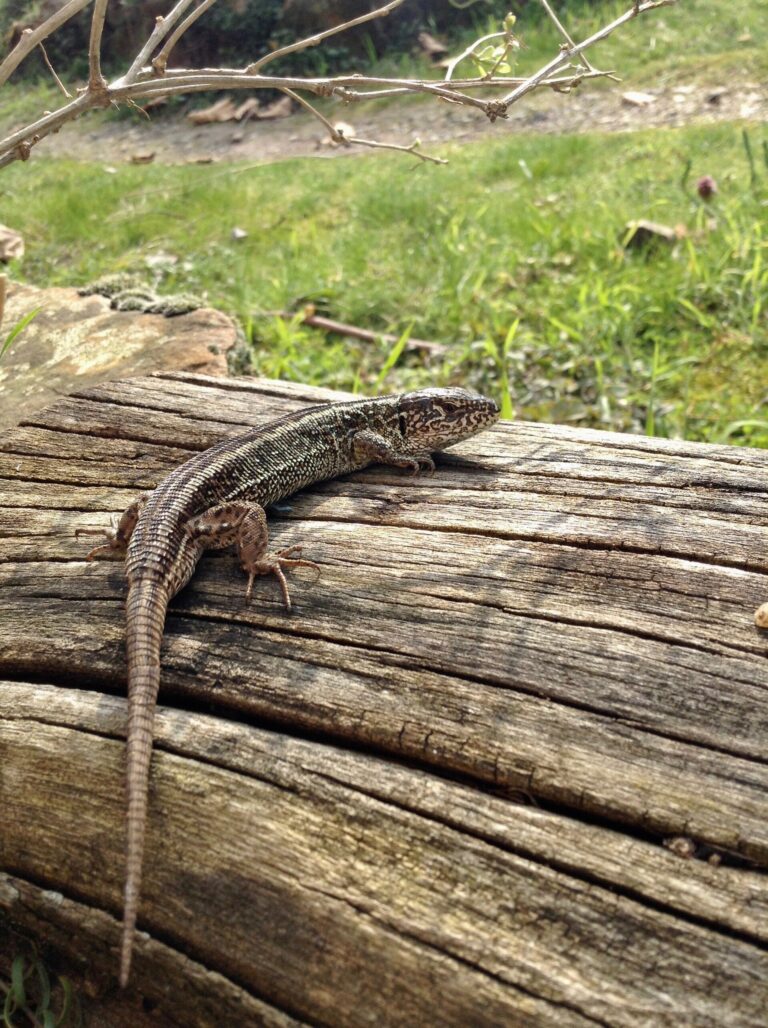
Zandhagedis
Photo: Annabel Kosch, CC BY-SA 4.0 (Wikimedia Commons)