
Where to see the Red-throated Diver in the Netherlands
With luck 🦅 Bird
Where and when do you see a Red-throated Diver? With some luck you can see this species, from October to May.
How do you recognise a Red-throated Diver?
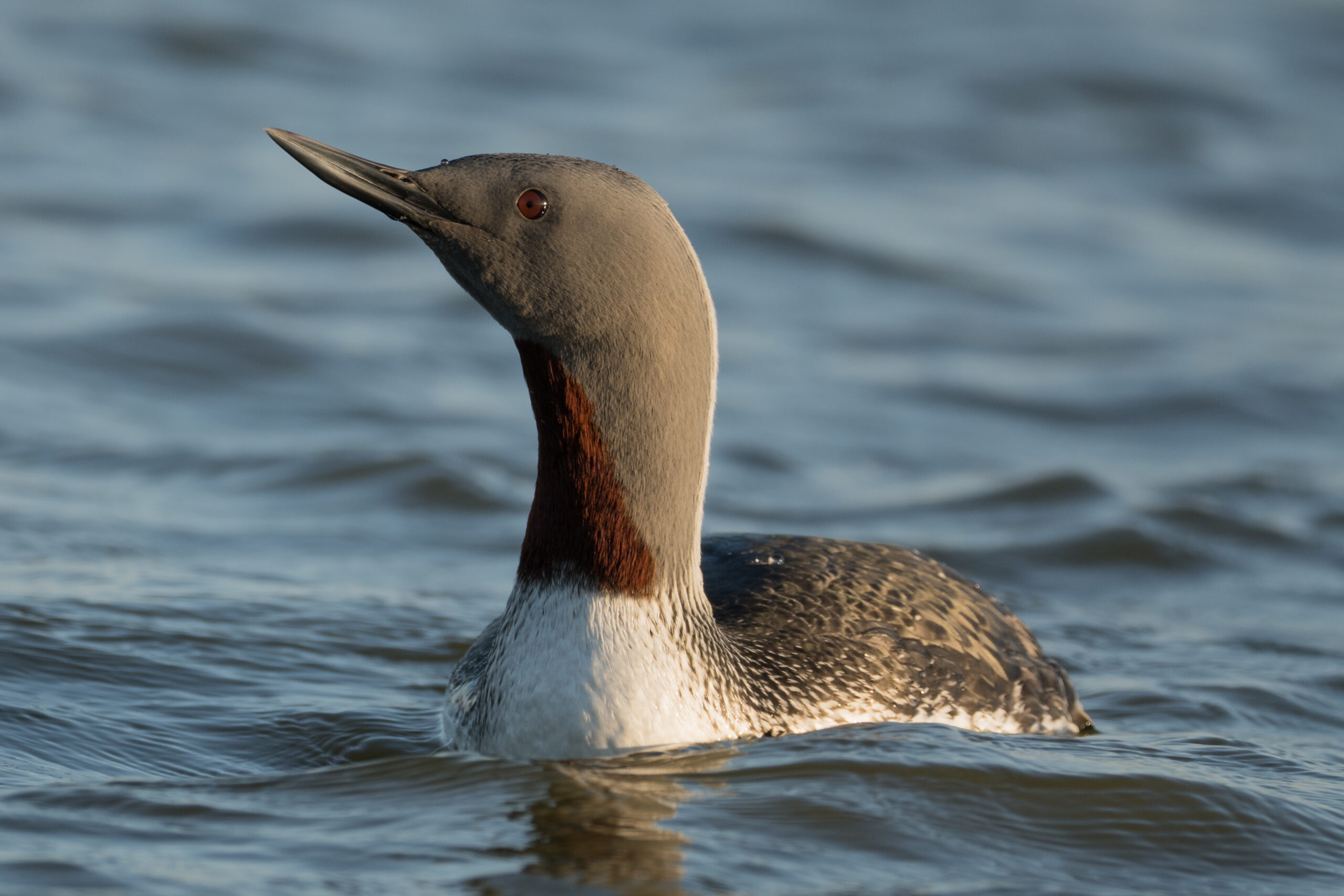
The smallest diver, 53 to 69 cm long with a wingspan of 106 to 116 cm. The thin bill is characteristically held tilted upwards and is slightly upturned. In winter plumage grey above with a great deal of fine white speckling and a white face, with the white reaching above the eye. In flight the stocky silhouette stands out, with a drooping neck and the feet projecting beyond the tail. The rust-red throat patch of the summer plumage is seldom seen here.
What does a Red-throated Diver sound like?
Recording: Ryan Hodnett, CC BY-SA 4.0, via Wikimedia Commons
Where do you see this species in the Netherlands?
A winter visitor along the coast. The Netherlands holds 1,800 to 9,800 birds in winter, about ten per cent of the north-west European population. Concentrations lie off the Zeeland and South Holland coast and above the Wadden Sea. It does not breed in the Netherlands.
📍 Nationaal Park Oosterschelde
With luck chance per source📍 Wadden Sea
presence reported📍 Noordhollands Duinreservaat
presence reported📍 Ilperveld
presence reported📍 Meijendel & Berkheide
presence reported📍 Schoorlse Duinen
presence reported📍 Haringvlietsluizen
presence reported📍 De Putten bij Camperduin
presence reportedThese links come straight from our database, with the chance, the source and the evidence level for each area.
When is the best time?
Green = present · orange = peak period. The bar is generated from our database.
Best period: Present from October through May, with the highest numbers from December to February.
Best time of day: The morning, when the water is calm and divers forage close inshore.
Recent sightings
👁️ Where has this species been seen recently?
Check the current sightings on Waarneming.nl. A useful addition to our own verified information.
How to improve your chances
- Learn the calls first. You will hear most birds before you see them.
- Go in the first hour after sunrise, when the song is at its peak and the wind is still down.
- Use a hide or natural cover. Sitting still gets you more than walking closer.
- Keep the sun behind you. Against the light you see a silhouette and no colour.
🎒 What you need for this
Telescope. Divers are often far offshore and disappear under water for minutes at a time, so magnification and patience are indispensable.
Photography
The best chances are at the Brouwersdam and the Oostvoornse Meer, where birds sometimes come right in to the shore. Stay sitting on the quay and do not follow the bird on foot, and it will keep foraging calmly. Photograph low by the water for a quiet background.
🌿 Watching responsibly
Keep your distance, stay on the paths, and never lure animals with food or sound. Leave as soon as an animal becomes uneasy.
Status: Verified · Last checked: 2026-08-08