
Where to see the Black-legged Kittiwake in the Netherlands
With luck 🦅 Bird
Where and when do you see a Black-legged Kittiwake? With some luck you can see this species, all year round.
How do you recognise a Black-legged Kittiwake?
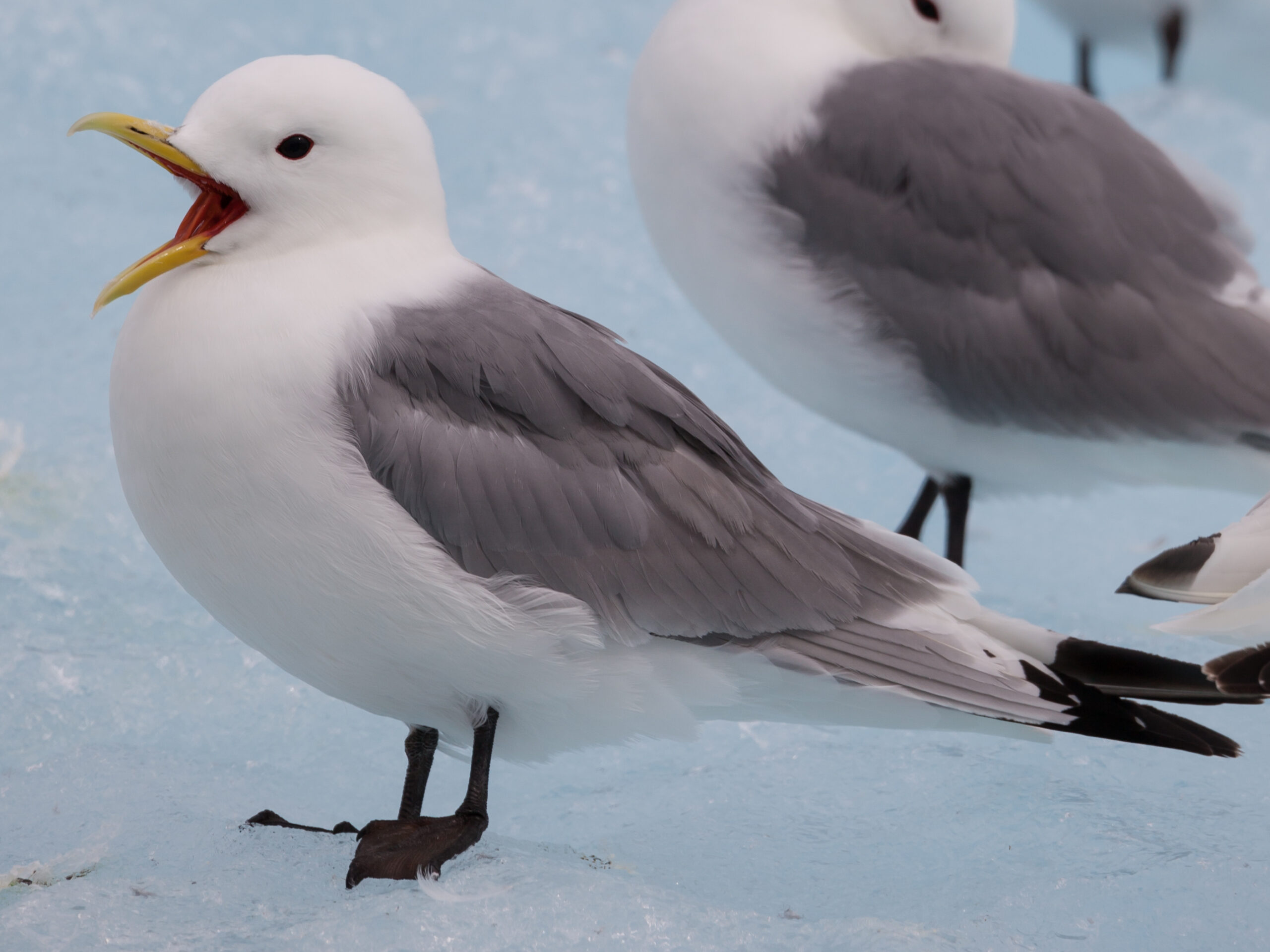
A medium-sized gull of 38 to 40 cm with a wingspan of 91 to 97 cm, about the size of a Common Gull. The adult has a yellow bill, black legs and pure black wing tips with no white mirrors, as if the tip had been dipped in ink. In winter plumage a grey patch runs like a pair of headphones across the back of the head, without the streaking other gulls have then. Young birds are recognisable at once by the black W across the upperwings and the black neck collar.
What does a Black-legged Kittiwake sound like?
Recording: Wikimalte, CC BY-SA 4.0, via Wikimedia Commons
Where do you see this species in the Netherlands?
A winter visitor and passage migrant on the North Sea. In the winters of 2016/17 to 2020/21, 63,700 to 81,800 birds were present here; in November 44,500 to 140,000 pass along the coast. For some years now the species has also bred in the Netherlands: in 2023 the population counted more than 350 breeding pairs, almost all of them on offshore platforms.
📍 Wadden Sea
With luck chance per source📍 Noordhollands Duinreservaat
presence reported📍 Meijendel & Berkheide
presence reported📍 Schoorlse Duinen
presence reported📍 De Putten bij Camperduin
presence reportedThese links come straight from our database, with the chance, the source and the evidence level for each area.
When is the best time?
Green = present · orange = peak period. The bar is generated from our database.
Best period: Present at sea all year, with the highest numbers during passage in November.
Best time of day: During and after a storm from the west or north-west, when seabirds come in close to the coast.
Recent sightings
👁️ Where has this species been seen recently?
Check the current sightings on Waarneming.nl. A useful addition to our own verified information.
How to improve your chances
- Learn the calls first. You will hear most birds before you see them.
- Go in the first hour after sunrise, when the song is at its peak and the wind is still down.
- Use a hide or natural cover. Sitting still gets you more than walking closer.
- Keep the sun behind you. Against the light you see a silhouette and no colour.
🎒 What you need for this
A telescope on a tripod plus warm, windproof clothing. Seawatching means hours on end in a cold, wet spot.
Photography
A seawatching point during an onshore storm gives the best chances. Work with a short shutter speed and follow the bird before it gains height. From a ferry to the Wadden islands the birds sometimes come surprisingly close.
🌿 Watching responsibly
Keep your distance, stay on the paths, and never lure animals with food or sound. Leave as soon as an animal becomes uneasy.
Status: Verified · Last checked: 2026-08-08