
Where to see the Baillon's Crake in the Netherlands
Very rare 🦅 Bird Sensitive species · R3
🛡️ No exact locations, on purpose
This is a sensitive species. We deliberately show no nest sites, and during the breeding season (March to July) we are extra careful about exact spots. Why we do that.
Where and when do you see a Baillon's Crake? This species is very rarely seen, from April to September.
How do you recognise a Baillon's Crake?
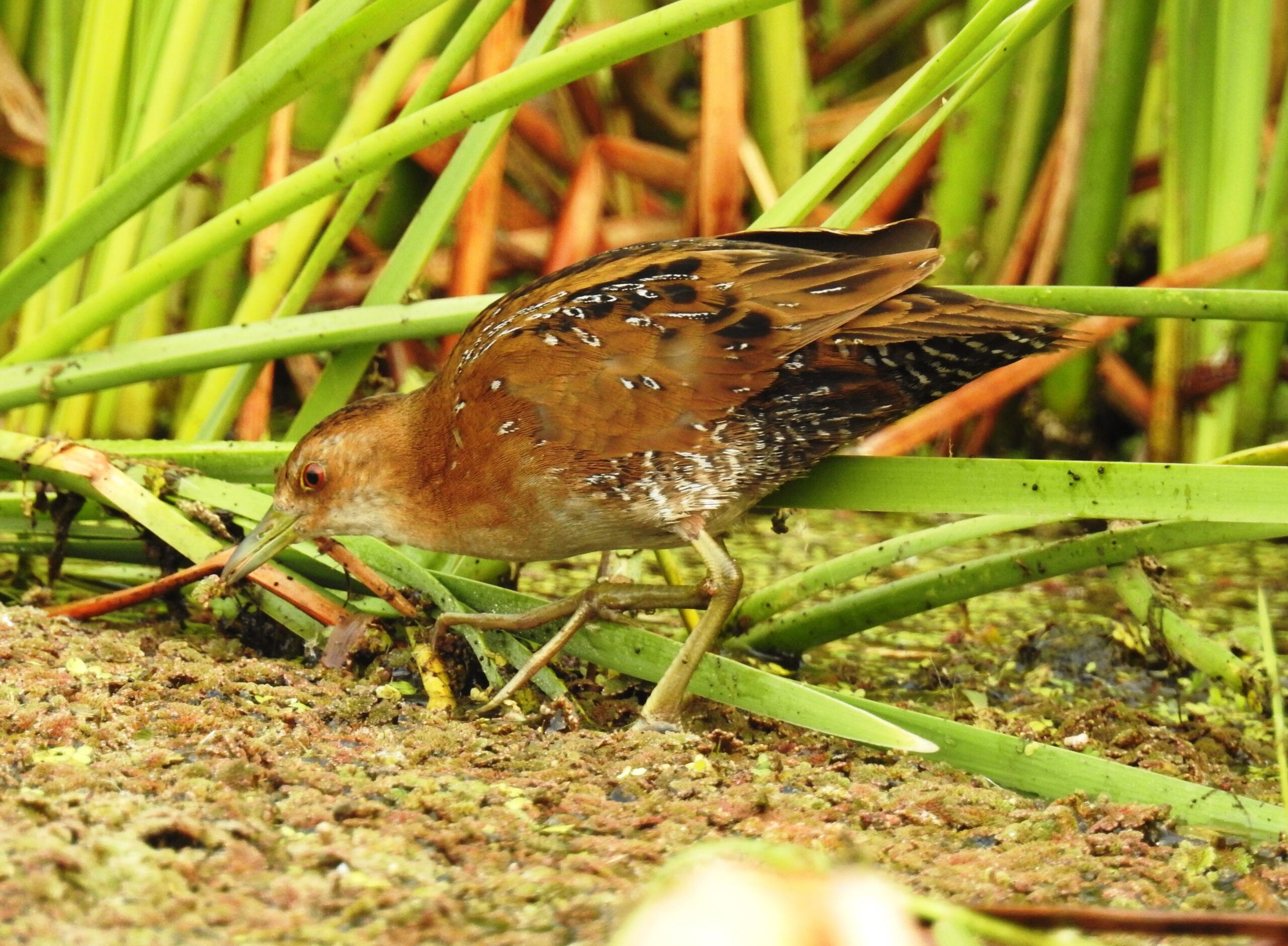
A very small crake of 17 to 19 cm with long, flesh-coloured to greenish toes. Characteristic are the black-and-white barring on the flanks and the fine white speckling on the upperparts; neck and breast are blue-grey. Young birds have the barring down onto the belly. Smaller than the Little Crake, and the male lacks the red bill base.
What does a Baillon's Crake sound like?
Recording: Jamescandless, CC BY 3.0, via Wikimedia Commons
Where do you see this species in the Netherlands?
An extremely scarce breeding bird: 20 to 45 breeding pairs in the period 2018 to 2020. It breeds in wet, low-growing marshes. We do not name more precise locations.
📍 Ilperveld
presence reported📍 Zuidlaardermeergebied en Hunzedal
presence reported📍 Meijendel & Berkheide
presence reportedThese links come straight from our database, with the chance, the source and the evidence level for each area.
When is the best time?
Green = present · orange = peak period. The bar is generated from our database.
Best period: A summer visitor: return passage in March and April, breeding season May through August, departure from late August to early October.
Best time of day: The night, when the male gives his rattle.
Recent sightings
👁️ Where has this species been seen recently?
Check the current sightings on Waarneming.nl. A useful addition to our own verified information.
Current sightings on Waarneming.nl →
Note: for sensitive species the source already blurs or withholds sightings. We do not reproduce exact locations.
How to improve your chances
- Learn the calls first. You will hear most birds before you see them.
- Go in the first hour after sunrise, when the song is at its peak and the wind is still down.
- Use a hide or natural cover. Sitting still gets you more than walking closer.
- Keep the sun behind you. Against the light you see a silhouette and no colour.
🎒 What you need for this
Your ears. The song is a hard dry rattle of one to three seconds, repeated every two seconds, and that is practically the only thing you can go on.
Photography
All but impossible to photograph without disturbing the bird, and that is precisely what you have to avoid. Sedge marsh is also vulnerable vegetation where simply walking in does damage. Stay on the path and keep it to a sound recording.
🌿 Watching responsibly
Keep your distance, stay on the paths, and never lure animals with food or sound. Leave as soon as an animal becomes uneasy. This is a sensitive species. We deliberately show no nest sites, and during the breeding season (March to July) we are extra careful about exact spots.
Status: Verified · Last checked: 2026-08-08