
Where to see the Wood Duck in the Netherlands
Rare 🦅 Bird
Where and when do you see a Wood Duck? This species is rarely seen, all year round.
How do you recognise a Wood Duck?
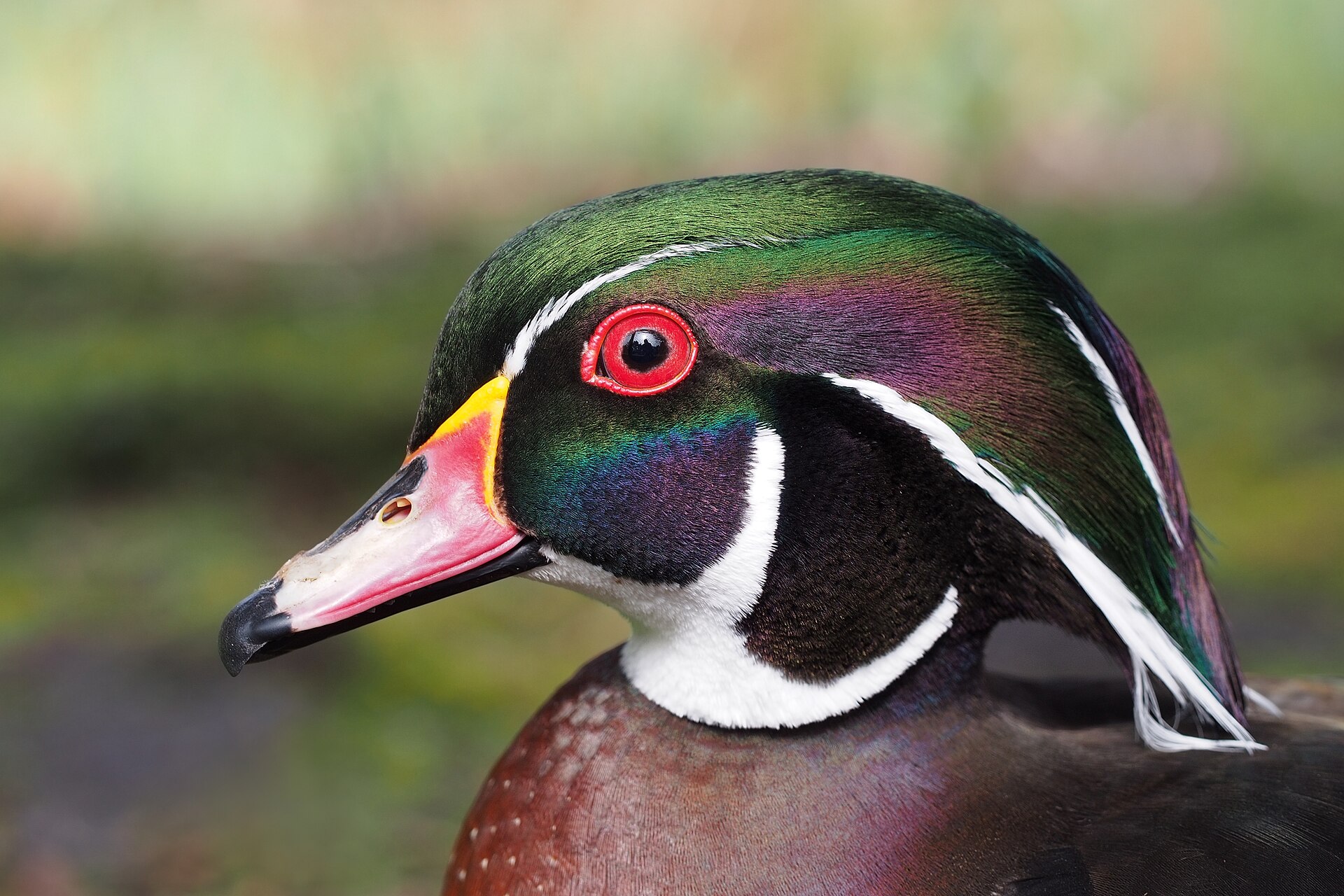
A small, colourful duck of 43 to 51 centimetres. The male is unmistakable: a crest glossed green and purple with white stripes, a reddish brown breast with white speckles, a red eye-ring and a red bill base. The female is grey-brown with a white teardrop-shaped eye-ring and a small crest.
Wingspan: 71 cm an indication from Wikidata; it varies by individual, sex and subspecies · compare all birds (in Dutch)
What does a Wood Duck sound like?
Recording: Jonathon Jongsma, CC BY-SA 3.0, via Wikimedia Commons
Where do you see this species in the Netherlands?
Scattered and in small numbers, mainly at woodland ponds, estate waters and parks.
📍 Meijendel & Berkheide
presence reportedThese links come straight from our database, with the chance, the source and the evidence level for each area.
When is the best time?
Green = present · orange = peak period. The bar is generated from our database.
Best period: All year.
Best time of day: During the day.
Recent sightings
👁️ Where has this species been seen recently?
Check the current sightings on Waarneming.nl. A useful addition to our own verified information.
How to improve your chances
- Learn the calls first. You will hear most birds before you see them.
- Go in the first hour after sunrise, when the song is at its peak and the wind is still down.
- Use a hide or natural cover. Sitting still gets you more than walking closer.
- Keep the sun behind you. Against the light you see a silhouette and no colour.
🎒 What you need for this
Binoculars
Photography
The male's colours are partly structural and shift with the angle of the light; move around the bird instead of waiting. Soft light on a sheltered woodland pond works better than full sun
🌿 Watching responsibly
Keep your distance, stay on the paths, and never lure animals with food or sound. Leave as soon as an animal becomes uneasy.
Status: Verified · Last checked: 2026-08-07