Where to see the Mole Cricket in the Netherlands
Rare 🦗 Grasshopper
Where and when do you see a Mole Cricket? This species is rarely seen, from April to June.
How do you recognise a Mole Cricket?
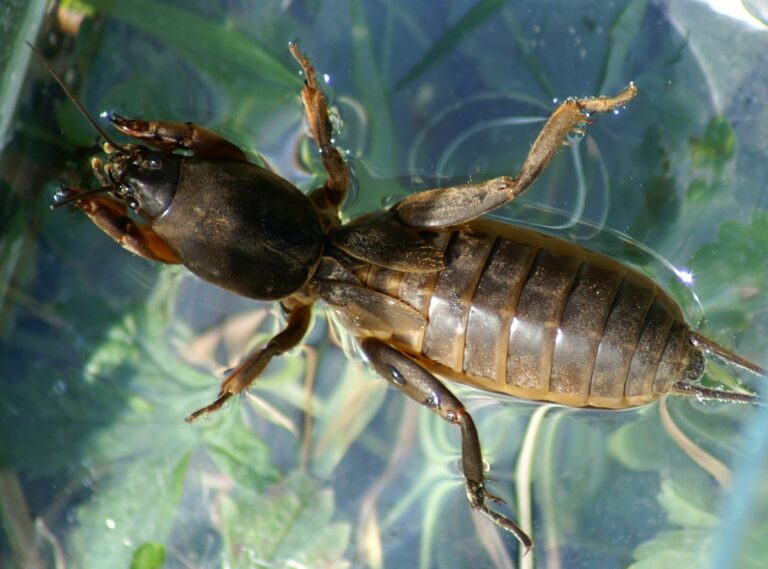
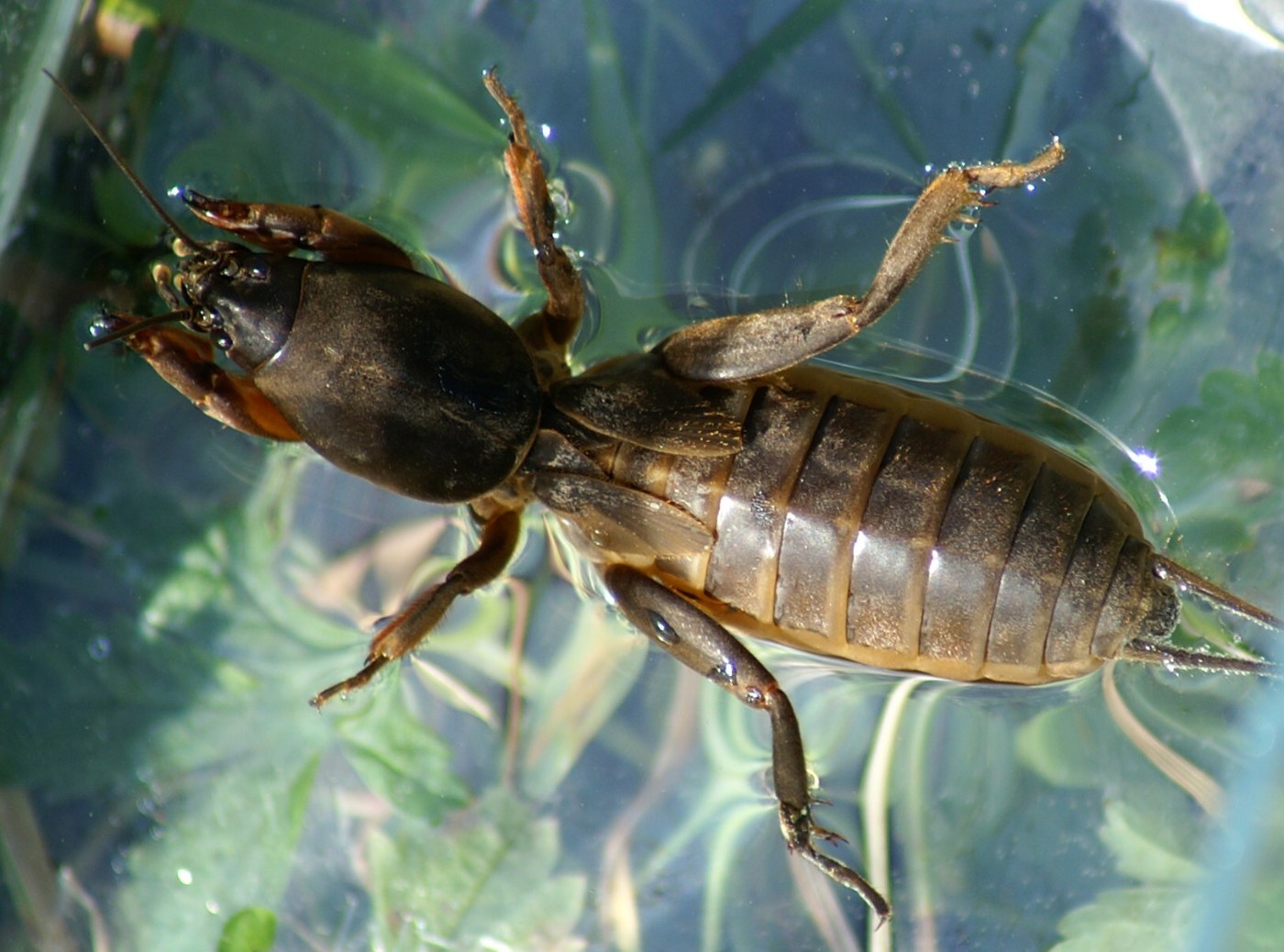
Unmistakable: a large, red-brown cricket of 35 to 50 mm with enormous, broadened digging legs. Short antennae, and unlike the true crickets no ovipositor. Forewing 11.5 to 20.0 mm. All measurements and status data come from Kleukers et al., De sprinkhanen en krekels van Nederland (Nederlandse Fauna 1, 1997). Those figures are now almost thirty years old. In the digital version of that source the symbols for male and female do not render, so it cannot be established with certainty which range belongs to which sex; we therefore give the combined range.
What can you confuse a Mole Cricket with?
Looks like: Natterjack toad
- By appearance, nothing: Kleukers et al. write that the Mole Cricket, with its striking appearance and large digging legs, cannot be confused with any other native Orthoptera.
- Natterjack toad: this is the crux. Kleukers et al. note that its song can be confused with the call of the natterjack toad. Both sound in the evening, low and sustained. The Mole Cricket holds its note monotonously for minutes; the natterjack calls in separate, rattling bursts.
Where do you see this species in the Netherlands?
Kleukers et al. put the centre of its Dutch distribution in the west of the country. The species has declined sharply in north-western Europe.
📍 Haringvliet & Hollands Diep
presence reported📍 Eemland
presence reported📍 Naardermeer
presence reported📍 Nationaal Park Zuid-Kennemerland
presence reported📍 Amsterdamse Waterleidingduinen
presence reported📍 Nationaal Park De Biesbosch
presence reported📍 Zouweboezem
presence reported📍 Oostelijke Vechtplassen
presence reported📍 Noordhollands Duinreservaat
presence reported📍 Wormer- en Jisperveld
presence reported📍 Ilperveld
presence reported📍 Meijendel & Berkheide
presence reported📍 Voornes Duin
presence reportedThese links come straight from our database, with the chance, the source and the evidence level for each area.
When is the best time?
Green = present · orange = peak period. The bar is generated from our database.
Best period: According to Kleukers et al. the adults are recorded in the Netherlands mainly from late April to late May. That is a short window — outside those weeks you will hardly hear it.
Best time of day: Just after sunset, on a warm, windless spring evening. According to Kleukers et al. the singing starts right after sunset.
Recent sightings
👁️ Where has this species been seen recently?
Check the current sightings on Waarneming.nl. A useful addition to our own verified information.
How to improve your chances
- Listen first. Almost every species gives itself away by singing before you spot it.
- Go on a warm, windless afternoon. In cold or wind they fall silent.
- Walk slowly and note where the sound stops. That is where it sits, usually low in the vegetation.
- A bat detector makes audible the species that sing too high for human ears.
🎒 What you need for this
A recorder and a torch. The identification goes by sound, not by sight.
Photography
Seeing one is already remarkable, so photograph it where you find it and do not dig it up. From above, with the digging legs spread, is the image that explains the species. Use soft light: the red-brown armour bounces flash hard.
🌿 Watching responsibly
Keep your distance, stay on the paths, and never lure animals with food or sound. Leave as soon as an animal becomes uneasy.
Status: Verified · Last checked: 2026-10-28
More photos