
Where to see the Lapland Bunting in the Netherlands
Rare 🦅 Bird Sensitive species · R4
🛡️ No exact locations, on purpose
This is a sensitive species. We deliberately give no roosting or wintering gathering places. Why we do that.
Where and when do you see a Lapland Bunting? This species is rarely seen, from September to April.
How do you recognise a Lapland Bunting?
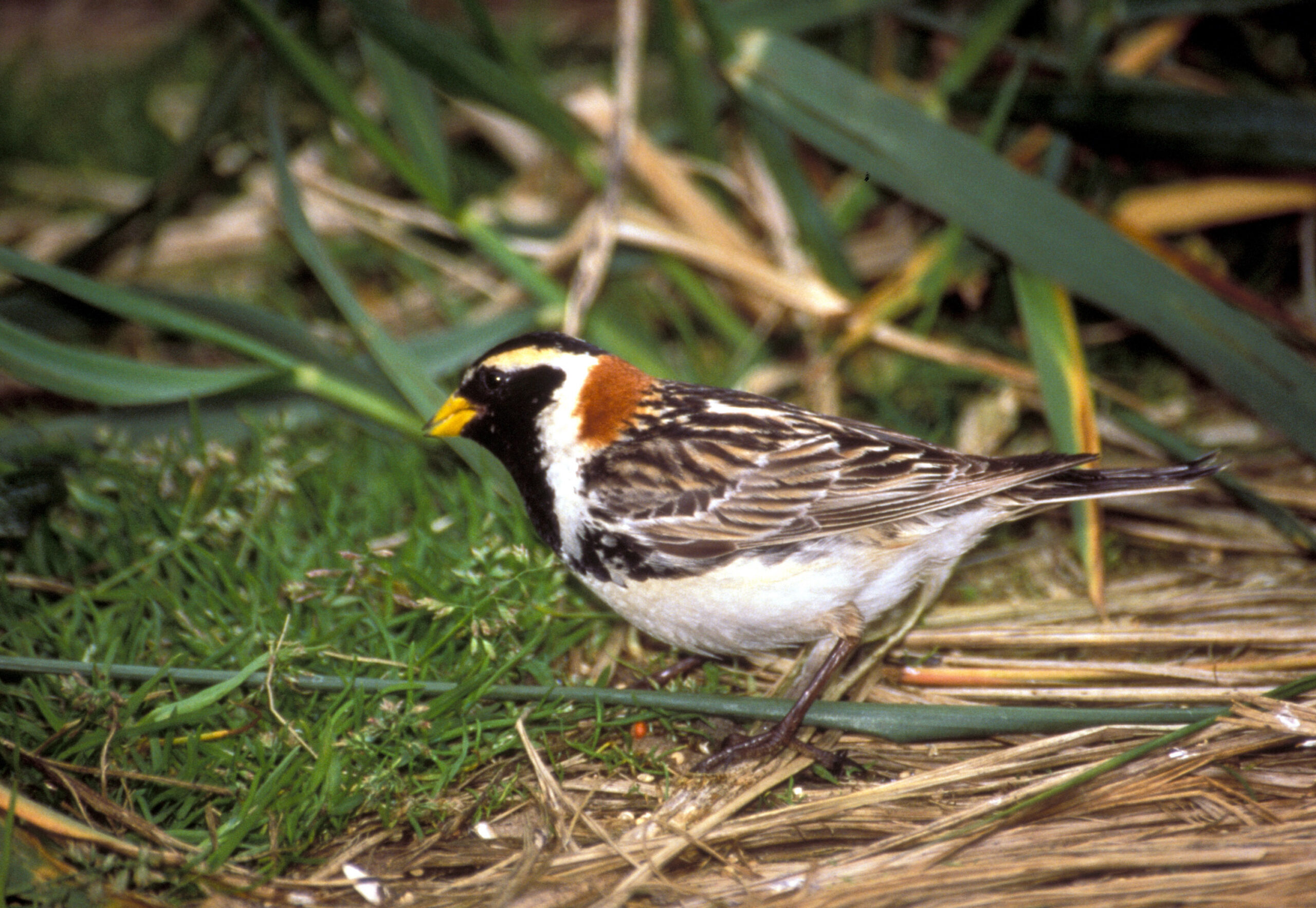
A sturdy bunting of 15.5 to 17 cm with a short tail and long, pointed wings. In winter plumage the bird has a reddish brown tinted face with a characteristic black C around the ear region, a yellow bill with a black tip and two white wing bars. The male in summer plumage is unmistakable, with a black throat, breast and ear region, bordered by cream yellow bands. The call is a melancholy descending roll with a dry rattle.
Wingspan: 26 cm an indication from Wikidata; it varies by individual, sex and subspecies · compare all birds (in Dutch)
What does a Lapland Bunting sound like?
Recording: Thomas Koffel, CC BY 4.0, via Wikimedia Commons
Where do you see this species in the Netherlands?
A scarce passage migrant and winter visitor, estimated at 100 to 600 wintering birds in the period 2012/13 to 2014/15. The species does not breed in the Netherlands but on the arctic tundra.
📍 Marker Wadden
With luck chance per source📍 Voornes Duin
presence reported📍 Haringvlietsluizen
presence reportedThese links come straight from our database, with the chance, the source and the evidence level for each area.
When is the best time?
Green = present · orange = peak period. The bar is generated from our database.
Best period: Arrival from mid-September to mid-November, then wintering; a few spring records up to mid-April.
Best time of day: During the day; above all listen for the call of birds flying over.
Recent sightings
👁️ Where has this species been seen recently?
Check the current sightings on Waarneming.nl. A useful addition to our own verified information.
Current sightings on Waarneming.nl →
Note: for sensitive species the source already blurs or withholds sightings. We do not reproduce exact locations.
How to improve your chances
- Learn the calls first. You will hear most birds before you see them.
- Go in the first hour after sunrise, when the song is at its peak and the wind is still down.
- Use a hide or natural cover. Sitting still gets you more than walking closer.
- Keep the sun behind you. Against the light you see a silhouette and no colour.
🎒 What you need for this
Binoculars and a knowledge of the call. Lapland Buntings are heard more often than seen; the descending roll with a rattle is the most reliable signal.
Photography
Work from a dyke or path along a salt marsh and let the flock shuffle towards you. Do not go out onto the marsh: in winter every flush is a loss of energy the birds can hardly spare. Cloudy light brings out the black C around the ear region best.
🌿 Watching responsibly
Keep your distance, stay on the paths, and never lure animals with food or sound. Leave as soon as an animal becomes uneasy. This is a sensitive species. We deliberately give no roosting or wintering gathering places.
Status: Verified · Last checked: 2026-08-08