
Where to see the Purple Sandpiper in the Netherlands
With luck 🦅 Bird
Where and when do you see a Purple Sandpiper? With some luck you can see this species, from September to May.
How do you recognise a Purple Sandpiper?
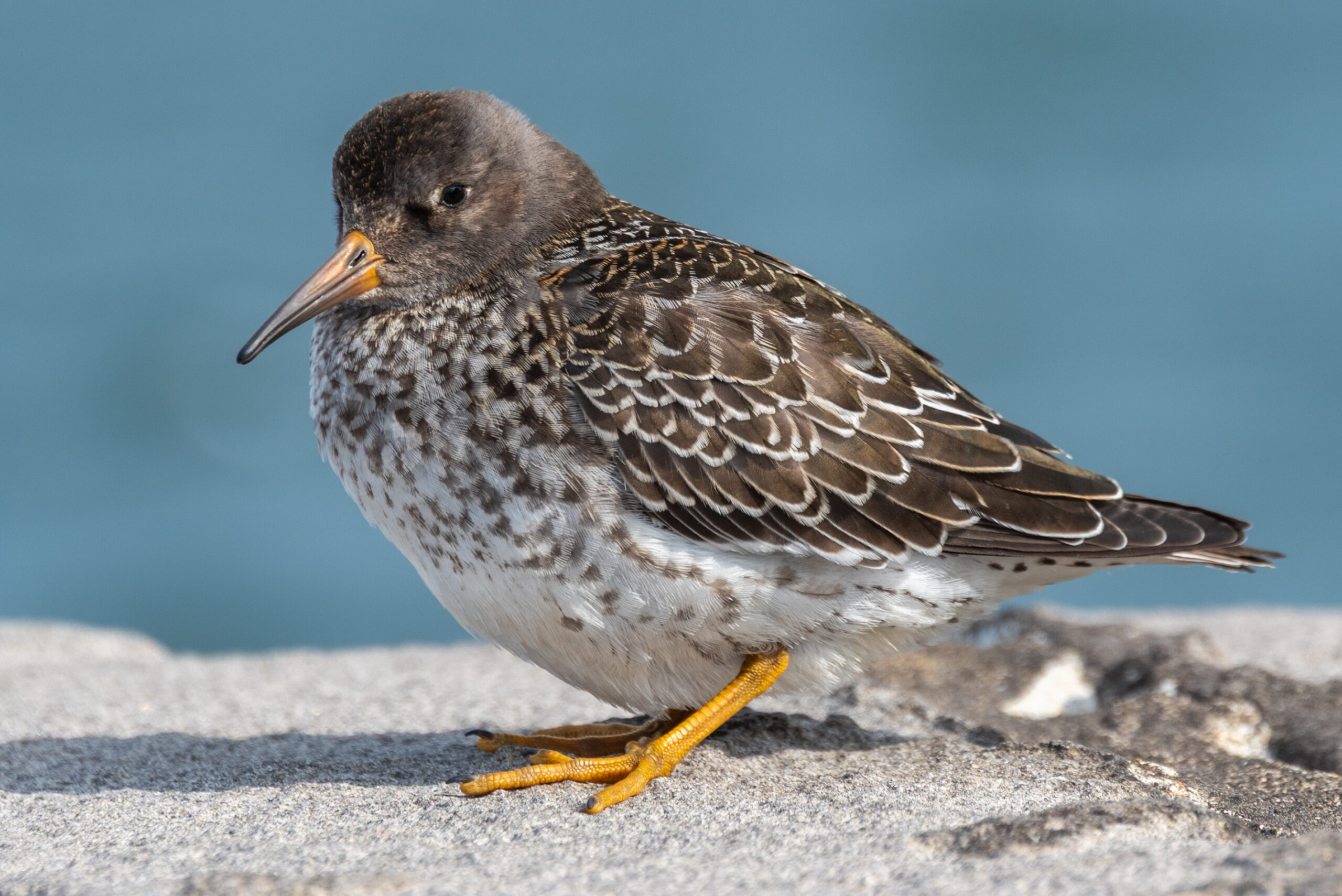
A stocky, dark wader of 20 to 22 cm with a wingspan of 42 to 46 cm. The winter plumage is slate grey to dark purplish grey on head, breast and upperparts, with a white belly. The two best features are the yellow to ochre legs and the yellow base of the slightly downcurved bill: no other sandpiper here has that combination. Often strikingly unshy.
Where do you see this species in the Netherlands?
A winter visitor along the whole Dutch coast wherever there are hard substrates. The national winter population is estimated at 400 to 600 birds. The species does not breed in the Netherlands; the birds come from northern Scandinavia, Spitsbergen and Greenland.
📍 Wadden Sea
Good chance in season chance per source📍 Nationaal Park Oosterschelde
Good chance in season chance per source📍 Schoorlse Duinen
presence reported📍 De Putten bij Camperduin
presence reportedThese links come straight from our database, with the chance, the source and the evidence level for each area.
When is the best time?
Green = present · orange = peak period. The bar is generated from our database.
Best period: Present from September through May, with the highest numbers in winter.
Best time of day: Around high tide, when the birds are pushed up onto the upper part of the stones.
Recent sightings
👁️ Where has this species been seen recently?
Check the current sightings on Waarneming.nl. A useful addition to our own verified information.
How to improve your chances
- Learn the calls first. You will hear most birds before you see them.
- Go in the first hour after sunrise, when the song is at its peak and the wind is still down.
- Use a hide or natural cover. Sitting still gets you more than walking closer.
- Keep the sun behind you. Against the light you see a silhouette and no colour.
🎒 What you need for this
Binoculars are usually enough, because the birds often let you get close. Waterproof shoes with grip matter more: basalt blocks with weed on them are treacherously slippery.
Photography
The species is not very shy, so a 300 to 400 mm will serve you well. Sit down and wait until the bird forages towards you. Keep an eye on the waves behind you and never photograph alone on a slippery pier.
🌿 Watching responsibly
Keep your distance, stay on the paths, and never lure animals with food or sound. Leave as soon as an animal becomes uneasy.
Status: Verified · Last checked: 2026-08-08