
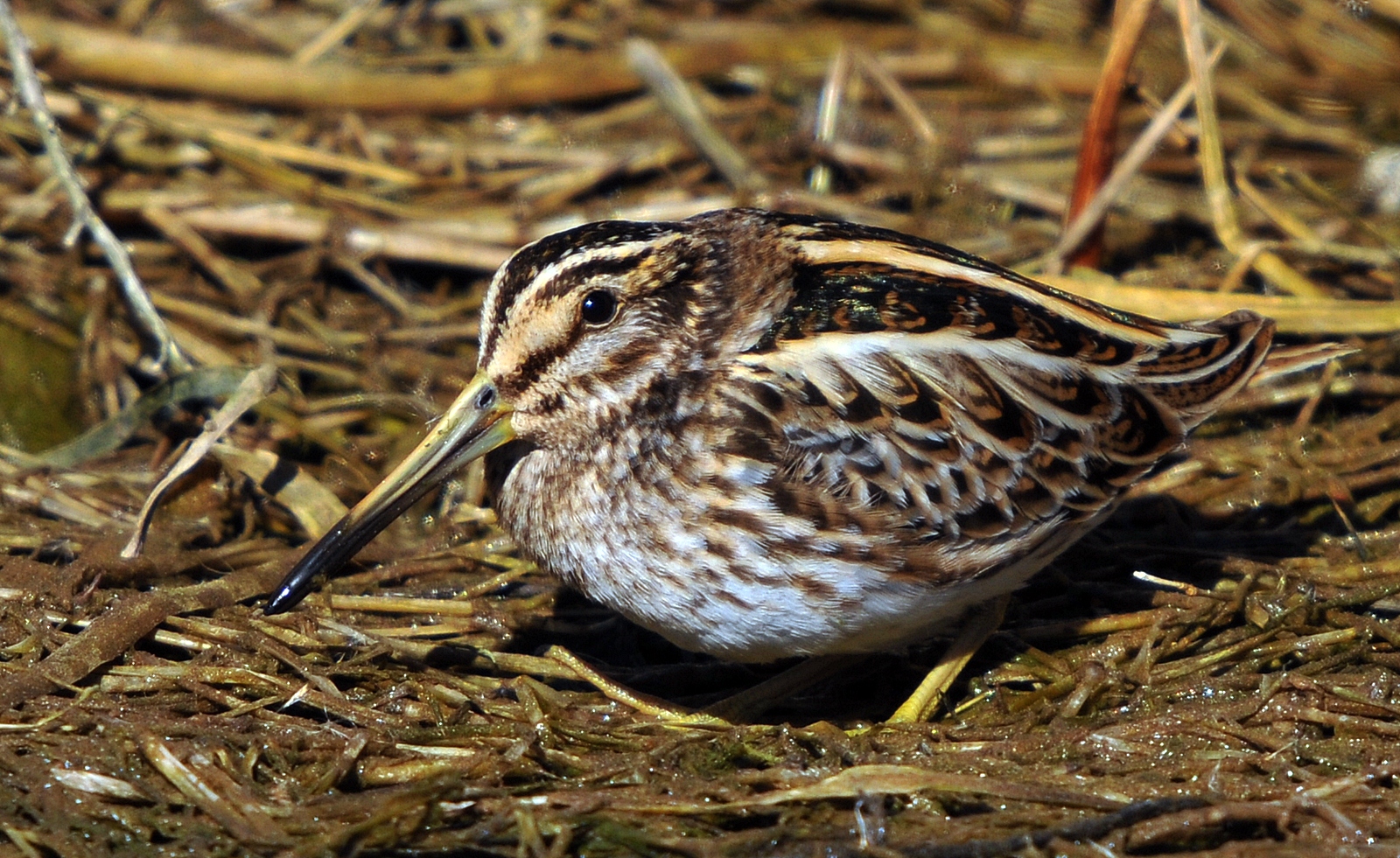
Where to see the Jack Snipe in the Netherlands
Rare 🦅 Bird
Where and when do you see a Jack Snipe? This species is rarely seen, from September to April.
How do you recognise a Jack Snipe?
Length 17 to 19 cm, wingspan 34 to 42 cm. Our smallest snipe, with a strikingly short bill, striped flanks and no pale crown stripe.
Where do you see this species in the Netherlands?
Low marshy vegetation: reedbeds, fens, wet grassland and ditch banks.
📍 Oostvaardersplassen
presence reported📍 Amsterdamse Waterleidingduinen
Rare chance per source📍 Gelderse Poort & Millingerwaard
Rare chance per source📍 Meijendel & Berkheide
presence reportedThese links come straight from our database, with the chance, the source and the evidence level for each area.
When is the best time?
Green = present · orange = peak period. The bar is generated from our database.
Best period: September to November and March to April; partly overwintering.
Best time of day: During the day.
Recent sightings
👁️ Where has this species been seen recently?
Check the current sightings on Waarneming.nl. A useful addition to our own verified information.
How to improve your chances
- Learn the calls first. You will hear most birds before you see them.
- Go in the first hour after sunrise, when the song is at its peak and the wind is still down.
- Use a hide or natural cover. Sitting still gets you more than walking closer.
- Keep the sun behind you. Against the light you see a silhouette and no colour.
🎒 What you need for this
Binoculars; above all patience
🌿 Watching responsibly
Keep your distance, stay on the paths, and never lure animals with food or sound. Leave as soon as an animal becomes uneasy.
Status: Verified · Last checked: 2026-08-08