
Where to see the Sandwich Tern in the Netherlands
Easy 🦅 Bird
Where and when do you see a Sandwich Tern? This species is easy to see, from March to September.
How do you recognise a Sandwich Tern?
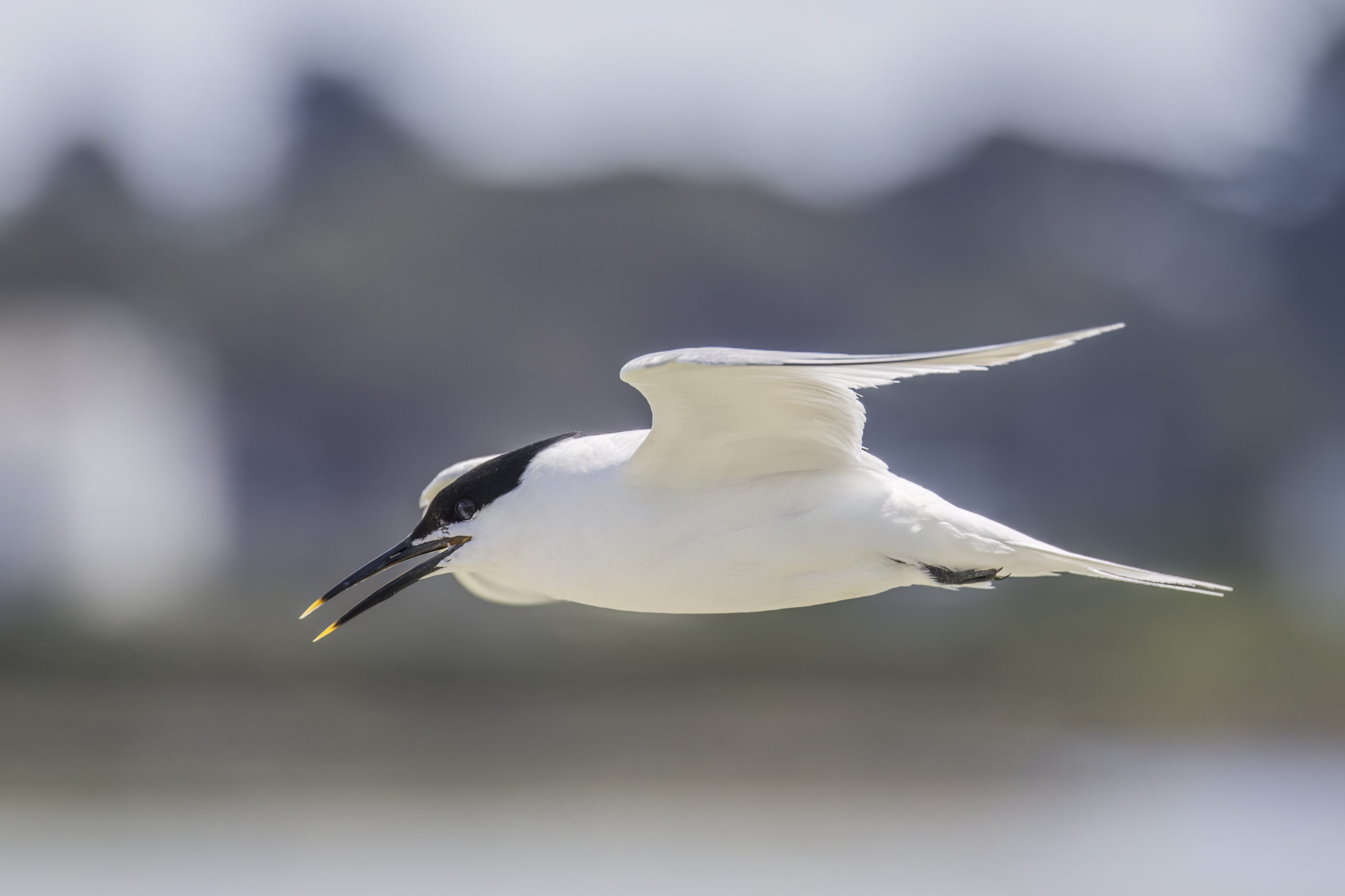
A fairly hefty, very white-looking tern with a pale grey upperside, white underside and, in the breeding season, a black cap with a crest. Decisive is the bill: long, thin and black with a yellow tip. About the size of a Black-headed Gull: 36 to 46 centimetres, wingspan 86 to 105 centimetres.
What can you confuse a Sandwich Tern with?
Looks like: Common Tern, Black-headed Gull
- Common Tern: the Sandwich Tern is whiter and heftier, with a black bill with a yellow tip; the Common Tern has an orange-red bill with a black tip.
- Black-headed Gull: about the same size, but the Black-headed Gull has a chocolate brown head in summer and red legs and bill.
What does a Sandwich Tern sound like?
Recording: British Library, CC BY-SA 4.0, via Wikimedia Commons
Where do you see this species in the Netherlands?
It breeds in colonies in the Wadden area and the Zeeland Delta. In 2025 there were about 11,450 to 11,550 breeding pairs.
📍 Wadden Sea
Good chance in season chance per source📍 Nationaal Park Oosterschelde
Good chance in season chance per source📍 De Putten bij Camperduin
chance per sourceThese links come straight from our database, with the chance, the source and the evidence level for each area.
When is the best time?
Green = present · orange = peak period. The bar is generated from our database.
Best period: Present in large numbers from late March; departure from mid-July to September for West Africa.
Best time of day: During the day.
Recent sightings
👁️ Where has this species been seen recently?
Check the current sightings on Waarneming.nl. A useful addition to our own verified information.
How to improve your chances
- Learn the calls first. You will hear most birds before you see them.
- Go in the first hour after sunrise, when the song is at its peak and the wind is still down.
- Use a hide or natural cover. Sitting still gets you more than walking closer.
- Keep the sun behind you. Against the light you see a silhouette and no colour.
🎒 What you need for this
Binoculars. The yellow bill tip is the quickest feature at a distance.
Photography
Look along the tideline or by a channel: the Sandwich Tern hunts with plunge-dives and often comes close inshore while doing so. Photograph it in flight, because then you see the yellow bill tip and the crest at the same time.
🌿 Watching responsibly
Keep your distance, stay on the paths, and never lure animals with food or sound. Leave as soon as an animal becomes uneasy.
Status: Verified · Last checked: 2026-08-08