
Where to see the Richard's Pipit in the Netherlands
Very rare 🦅 Bird
Where and when do you see a Richard's Pipit? This species is very rarely seen, in April, September, October and November.
How do you recognise a Richard's Pipit?
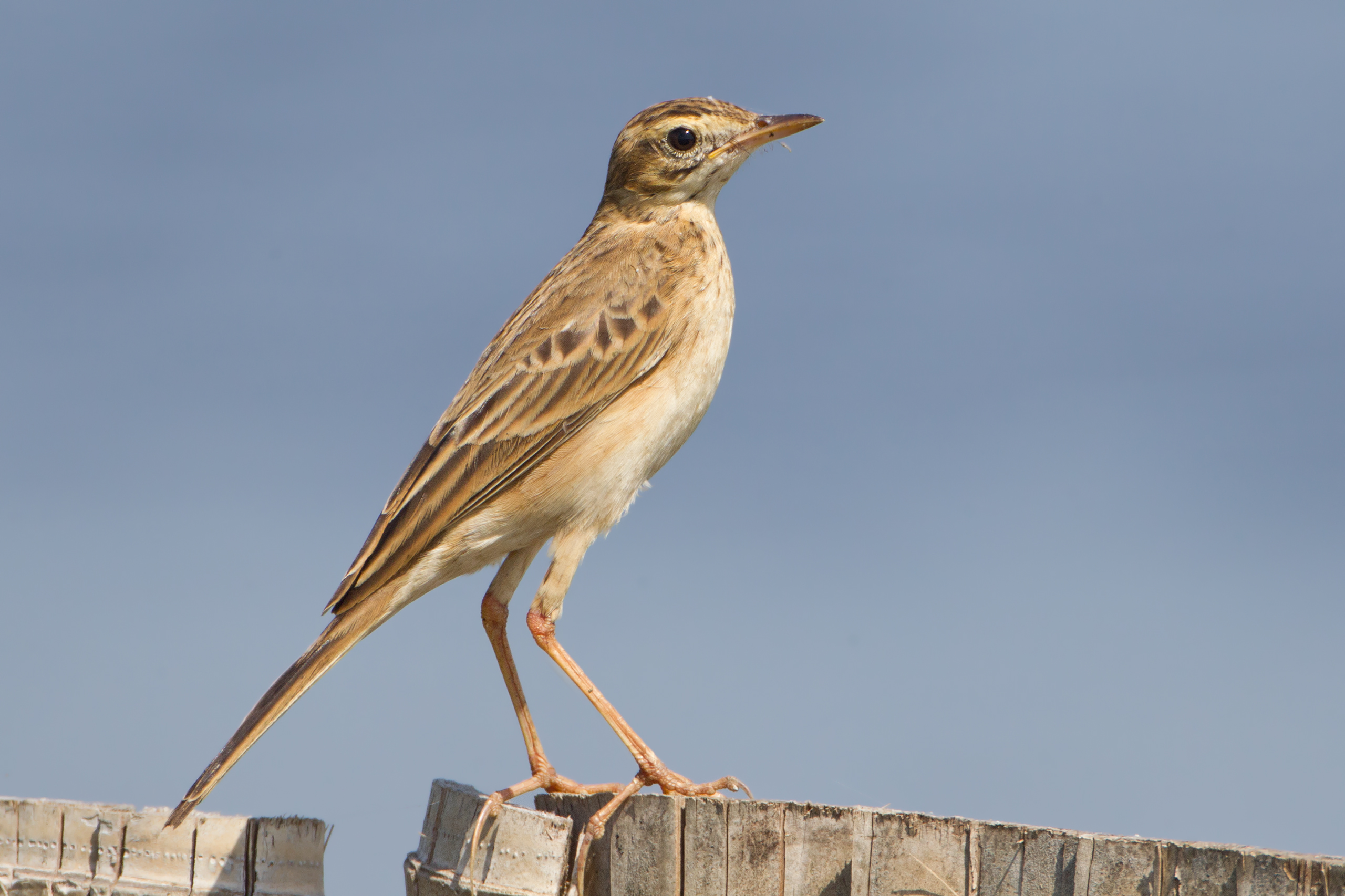
A hefty pipit of 17 to 18 cm with long legs, a long tail and a strikingly upright stance. Dark streaking on mantle and breast, a pale lore, and warm beige underparts with fine breast streaking. The flanks are unstreaked. The long tail and the upright, almost lark-like stance above all set it apart from Meadow Pipit and Tawny Pipit.
Where do you see this species in the Netherlands?
A rare passage migrant, estimated at 1 to 100 birds a year in the period 2007/08 to 2011/12. The species breeds from eastern Russia to Kazakhstan and normally migrates to southern Asia; the birds that reach us are strays that winter in the Mediterranean.
Habitat: On passage open dune, damp grassland, dykes and salt marshes. Unlike many pipits it sits in tall grass rather than on bare ground. It eats invertebrates, insects and seeds.
This is a common, widespread species: you can come across it in far more places than the areas listed below. Treat that list as a starting point rather than a full survey.
📍 Noordhollands Duinreservaat
presence reportedThese links come straight from our database, with the chance, the source and the evidence level for each area.
When is the best time?
Green = present · orange = peak period. The bar is generated from our database.
Best period: Autumn passage from September through November; return passage in April is far rarer.
Best time of day: The morning during a migration count, when birds flying over are calling.
Recent sightings
👁️ Where has this species been seen recently?
Check the current sightings on Waarneming.nl. A useful addition to our own verified information.
How to improve your chances
- Learn the calls first. You will hear most birds before you see them.
- Go in the first hour after sunrise, when the song is at its peak and the wind is still down.
- Use a hide or natural cover. Sitting still gets you more than walking closer.
- Keep the sun behind you. Against the light you see a silhouette and no colour.
🎒 What you need for this
Binoculars and above all a knowledge of the call. In practice the bird is almost always found by sound.
Photography
Richard's Pipits crouch in tall grass and then fly up suddenly. Walk a dyke or salt marsh quietly and keep the camera ready for the moment it flies up and lands on a post or bush: then you have the upright stance and the long tail in one frame.
🌿 Watching responsibly
Keep your distance, stay on the paths, and never lure animals with food or sound. Leave as soon as an animal becomes uneasy.
Status: Verified · Last checked: 2026-08-08