
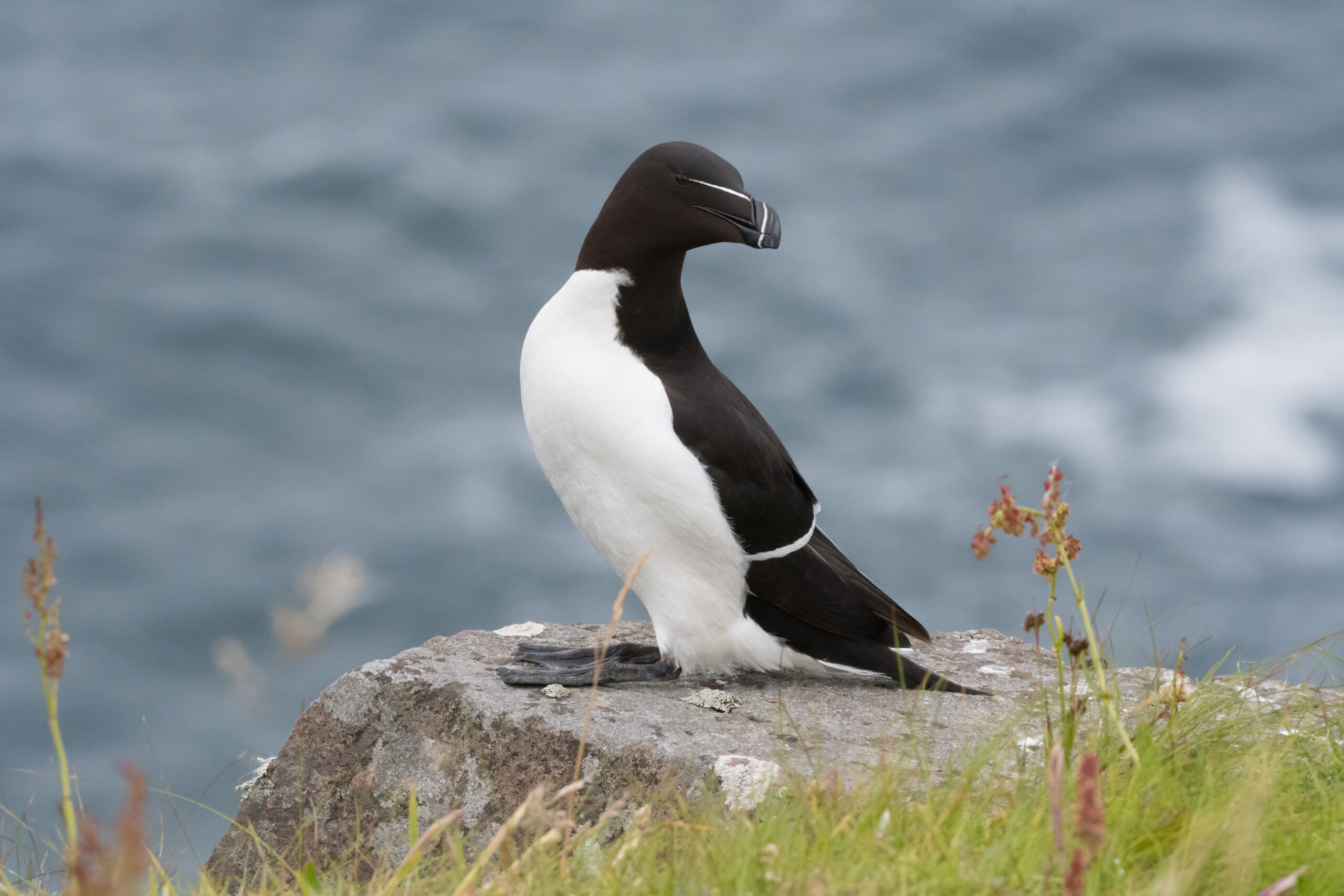
Where to see the Razorbill in the Netherlands
Rare 🦅 Bird
Where and when do you see a Razorbill? This species is rarely seen, from October to April.
How do you recognise a Razorbill?
A black-and-white seabird with a black, very deep and blunt bill with a white cross-stripe. In flight it looks torpedo-shaped. The upperside is truly black, the underside white. In summer plumage a white line runs from the bill to the eye; in winter plumage the cheeks and throat are white. It lies low in the water with its rear end raised. Length 38 to 43 centimetres, wingspan 60 to 69 centimetres.
Where do you see this species in the Netherlands?
A winter visitor from October to April, in some years in larger numbers through northerly weather patterns. It does not breed in the Netherlands; more than half the world population breeds along the coast of Iceland.
📍 Wadden Sea
With luck chance per sourceThese links come straight from our database, with the chance, the source and the evidence level for each area.
When is the best time?
Green = present · orange = peak period. The bar is generated from our database.
Best period: In Dutch waters from October to April.
Best time of day: During the day, during autumn and winter passage.
Recent sightings
👁️ Where has this species been seen recently?
Check the current sightings on Waarneming.nl. A useful addition to our own verified information.
How to improve your chances
- Learn the calls first. You will hear most birds before you see them.
- Go in the first hour after sunrise, when the song is at its peak and the wind is still down.
- Use a hide or natural cover. Sitting still gets you more than walking closer.
- Keep the sun behind you. Against the light you see a silhouette and no colour.
🎒 What you need for this
A telescope. It flies fast and low over the water, which makes it hard to follow with binoculars.
Photography
Aim at the head: the deep, blunt bill with the white cross-stripe is the only thing that separates it from the Common Guillemot. On a flying bird at a distance that rarely works — count on a swimming bird or a good telescope.
🌿 Watching responsibly
Keep your distance, stay on the paths, and never lure animals with food or sound. Leave as soon as an animal becomes uneasy.
Status: Verified · Last checked: 2026-08-08