
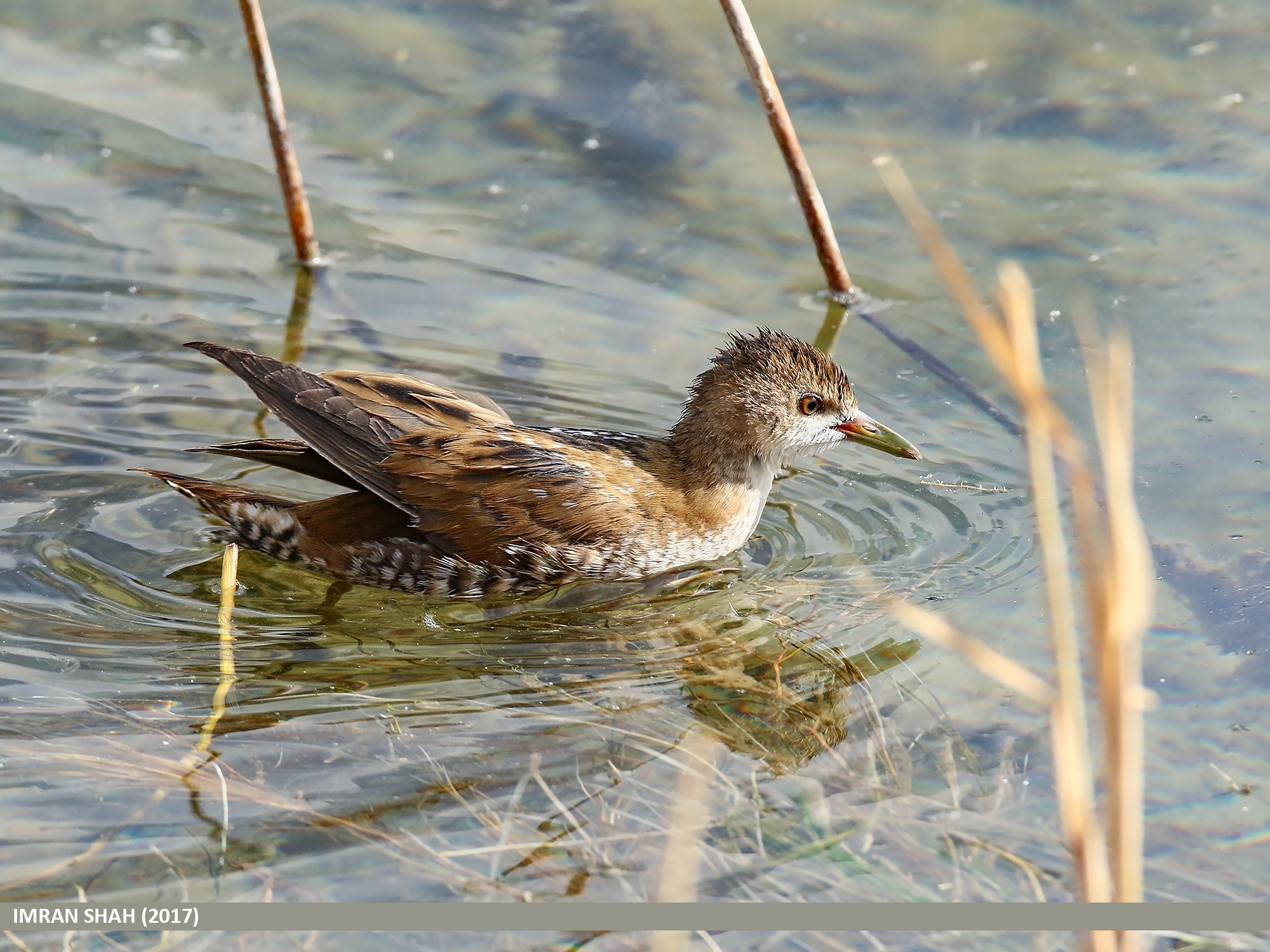
Where to see the Little Crake in the Netherlands
Very rare 🦅 Bird Sensitive species · R3
🛡️ No exact locations, on purpose
This is a sensitive species. We deliberately show no nest sites, and during the breeding season (March to July) we are extra careful about exact spots. Why we do that.
Where and when do you see a Little Crake? This species is very rarely seen, from April to September.
How do you recognise a Little Crake?
A small crake of 18 to 20 cm with strikingly long toes. The upperparts are brown with black streaks, the bill is short and yellowish green with red at the base. The male has slate grey underparts, the female beige underparts with a white throat. The best feature in spring is the song. Smaller and differently marked than the Spotted Crake, which has a speckled breast and an orange bill base.
Wingspan: 37 cm an indication from Wikidata; it varies by individual, sex and subspecies · compare all birds (in Dutch)
Where do you see this species in the Netherlands?
An extremely scarce breeding bird: 0 to 8 breeding pairs in the period 2018 to 2020, with only a handful of proven breeding records ever. Singing birds are recorded almost every year in lowland peat marshes and marshes along the rivers. We do not name nest locations.
📍 Onlanden & Leekstermeer
Very rare chance per source📍 Zuidlaardermeergebied en Hunzedal
presence reported📍 Haringvlietsluizen
presence reportedThese links come straight from our database, with the chance, the source and the evidence level for each area.
When is the best time?
Green = present · orange = peak period. The bar is generated from our database.
Best period: A summer visitor: arrival in late March and April, breeding season May through August, departure in September.
Best time of day: Dusk and night, when the male sings.
Recent sightings
👁️ Where has this species been seen recently?
Check the current sightings on Waarneming.nl. A useful addition to our own verified information.
Current sightings on Waarneming.nl →
Note: for sensitive species the source already blurs or withholds sightings. We do not reproduce exact locations.
How to improve your chances
- Learn the calls first. You will hear most birds before you see them.
- Go in the first hour after sunrise, when the song is at its peak and the wind is still down.
- Use a hide or natural cover. Sitting still gets you more than walking closer.
- Keep the sun behind you. Against the light you see a silhouette and no colour.
🎒 What you need for this
Your ears and a torch for the way back. Binoculars help little in the dark; the record is almost always made by sound.
Photography
Do not go into the reedbed and do not use call playback. A singing Little Crake is a possible breeding record and very sensitive to disturbance. Photograph at most from an existing path or from a bird hide, and report your record to Sovon without publishing the location.
🌿 Watching responsibly
Keep your distance, stay on the paths, and never lure animals with food or sound. Leave as soon as an animal becomes uneasy. This is a sensitive species. We deliberately show no nest sites, and during the breeding season (March to July) we are extra careful about exact spots.
Status: Verified · Last checked: 2026-08-08