
Where to see the Kentish Plover in the Netherlands
Rare 🦅 Bird
Where and when do you see a Kentish Plover? This species is rarely seen, from March to September.
How do you recognise a Kentish Plover?
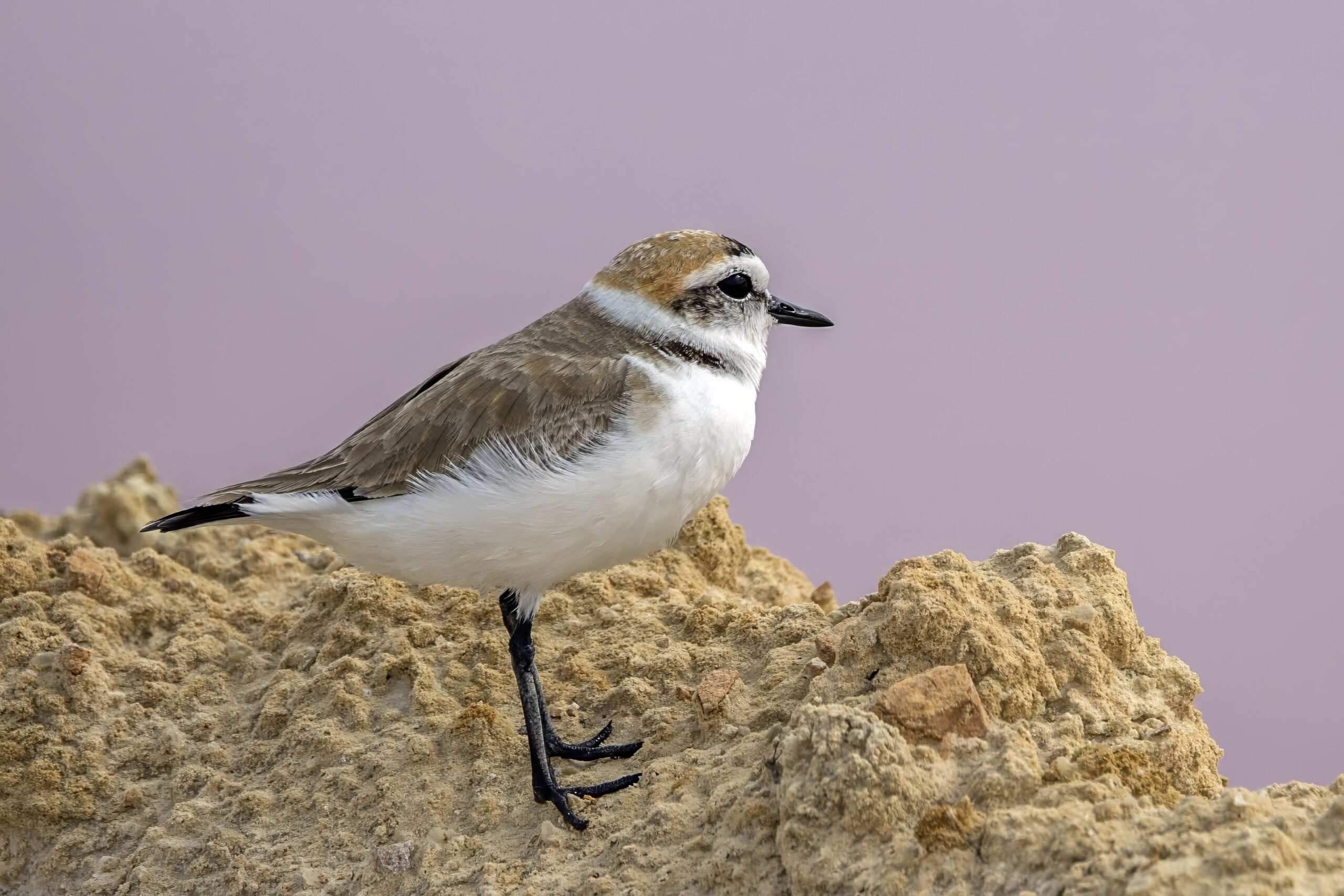
A small, pale little plover of 15 to 17 cm with a wingspan of 42 to 45 cm, which runs long stretches across the sand and then stands still. A black bill and black legs. The decisive feature is the absence of a dark breast band: instead there are two separate patches at the sides of the breast. The male also has a rusty brown crown and a black forehead mark; the female is far more faintly marked.
What does a Kentish Plover sound like?
Recording: Joost van Bruggen, CC BY-SA 4.0, via Wikimedia Commons
Where do you see this species in the Netherlands?
A breeding bird of the coast, with 165 to 185 breeding pairs in 2025. Since the nineteen-seventies the population has fallen by about 75 per cent. The inland breeding sites have all been abandoned; what remains lies in the coastal zone of the Delta and the Wadden area.
📍 Wadden Sea
Rare chance per sourceThese links come straight from our database, with the chance, the source and the evidence level for each area.
When is the best time?
Green = present · orange = peak period. The bar is generated from our database.
Best period: A breeding bird from April through August. Departure begins in late June, autumn passage from September; return in April and May.
Best time of day: Early morning, before the beach fills up.
Recent sightings
👁️ Where has this species been seen recently?
Check the current sightings on Waarneming.nl. A useful addition to our own verified information.
How to improve your chances
- Learn the calls first. You will hear most birds before you see them.
- Go in the first hour after sunrise, when the song is at its peak and the wind is still down.
- Use a hide or natural cover. Sitting still gets you more than walking closer.
- Keep the sun behind you. Against the light you see a silhouette and no colour.
🎒 What you need for this
A telescope, so that you can watch from a good distance without approaching the breeding ground.
Photography
Never photograph from the beach itself in the breeding season: the nests lie loose in the sand and are invisible, and a single step can cost a clutch. Work from a path or from a hide with a long lens, and always respect the site manager's cordons.
🌿 Watching responsibly
Keep your distance, stay on the paths, and never lure animals with food or sound. Leave as soon as an animal becomes uneasy.
Status: Verified · Last checked: 2026-08-08