
Where to see the Grey Phalarope in the Netherlands
Very rare 🦅 Bird
Where and when do you see a Grey Phalarope? This species is very rarely seen, from October to January.
How do you recognise a Grey Phalarope?
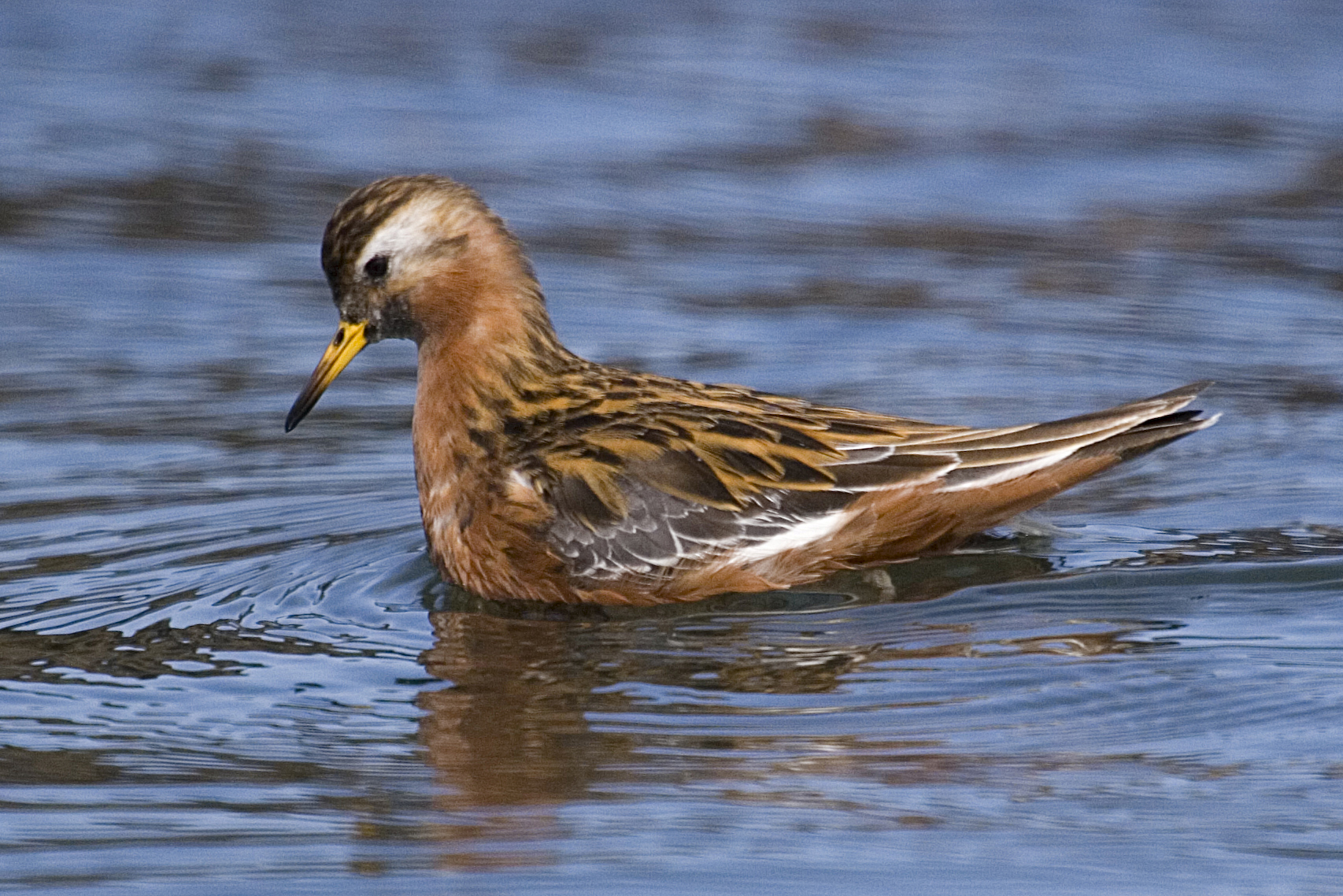
A phalarope of 20 to 22 cm with a wingspan of 37 to 40 cm, larger than the Red-necked Phalarope and with a clearly thicker bill. In winter plumage white below and grey above, with a black eye stripe and a dark rear crown. Females in summer plumage are spectacular: rust red underparts, black upperparts with yellow feather edges and a black head with a white mask. This species too swims and spins round to pick prey from the surface.
Where do you see this species in the Netherlands?
A passage migrant with an average of ten to twenty records a year, mainly from late October to early December and almost always on the coast; occasionally on an inland pool. It winters off the coast of west and south-west Africa and South America.
📍 Wadden Sea
Very rare chance per sourceThese links come straight from our database, with the chance, the source and the evidence level for each area.
When is the best time?
Green = present · orange = peak period. The bar is generated from our database.
Best period: Late October to early December, with a few later records in January.
Best time of day: The day after a severe westerly gale, along the coast and in harbours.
Recent sightings
👁️ Where has this species been seen recently?
Check the current sightings on Waarneming.nl. A useful addition to our own verified information.
How to improve your chances
- Learn the calls first. You will hear most birds before you see them.
- Go in the first hour after sunrise, when the song is at its peak and the wind is still down.
- Use a hide or natural cover. Sitting still gets you more than walking closer.
- Keep the sun behind you. Against the light you see a silhouette and no colour.
🎒 What you need for this
Binoculars and a telescope. A Grey Phalarope that ends up in a harbour after a storm will often let you approach to within a few metres.
Photography
Storm is the key: the day after a heavy westerly gale, look in harbours, sluice basins and in pools on the beach. The birds are then exhausted and strikingly tame, so keep your distance all the more and photograph with a long lens from the quay. Shooting low gives the finest image of the swimming bird.
🌿 Watching responsibly
Keep your distance, stay on the paths, and never lure animals with food or sound. Leave as soon as an animal becomes uneasy.
Status: Verified · Last checked: 2026-08-08