
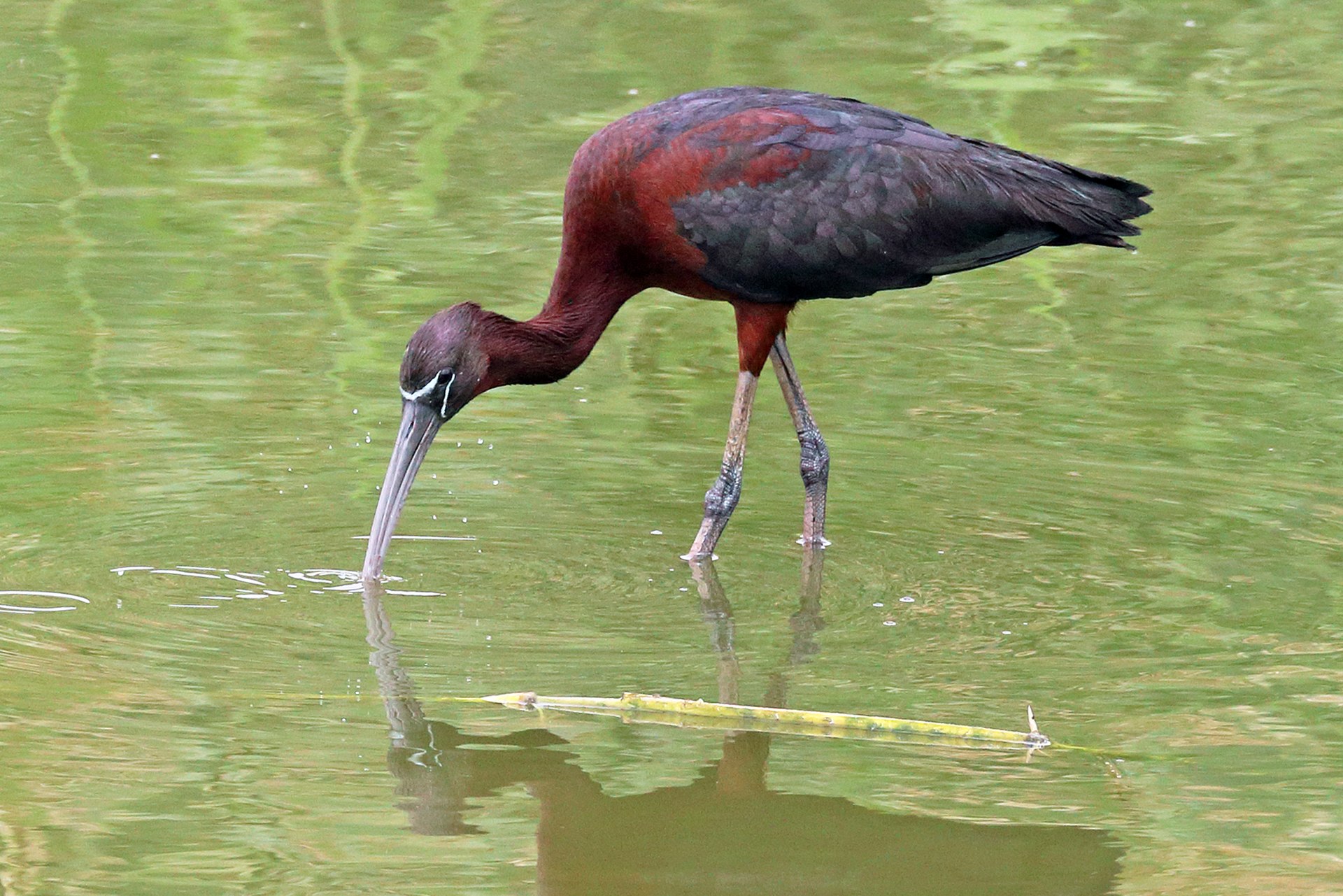
Where to see the Glossy Ibis in the Netherlands
Very rare 🦅 Bird
Where and when do you see a Glossy Ibis? This species is very rarely seen, all year round.
How do you recognise a Glossy Ibis?
Wingspan 80 to 95 cm. A dark, medium-sized heron-like bird of 48.5 to 66 centimetres with a long, downcurved bill. In summer plumage glossy chestnut on head and neck with iridescent green wings and white streaks around the eye; in winter plumage a dull brown-black with white streaking on head and neck.
What does a Glossy Ibis sound like?
Recording: Pere Josa, CC BY 4.0, via Wikimedia Commons
Where do you see this species in the Netherlands?
Marsh and shallow flooded areas, with the emphasis on North and South Holland, the Lauwersmeer and young nature-development areas.
📍 Nationaal Park Lauwersmeer
presence reported📍 Onlanden & Leekstermeer
presence reported📍 Blauwe Kamer
presence reported📍 Noordhollands Duinreservaat
presence reported📍 Ilperveld
presence reported📍 Zuidlaardermeergebied en Hunzedal
presence reportedThese links come straight from our database, with the chance, the source and the evidence level for each area.
When is the best time?
Green = present · orange = peak period. The bar is generated from our database.
Best period: Mainly April to September; 1 to 20 birds overwinter.
Best time of day: During the day.
Recent sightings
👁️ Where has this species been seen recently?
Check the current sightings on Waarneming.nl. A useful addition to our own verified information.
How to improve your chances
- Learn the calls first. You will hear most birds before you see them.
- Go in the first hour after sunrise, when the song is at its peak and the wind is still down.
- Use a hide or natural cover. Sitting still gets you more than walking closer.
- Keep the sun behind you. Against the light you see a silhouette and no colour.
🎒 What you need for this
A telescope or binoculars
Photography
The iridescent green sheen on the wings only shows in low, warm light and at the right angle; in cloudy weather it simply looks black. Work in the early morning and photograph from the side
🌿 Watching responsibly
Keep your distance, stay on the paths, and never lure animals with food or sound. Leave as soon as an animal becomes uneasy.
Status: Verified · Last checked: 2026-08-07