
Where to see the European bitterling in the Netherlands
With luck 🐟 Fish
Where and when do you see a European bitterling? With some luck you can see this species, all year round.
How do you recognise a European bitterling?
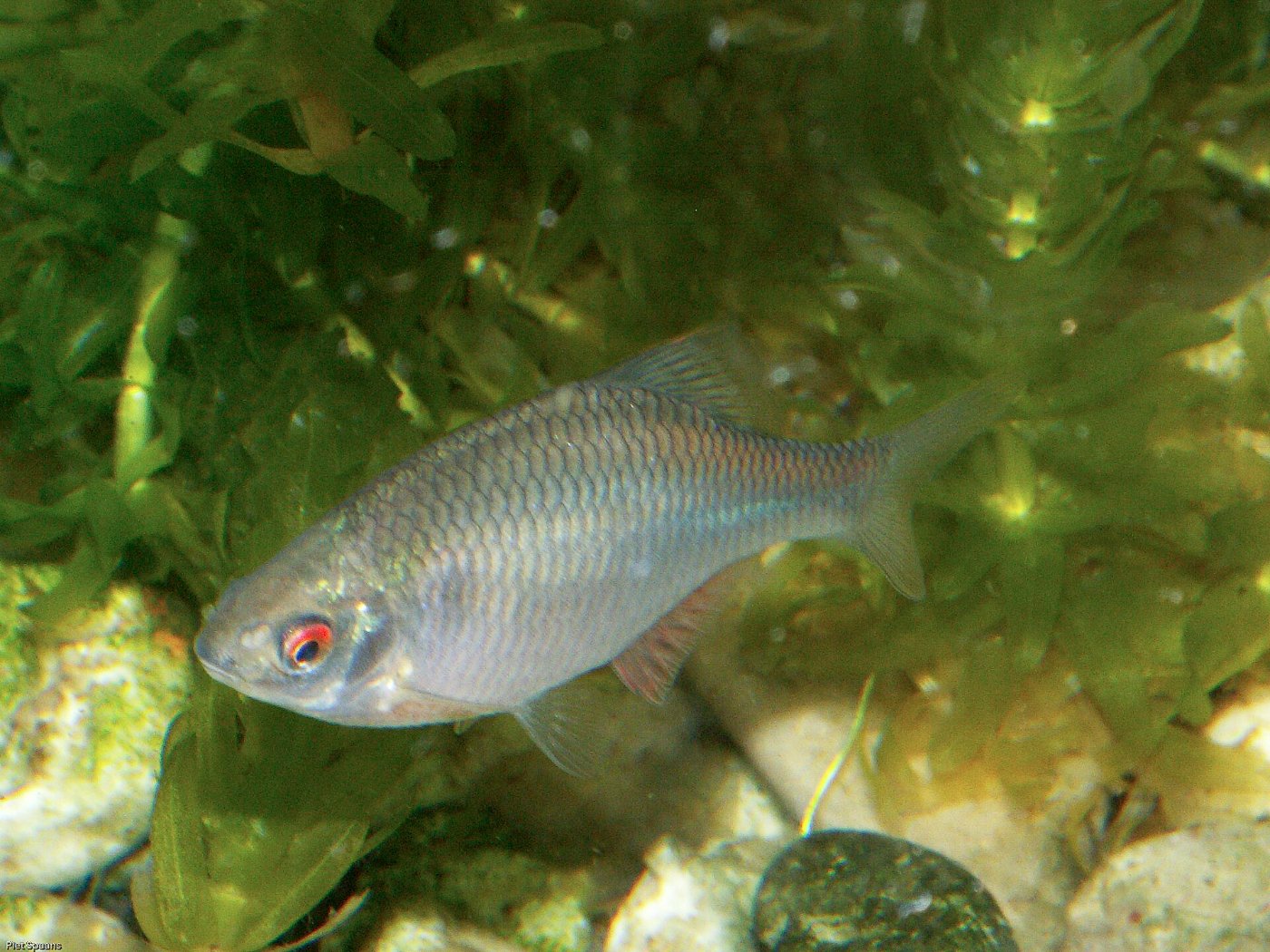
It can grow to a maximum of 9 centimetres; the Natura 2000 profile gives an average of 5 to 8 centimetres. A short, stocky, silvery body with a high, grey-green back and a blue-green stripe running to the tail. Spawning males turn purplish with a red breast; females develop an ovipositor. The key feature: the lateral line is incomplete, four to seven scales long.
What can you confuse a European bitterling with?
Looks like: Common bream, White bream, Crucian carp, Common roach
- Young Common bream and White bream: look much like a bitterling but have a complete lateral line and a longer anal fin.
- Crucian carp and the giebel: have a longer dorsal fin.
- Common roach: a complete lateral line, and grows much larger.
Where do you see this species in the Netherlands?
A fairly common species in large parts of the Netherlands, but rare in Zeeland, Flevoland, Drenthe and Groningen. At most ten per cent of its range lies inside a Natura 2000 site.
📍 IJssel-uiterwaarden
presence reported📍 IJsselmeer
presence reported📍 Naardermeer
presence reported📍 Gelderse Poort & Millingerwaard
presence reported📍 Nationaal Park De Biesbosch
presence reported📍 Nationaal Park Weerribben-Wieden
presence reported📍 Zouweboezem
presence reported📍 Oostelijke Vechtplassen
presence reported📍 Wormer- en Jisperveld
presence reported📍 Ilperveld
presence reported📍 Meijendel & Berkheide
presence reported📍 Kampina & Oisterwijkse Vennen
presence reported📍 Strabrechtse Heide & Beuven
presence reportedThese links come straight from our database, with the chance, the source and the evidence level for each area.
When is the best time?
Green = present · orange = peak period. The bar is generated from our database.
Best period: Spawning runs from April to September, with several clutches a year. In winter schools of thousands gather in sheltered spots.
Best time of day: During the day, in clear shallow water along plant-rich banks.
Recent sightings
👁️ Where has this species been seen recently?
Check the current sightings on Waarneming.nl. A useful addition to our own verified information.
How to improve your chances
- Look for clear, shallow water and watch from a bridge, a jetty or a high bank.
- Polarising sunglasses take the reflection off the surface and show you what is swimming underneath.
- Stay low and move slowly. Fish are very good at seeing movement above the water.
- Early morning gives the calmest water and the best visibility.
🎒 What you need for this
A dip net and a tray of water; polarising glasses for clear ditch water
Photography
Photograph in the spawning season. The male is then purplish with a red breast and the female has a long ovipositor — two things that make a bitterling unmistakable and that you do not see for the rest of the year.
🌿 Watching responsibly
Keep your distance, stay on the paths, and never lure animals with food or sound. Leave as soon as an animal becomes uneasy.
Status: Verified · Last checked: 2026-10-28