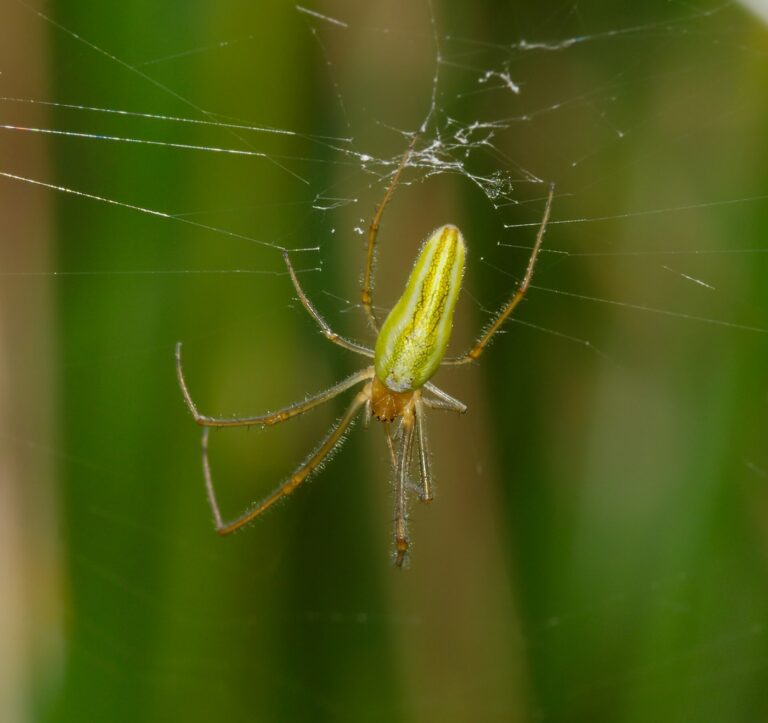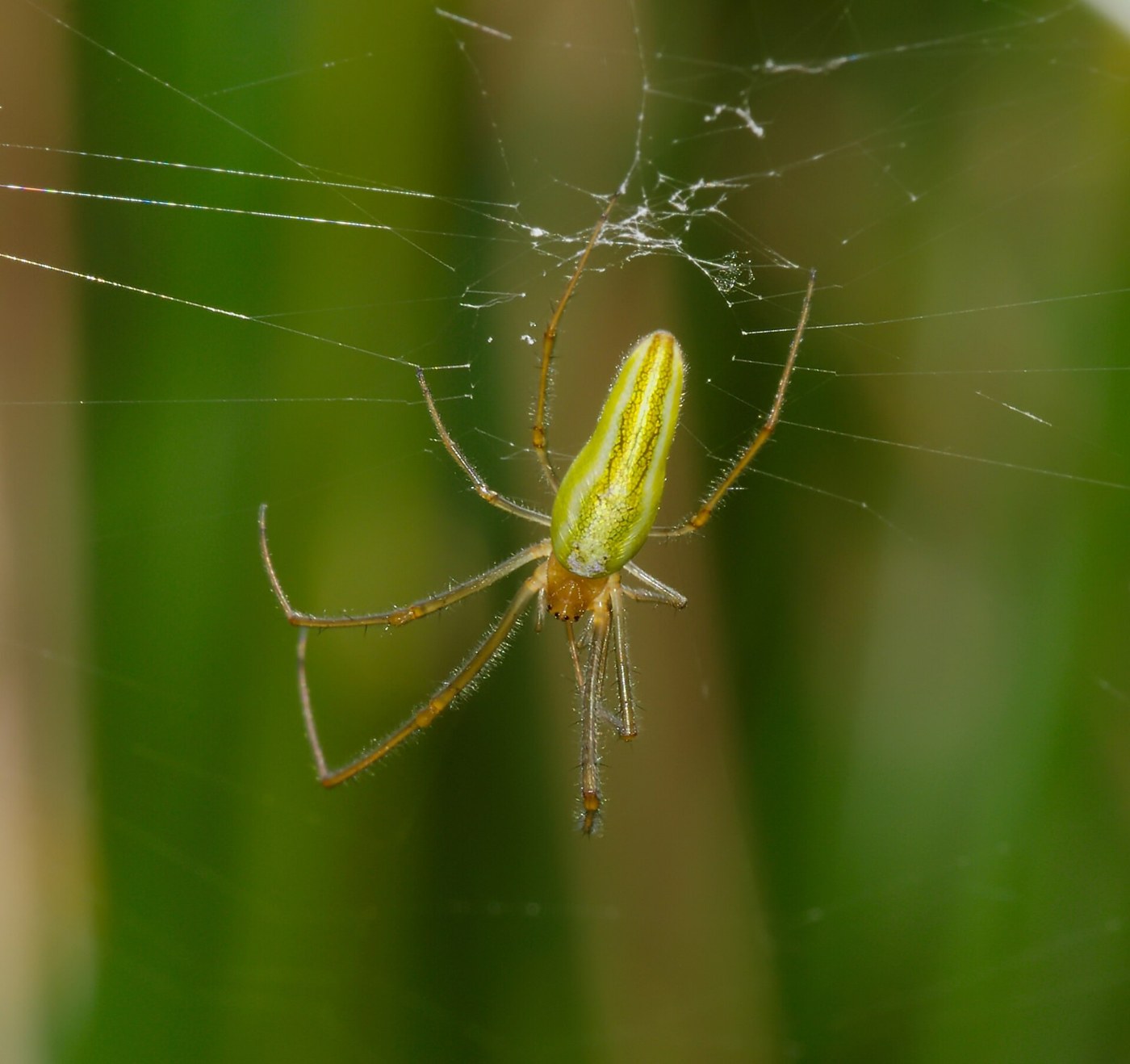
Where to see the common stretch-spider in the Netherlands
With luck 🕷️ Spider
Where and when do you see a common stretch-spider? With some luck you can see this species, from May to September.
How do you recognise a common stretch-spider?
A long, narrow, green-yellow to pale brown body with long jaws and very long front legs. The animal stretches itself out full length along a stem, with the front legs forward and the rear ones back. Spiders of Europe gives 5 to 12.2 mm (female) and 6 to 9 mm (male). Body lengths come from Spiders of Europe (Nentwig et al., araneae.nmbe.ch); those are European ranges, not Dutch measurements.
What can you confuse a common stretch-spider with?
- Other Tetragnatha species: this is the crux. NatureSpot writes "This is a very difficult species to identify as there are other similar species" and states that microscopic examination of the genitalia of adults is needed. On a photograph, then, you stop at Tetragnatha.
- Harvestman: not a spider, and never lies stretched out in a web.
Where do you see this species in the Netherlands?
In bankside and marsh vegetation throughout the country. Dutch trend figures are lacking.
Habitat: Always near water. Spiders of Europe: "On herbaceous plants in humid, open habitats, always near water". Reed fringes, ditch banks, peat cuttings and wet verges.
We have not yet recorded any areas for this species with enough evidence behind them, so we name the habitat type instead.
When is the best time?
Green = present · orange = peak period. The bar is generated from our database.
Best period: NatureSpot gives May to September. Note: the months come from British sources (British Arachnological Society and NatureSpot). Dutch phenology data per spider species could not be consulted — waarneming.nl and the Dutch Species Register blocked automated access. The climate is comparable, but this is not a Dutch measurement.
Best time of day: Early morning, while the web is still wet. In dry, sunny weather the spider lies stretched along a stem and you overlook it.
Recent sightings
👁️ Where has this species been seen recently?
Check the current sightings on Waarneming.nl. A useful addition to our own verified information.
How to improve your chances
- Go early, pick one spot, and let the animal come to you.
- Wear muted colours, skip the scent, and put your phone on silent.
- Look first for where one habitat turns into another. That is where most of the movement is.
- Be patient. Expect to come back more than once before it works.
🎒 What you need for this
Macro lens and boots. The animal is by definition on the wet side.
Photography
Photograph it stretched along the stem, parallel to the sensor — that is the posture by which you recognise the sex, and it makes the best composition at the same time. A low viewpoint with the water as a blurred background works best. Hanging in the web it is far less recognisable.
🌿 Watching responsibly
Keep your distance, stay on the paths, and never lure animals with food or sound. Leave as soon as an animal becomes uneasy.
Status: Verified · Last checked: 2026-10-28
More photos