Where to see the giant house spider in the Netherlands
Easy 🕷️ Spider
Where and when do you see a giant house spider? This species is easy to see, all year round.
How do you recognise a giant house spider?
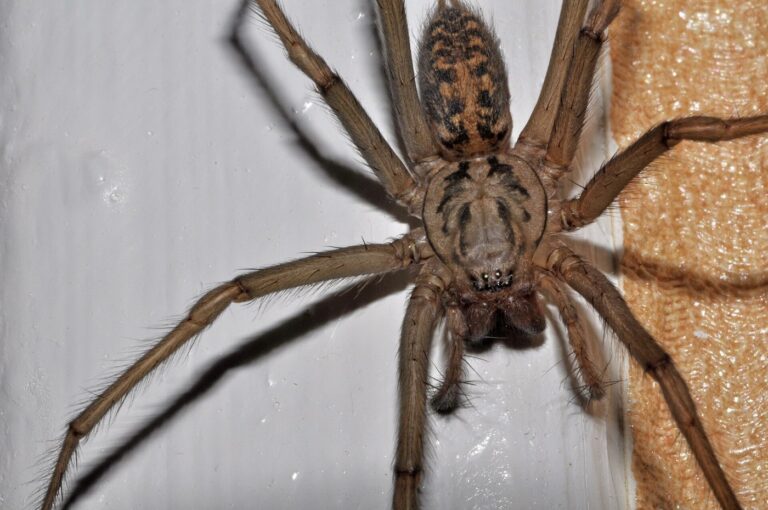
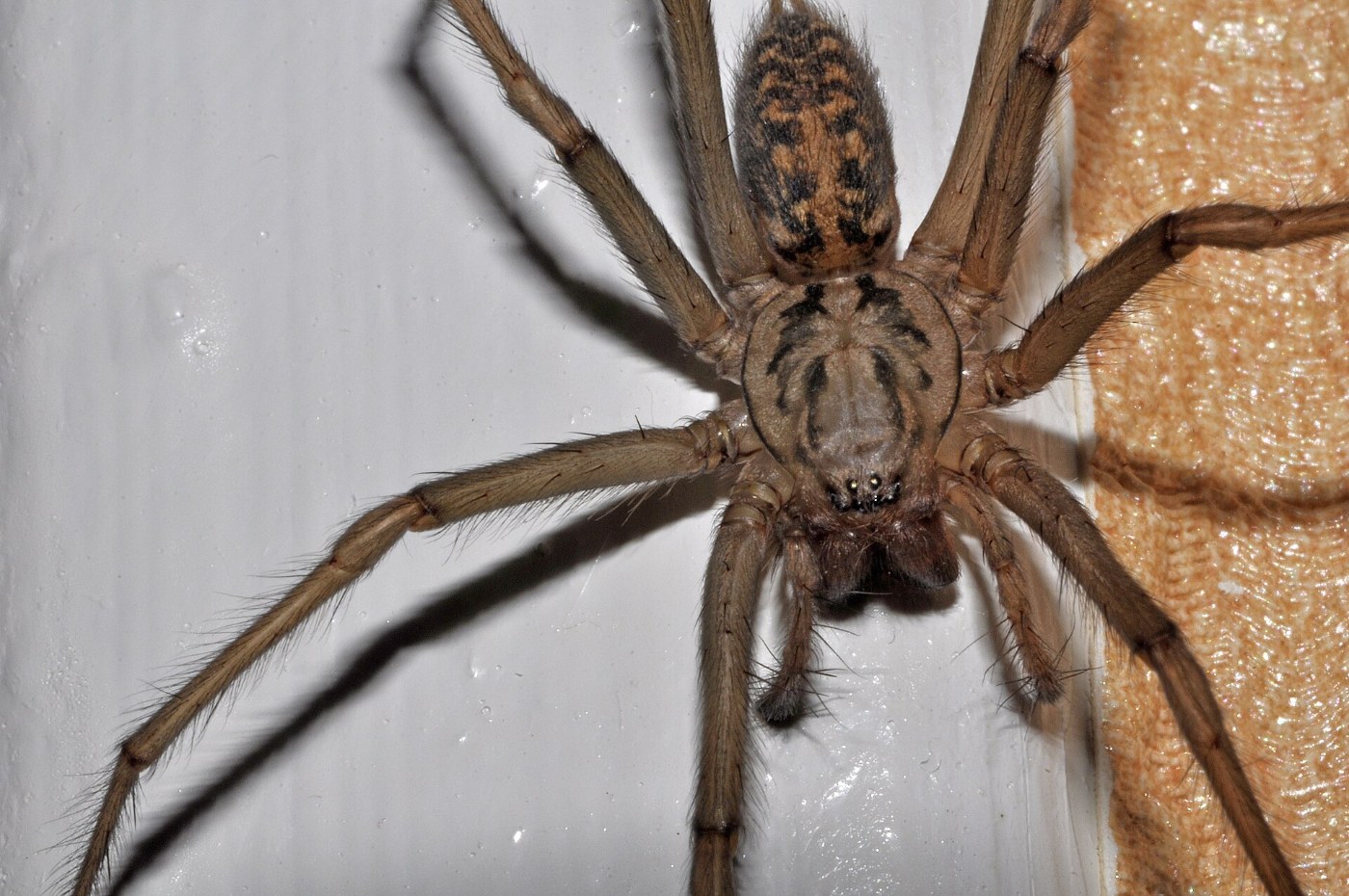
A large, brown spider with long, plain legs and a leg span of around 7.5 cm. Spiders of Europe gives a body length of 11.0 to 16.0 mm for the female and 10.0 to 14.0 mm for the male. An important feature for placing the group: Tegenaria species have banded legs, Eratigena species plain legs. The body lengths come from Spiders of Europe (Nentwig et al., araneae.nmbe.ch); those are European ranges, not Dutch measurements.
What can you confuse a giant house spider with?
Looks like: Daddy long-legs spider
- Other Eratigena species: according to NatureSpot, Eratigena duellica, Eratigena saeva and Eratigena atrica "cannot be reliably separated without examining the genitalia". On a photo you therefore get no further than the genus Eratigena.
- Tegenaria species: those do have clearly banded legs; Eratigena species have plain legs.
- Daddy long-legs spider: far thinner, with very long thin legs, hanging upside down in an untidy web.
Where do you see this species in the Netherlands?
Throughout the country, almost exclusively in and around buildings. Exactly which Eratigena species occur in the Netherlands, and in what proportion, could not be established from a primary source.
Habitat: Dark, quiet corners: behind cupboards, in cellars, sheds, crawl spaces and garages. Spiders of Europe mentions "In warm localities under stones, often in buildings".
We have not yet recorded any areas for this species with enough evidence behind them, so we name the habitat type instead.
When is the best time?
Green = present · orange = peak period. The bar is generated from our database.
Best period: Present all year. The animals stand out above all in August, September and October, when the adult males are roaming. Note: the months come from British sources (the British Arachnological Society and NatureSpot). Dutch phenological data per spider species could not be consulted — waarneming.nl and the Dutch Species Register blocked automated access. The climate is comparable, but this is not a Dutch measurement.
Best time of day: In the evening and at night; that is when the animals are on the move. By day they sit in a funnel-shaped web in a corner.
Recent sightings
👁️ Where has this species been seen recently?
Check the current sightings on Waarneming.nl. A useful addition to our own verified information.
How to improve your chances
- Go early, pick one spot, and let the animal come to you.
- Wear muted colours, skip the scent, and put your phone on silent.
- Look first for where one habitat turns into another. That is where most of the movement is.
- Be patient. Expect to come back more than once before it works.
🎒 What you need for this
A glass and a piece of card. For a photo: macro setting and a torch or flash with a diffuser — indoors it is always too dark.
Photography
Do not put the spider on a white sheet of paper "for clarity". Photograph it where it sits, low by the floor, along the line of the skirting board or the edge of the bath. A little side light shows the hairs on the legs, and that is exactly what to watch if you want to tell Tegenaria and Eratigena apart.
🌿 Watching responsibly
Keep your distance, stay on the paths, and never lure animals with food or sound. Leave as soon as an animal becomes uneasy.
Status: Verified · Last checked: 2026-10-28
More photos