
Where to see the Broad-billed Sandpiper in the Netherlands
Very rare 🦅 Bird
Where and when do you see a Broad-billed Sandpiper? This species is very rarely seen, in May, July, August and September.
How do you recognise a Broad-billed Sandpiper?
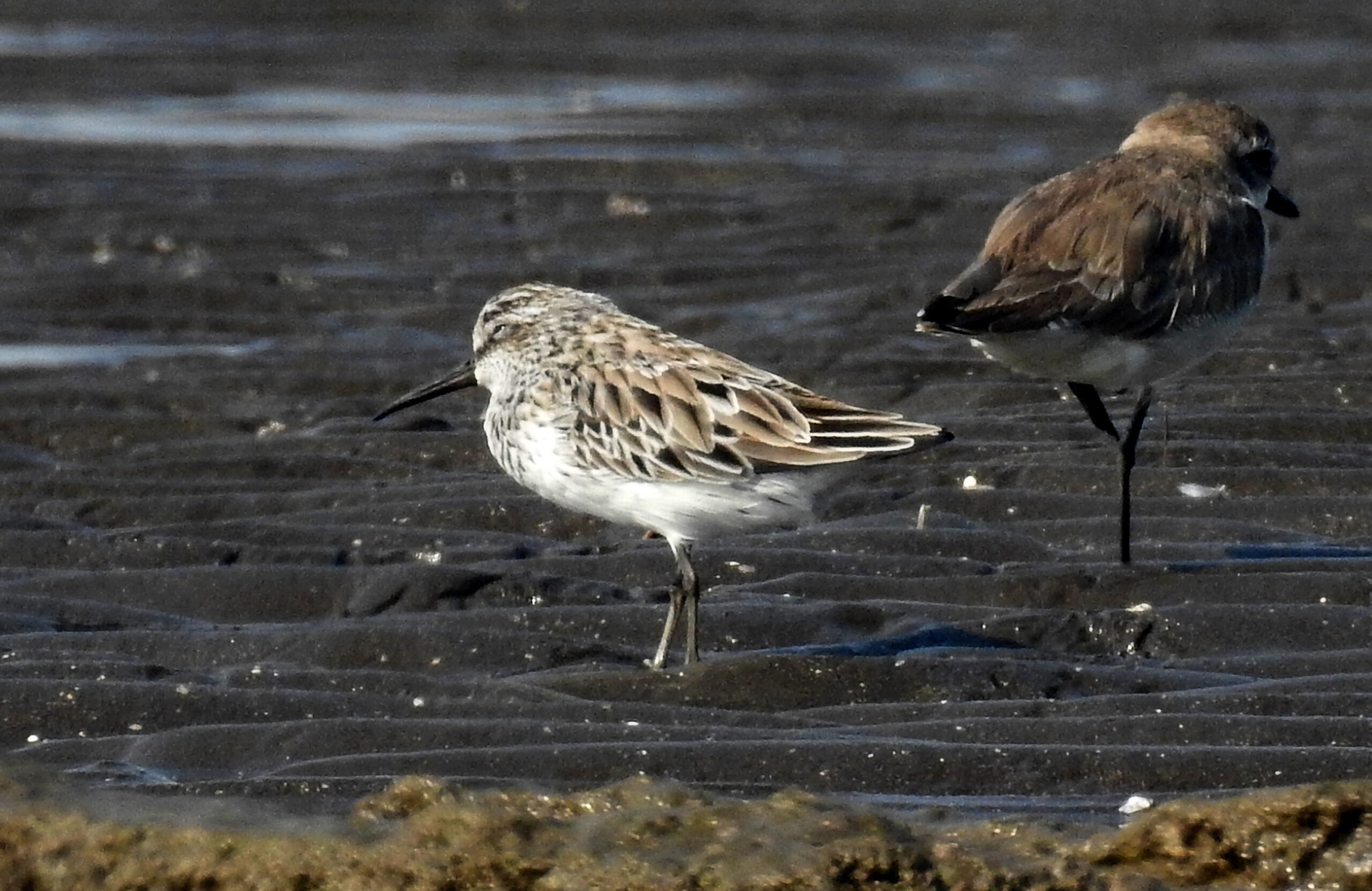
A compact wader of 15 to 18 cm with a wingspan of 34 to 37 cm. The bill is straight with a slight downward kink just before the tip. The decisive feature is the head: a dark crown with a double eyebrow stripe that splits above the eye. The legs are shorter than on a Dunlin, the rear end is short and the upperparts are dark. Young birds in autumn lack the arrow-shaped breast markings of adults.
Where do you see this species in the Netherlands?
A rare passage migrant, 1 to 100 birds a year in the period 2007 to 2012. Records come both from the Frisian Wadden coast and from freshwater pools inland. It does not breed in the Netherlands.
Habitat: Tidal flats and muddy margins, and inland shallow freshwater pools with muddy shores. It forages by touch in mud and shallow water, more slowly than a Sanderling. It eats bristle worms, small molluscs and crustaceans, insects and larvae and seeds of water plants. It breeds in loose colonies on the Fennoscandian tundra.
This is a common, widespread species: you can come across it in far more places than the areas listed below. Treat that list as a starting point rather than a full survey.
📍 Wadden Sea
presence reported📍 Schoorlse Duinen
presence reportedThese links come straight from our database, with the chance, the source and the evidence level for each area.
When is the best time?
Green = present · orange = peak period. The bar is generated from our database.
Best period: Spring passage around mid-May, autumn passage mainly in August.
Best time of day: Around low tide on the tidal flats, or the morning at an inland mud pool.
Recent sightings
👁️ Where has this species been seen recently?
Check the current sightings on Waarneming.nl. A useful addition to our own verified information.
How to improve your chances
- Learn the calls first. You will hear most birds before you see them.
- Go in the first hour after sunrise, when the song is at its peak and the wind is still down.
- Use a hide or natural cover. Sitting still gets you more than walking closer.
- Keep the sun behind you. Against the light you see a silhouette and no colour.
🎒 What you need for this
A telescope. The species is almost always among Dunlin and you need to be able to judge bill shape and head pattern.
Photography
Photograph from a bird hide at a mud pool and try to get the bird in frame next to a Dunlin. That comparison shot — shorter legs, shorter rear end, double eyebrow stripe — is far more valuable than a portrait on its own.
🌿 Watching responsibly
Keep your distance, stay on the paths, and never lure animals with food or sound. Leave as soon as an animal becomes uneasy.
Status: Verified · Last checked: 2026-08-08