
Where can you see red deer in the Netherlands — and when is the rut?
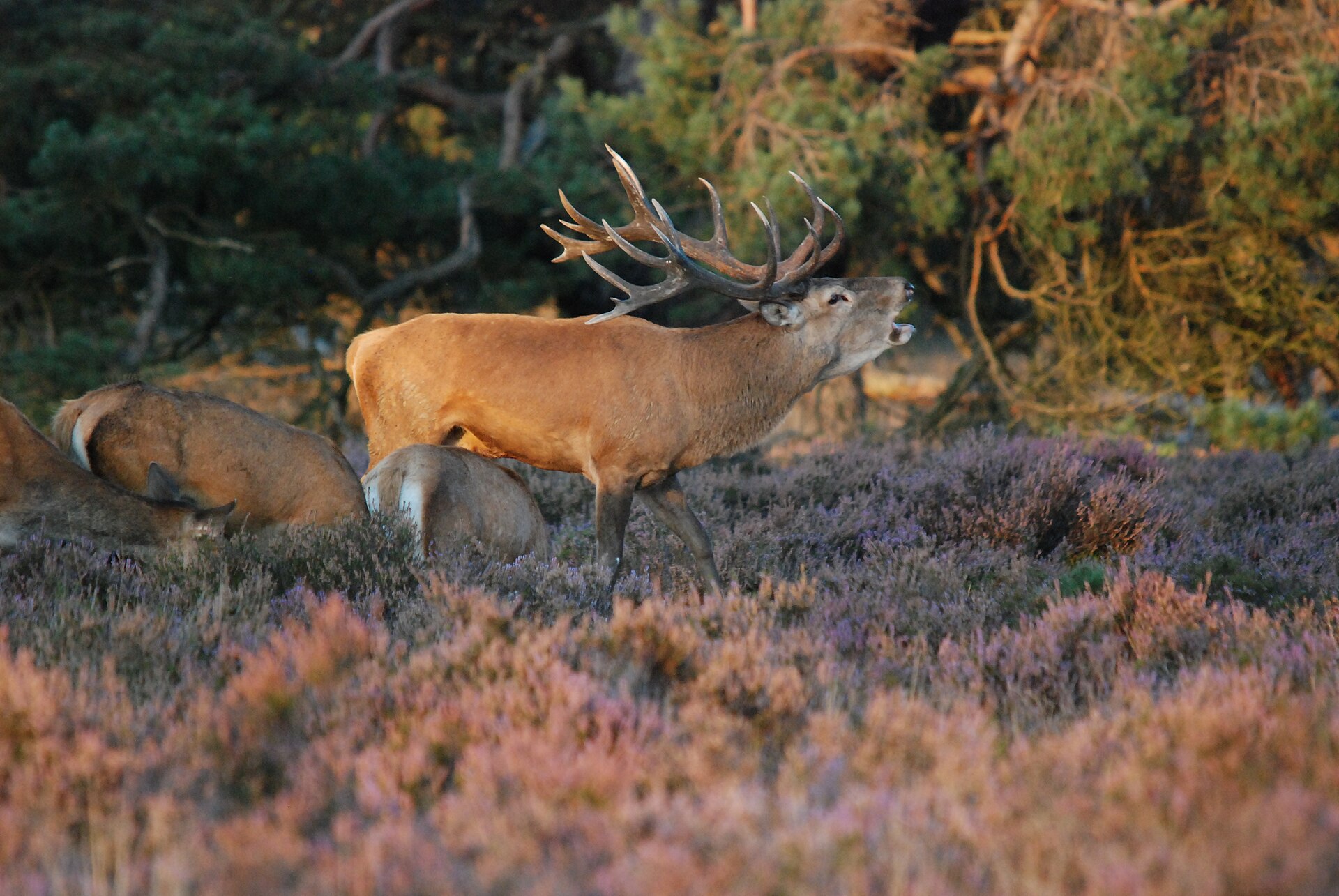
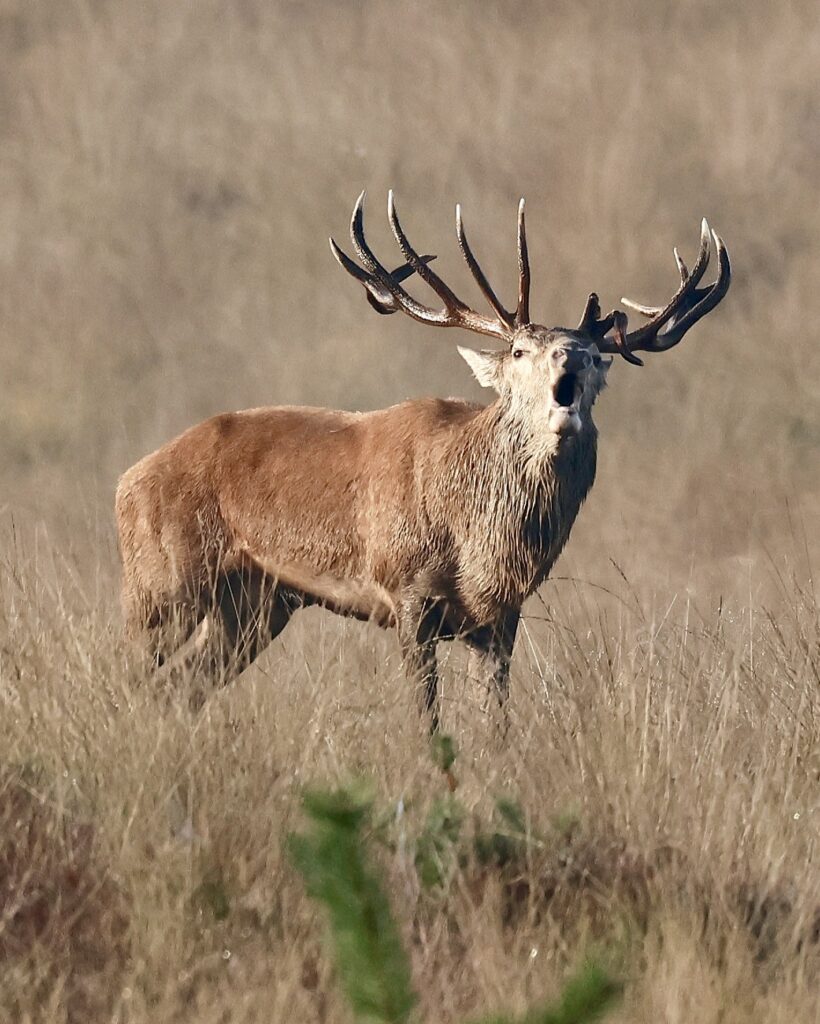
In mid-September the Veluwe changes its sound. Where August is quiet apart from a few songbirds, from the second half of September a low, raw bellowing carries through the wood — something between a cow and a motorbike. That is the red deer rut, and it is by far the most impressive natural spectacle the Netherlands has to offer.
Below is where you can see red deer, when the rut begins exactly, why that date differs by area, and how to go there without disturbing the animals. All with the source attached.

Where can you see red deer in the Netherlands?
The answer is shorter than you’d think: really well in two places, and essentially nowhere else.
Vereniging Het Edelhert, the association that has concerned itself with this species since 1946, puts it like this: in the Netherlands red deer occur “particularly on the Veluwe and in the Oostvaardersplassen”, with smaller populations in Flevoland and in Brabant and Limburg. Natuurmonumenten names the same two core areas, with occasional animals in Drenthe and the east of the country.
The Veluwe
This is the core area. Important to know: the Veluwe is not one continuous game park but a patchwork of estates with different owners, and each applies its own rules.
- Park De Hoge Veluwe — fenced, private and charging admission. That is exactly what makes it the most predictable: in spring 2024 the park counted a population of 230 red deer against a target of 160. There are three covered game observation hides and five open game meadows.
- Veluwezoom National Park (Natuurmonumenten) — with the De Elsberg observation hide, where according to Natuurmonumenten red deer gather for the rut “from mid-September to mid-October”.
- Planken Wambuis (Natuurmonumenten) — six observation points, including the game-viewing screen at Nieuw Reemst.
- Deelerwoud (Natuurmonumenten) — two marked walking routes, one of which is literally called “spotting deer in the Deelerwoud”.
- Kroondomein Het Loo — with a large caveat, see below.
The Oostvaardersplassen
The Oostvaardersplassen is the second large area, and in terms of landscape the opposite: open, flat and with no woodland to block your view. At the helicopter count of October 2025, Staatsbosbeheer counted 770 red deer there, alongside 420 Konik horses and 380 Heck cattle.
The core area with the herds is accessible outside the winter season only on guided excursions. Freely accessible are the Hollandse Hout, the Kotterbos, the Oostvaardersbos and the Oostvaardersveld — and in the winter months parts of those are in turn closed.
And beyond that?
Here you have to be careful what you read online. In 2017 ARK Rewilding, together with Brabants Landschap, brought red deer back to the Brabant landscape, and in the Weerterbos they have lived since 2005. But ARK itself adds: those animals live “for the time being in fenced area”. So that is not a free-ranging population as on the Veluwe.
Something similar applies to the Drents-Friese Wold: Natuurmonumenten has a news item about it titled “No red deer in Drents-Friese Wold for now”. So don’t count on it.
When exactly is the rut?
The standard answer is mid-September to mid-October. Vereniging Het Edelhert, Natuurmonumenten and Natuurmonumenten’s own Rut Route all say so. Staatsbosbeheer phrases it slightly more broadly: red deer “start around the end of summer, from September through October”.
The peak differs by area — and that is a fortnight’s difference
This is the part that appears almost nowhere. Vereniging Het Edelhert publishes an expected start date per area, with the peak following some ten to twelve days later:
- Hoge Veluwe — early September
- Asselse Heide — around 10 September
- Kroondomein Het Loo — around 15 September
- Other areas — around 18 September
So anyone driving to the Veluwezoom on 10 September is probably too early, while on the Hoge Veluwe the party has already started. And note: the same source warns that it differs from year to year. “The peak of the rut also shows some variation from one year to the next.”
The awkward coincidence at the Kroondomein
Kroondomein Het Loo is closed annually from 15 September to 25 December; only the Paleispark stays open all year. That is precisely the day on which, according to Vereniging Het Edelhert, the rut begins there. In practice, then, you cannot experience the peak of the rut at the Kroondomein, except on the public roads and in the part that stays freely accessible — according to the Royal House “a good 20 per cent of the area”.
What happens in those weeks
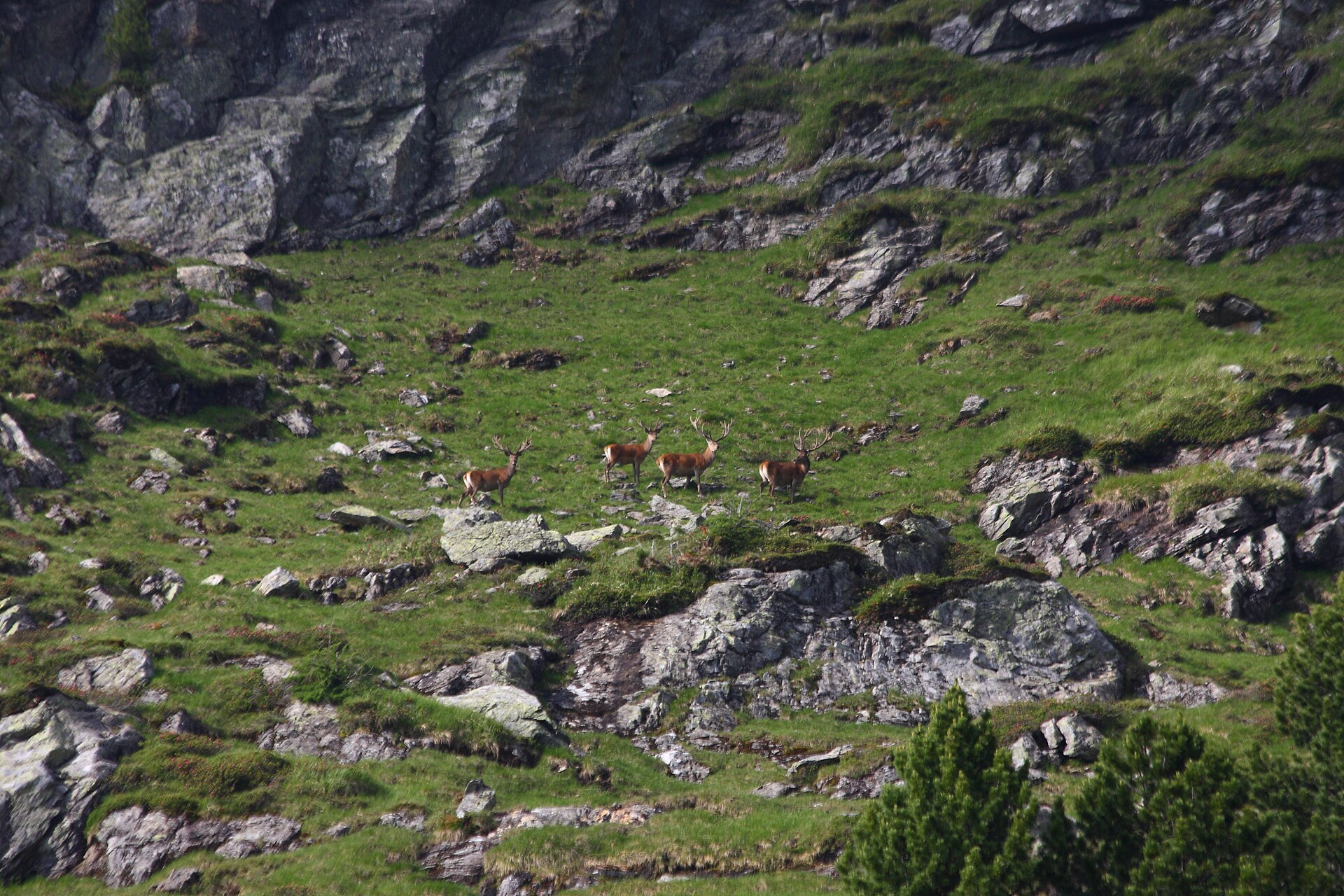
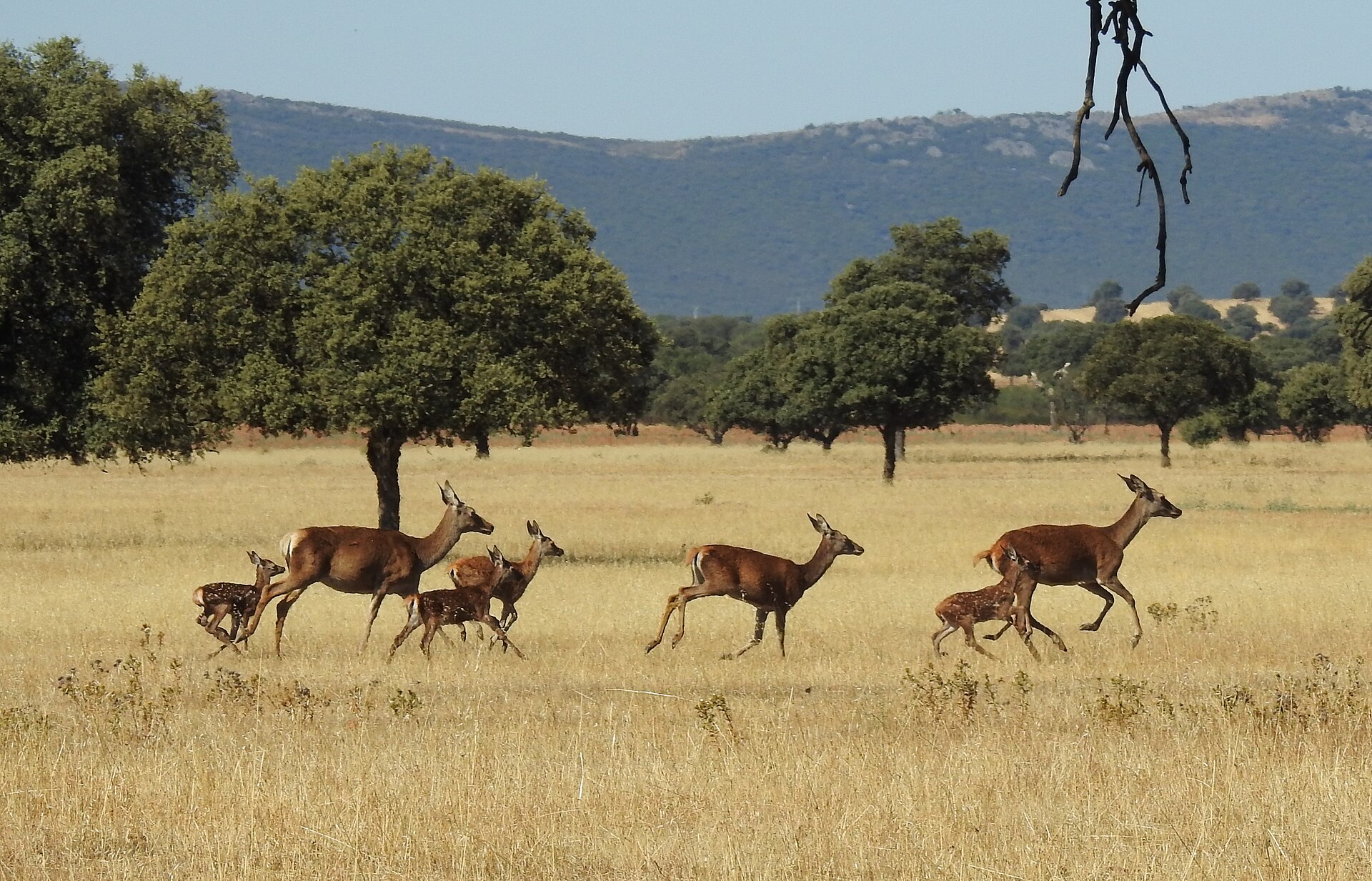
Adult stags live alone or in small groups for most of the year. The hinds live in herds led by a lead hind, who according to Natuurmonumenten determines “the movement behaviour and the rhythm of the group”.
In September that changes. The stag leaves his group, becomes visibly heavier, grows a rutting mane — longer hairs around the neck — and an enlarged throat. Vereniging Het Edelhert describes the accompanying behaviour: he thrashes his antlers against bushes, takes “a mud bath especially often” and urinates against his own belly.
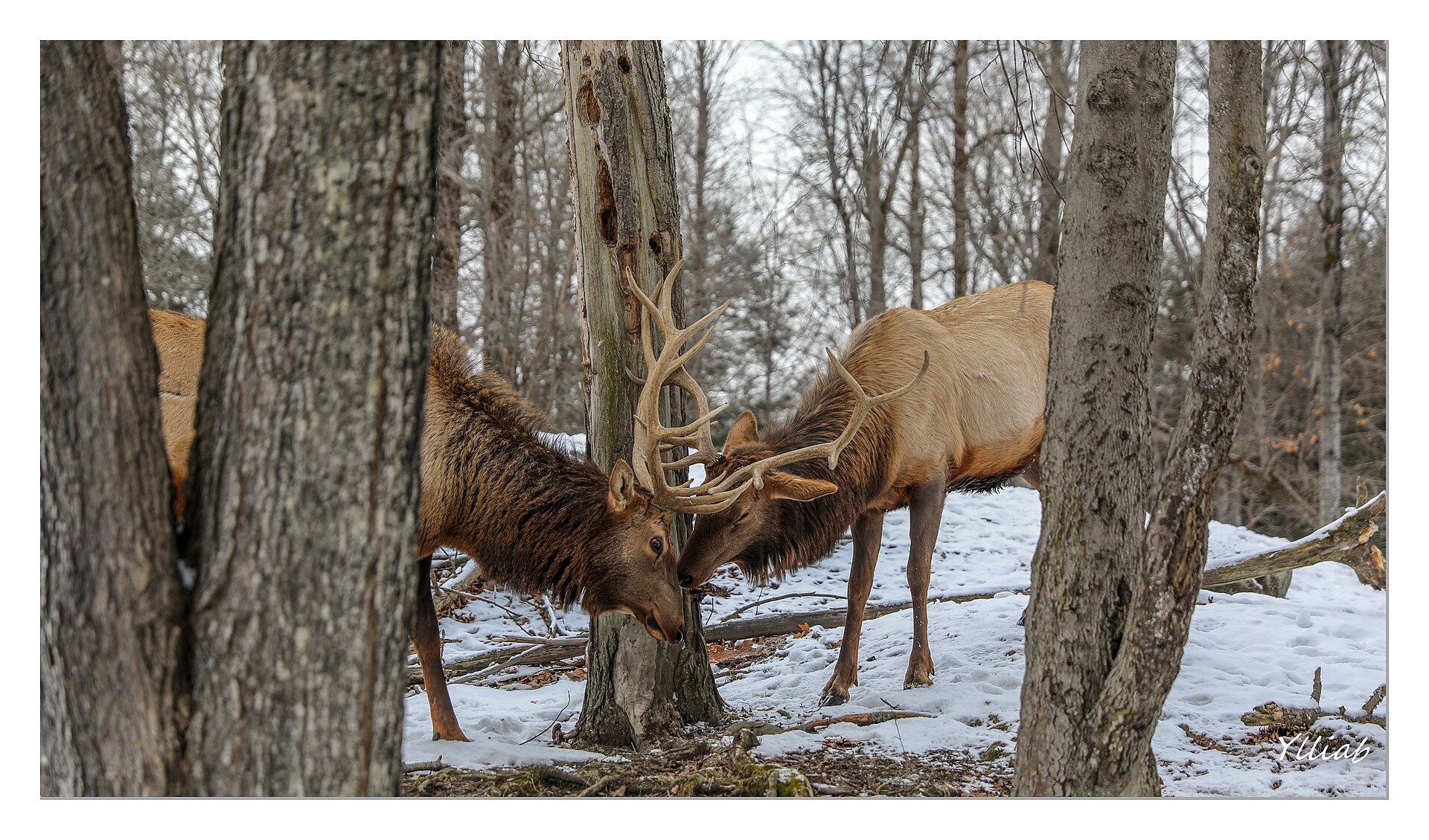
The dominant stag in an area is called the master stag. Around him hang satellite stags, younger or weaker males trying to take over his position. Roaring is the way that conflict is usually settled without a fight: the sound conveys information about condition and size. If it does come to a clash, the animals lock antlers and push against each other until one gives up.
A detail that shifts the picture: it is not the stags that determine where the rut takes place. According to Vereniging Het Edelhert the hinds choose the spot, on the basis of food availability. A hind is in season for only about one day. Some 34 weeks later, around 1 June, a single calf is born.
Why watching quietly counts double here
Vereniging Het Edelhert writes one sentence that explains exactly why disturbance during the rut is worse than disturbance in May:
“If the master stag is driven off by people, weaker stags mate with the hinds. That is bad for the species.”
So someone who comes too close with a telephoto lens doesn’t just ruin his own afternoon — he intervenes in which genes get passed on.
The best moment of the day
Natuurmonumenten is unambiguous about it: “the hours after sunrise and before sunset”. Park De Hoge Veluwe advises visiting the observation posts “at the end of the day”, when large game becomes more active. That park’s rut excursion runs in September from 6.00 to 7.30 pm — which is also the time window the site manager itself considers best.
In practice that means: go in the last two hours before sunset, and make sure you are in place well before dusk. Anyone turning up at a quarter to eight is the only sound they’ll hear.
Wind matters more than light
A red deer can, according to Vereniging Het Edelhert, smell a human “up to 1 kilometre away”. That figure makes it clear in one go why wind direction is the one thing you really must check before you leave: you want the wind in your face, not at your back.
For the Veluwezoom Rut Route, Natuurmonumenten even gives concrete advice: in a westerly or southerly wind you can hear the roaring from several points along the route.
Where exactly to stand
It sounds contradictory, but the best places are the places where everyone stands — because the animals are used to it and the view there is designed for them.
- De Elsberg observation hide (Veluwezoom) — Natuurmonumenten names it explicitly for the rut. Note: since 1 July 2025 the Schaapsallee has been permanently closed. From the De Plaghak car park it is now a 3.8 kilometre walk. Count on that.
- Millelamel and the Schuilkelder (Hoge Veluwe) — the two hides where the rut excursion takes place. Millelamel is wheelchair accessible.
- Nieuw Reemst game-viewing screen and the viewpoints Valenberg, De Mossel, Oud Reemst and Reijerscamp (Planken Wambuis).
- Enkhout observation point (Kroondomein) — outside the closure period.
Going along with a ranger
If you go once a year, an excursion is probably the better choice: you reach places that are otherwise closed, and someone there hears the difference between a roaring stag and a distant tractor.
- Staatsbosbeheer organises rut excursions on the Veluwe and in the Oostvaardersplassen. For 2026 these were bookable from Tuesday 25 August, 10.00 am — they fill up fast.
- Park De Hoge Veluwe runs “Watching and listening to the rut with the nature guide” throughout September, from 6.00 to 7.30 pm. It is free on top of admission and cannot be reserved; the location alternates by date between Millelamel and the Schuilkelder.
- Natuurmonumenten runs nature safaris in the Deelerwoud.
How to behave
The only hard distance norm published by a Dutch site manager comes from Natuurmonumenten, for Planken Wambuis: keep at least 25 metres away, stay calm and walk away slowly. Don’t walk between animals or between groups. Never feed or touch them — Park De Hoge Veluwe explicitly forbids luring with food, visitors included.
Beyond that the ordinary rules apply, which on the Veluwe are stricter than people think:
- Most areas are open from sunrise to sunset. Planken Wambuis publishes the current times on its own area page.
- Keep to the paths. Planken Wambuis has an explicit quiet zone that you may not enter at all.
- Dogs on the lead, on the paths. In the Deelerwoud, group activities, events and professional use are not permitted at all.
- No drones. In the Deelerwoud that is stated in so many words.
There is more about this on our page Responsible wildlife watching.
Red deer, fallow deer or roe deer — what am I looking at?
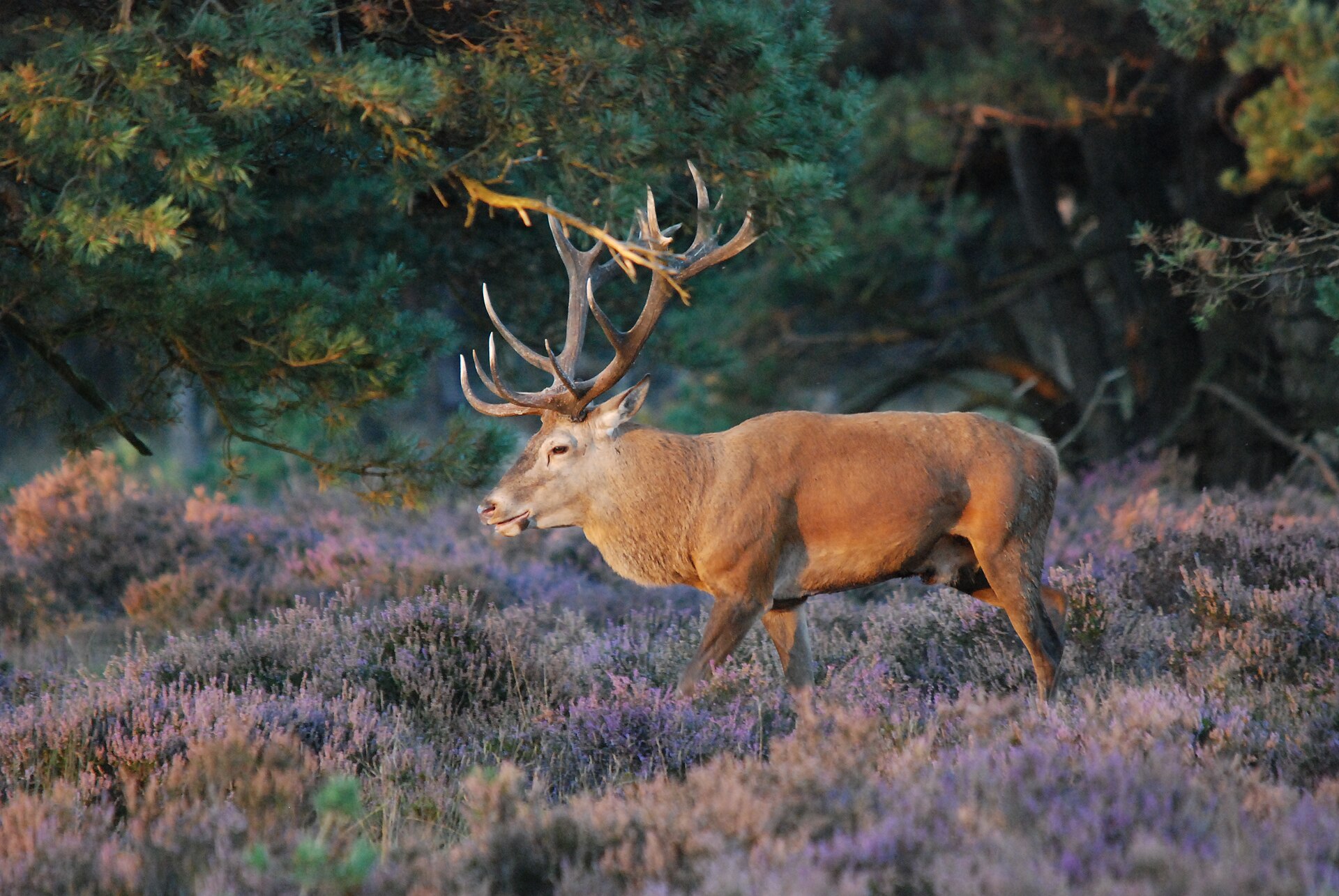
Staatsbosbeheer sums up the distinction in one sentence: “Red deer have very large antlers, fallow deer flattened palmate antlers and roebucks have small little antlers.”
| Red deer | Fallow deer | Roe deer | |
|---|---|---|---|
| Shoulder height | 105–130 cm (male) | 85–100 cm (male) | 60–90 cm |
| Antlers | large, branched, up to ~10 kg | palmate, “shovel” | small, ~25 cm, 2–3 points |
| Coat | summer red-brown, winter grey-brown | often spotted, sometimes black or white | black nose, white chin |
| Rut | mid-Sept – mid-Oct | mid-Oct – early Nov | July–August |
| Where | Veluwe, Oostvaardersplassen | dunes, Veluwe, Friesland, Zeeland | all of the Netherlands |
Two things that resolve the confusion in practice. First: if you see a deer in the dunes in the Netherlands, it is almost certainly a fallow deer — think of the Amsterdamse Waterleidingduinen. Second: the roe deer has a tail of only two to four centimetres and is considerably smaller than people remember.
The rutting periods help too. If you hear barking in the wood in July or August, that is the roe deer — which has a completely different reproductive cycle, with delayed implantation in which the embryo only starts to grow in December. Fallow deer are late, by contrast: mid-October to early November. So anyone going to watch the rut in the last week of October is in fact watching fallow deer.
The antlers through the year
Antlers are not horn but bone, and they are regrown from scratch every year. It is one of the fastest tissue growth processes in mammals.
- Late winter, early spring — the antlers are cast.
- Spring and summer — the new antlers grow from the pedicles, covered by velvet: a velvety, blood-rich skin. Vereniging Het Edelhert gives a growth rate of one and a half centimetres a day.
- July–August — the antlers are full-grown. The velvet starts to itch and the deer rub it off against trees and bushes. After that the antlers are dead tissue and without feeling.
- September–October — the antlers do what they are for: impressing and pushing.
A full-grown set of antlers can weigh up to about ten kilos. Up to roughly the twelfth year of life it gets heavier every year; after that it declines again. Red deer live to around sixteen.
Signs: what you see when you don’t see the animals
For Planken Wambuis, Natuurmonumenten names three things to look out for: tracks, droppings, and rubbing and fraying spots. The last are clearest during the rut — young trees with the bark rubbed off at chest height, often with velvet left behind. Alongside those, the mud patches a rutting stag rolls in.
Don’t confuse red deer fraying spots with those of roe deer: a roebuck, according to Staatsbosbeheer, frays the bark off thin branches to drive other males away, and those spots sit much lower and are much finer.
Why you see them less often these days
If you hear someone say it used to be easier, that is probably right. In February 2025 Staatsbosbeheer announced that 80 to 100 wolves live on the Veluwe, and that less culling is needed as a result. Ranger Bart Smit says in that item that a few years ago seeing large game was still “a hundred per cent certainty”, and that this now happens less often.
That is exactly what you would expect: where a predator returns, prey animals become shyer and move differently through the landscape. It is good news for the wood and bad news for your chances on a single evening. So don’t count on seeing anything guaranteed, not even during the rut.
How many red deer are there, and who decides that?
In the Netherlands this is not a neutral question. Red deer numbers are actively managed, and how that should be done has been fought over for decades.
On the Veluwe the province of Gelderland sets the framework. The aim is that “the effect on nature, traffic safety and agriculture remains acceptable”; a wildlife management permit states exactly where, when and how many animals may be driven off or shot. The plan in force is the Faunabeheerplan Grote Hoefdieren 2026–2032.
In the Oostvaardersplassen the province of Flevoland has been responsible for policy since 2016 and Staatsbosbeheer carries out the management. The population went from around 1,750 animals in 2007 to 2,650 in 2017, was then sharply reduced to around 500, and at the October 2025 count stood at 770 again.
Two recent developments are worth following. On 11 February 2026 the Council of State annulled the exemption with which Flevoland had permitted culling down to a target population of 500 red deer: research into the consequences for genetic diversity should have taken place before the permit, not after. And on 2 July 2026 Staatsbosbeheer published the outcome of research by the University of Amsterdam: there are few signs of inbreeding, and the red deer of the Oostvaardersplassen are among the genetically most diverse populations in Western Europe.
Practicalities
Parking and starting points
- Veluwezoom — Paviljoen De Posbank, Beekhuizenseweg 1, Rheden, for the 10.4 km Rut Route. For De Elsberg: the De Plaghak car park. Note that the through road over the Posbank has been partly closed to cars since 1 July 2024.
- Planken Wambuis — Harderwijkerweg 1A, Otterlo; also by bus, Oud-Reemsterweg stop.
- Deelerwoud — the Deelen car park on the N804, or Herberg De Woeste Hoeve.
- Oostvaardersplassen — Buitencentrum Oostvaardersplassen, Kitsweg 1, Lelystad.
- Hoge Veluwe — three entrances: Schaarsbergen, Otterlo and Hoenderloo. In September the park is open from 9.00 am to 8.00 pm, in October until 7.00 pm.
Accessibility
The most accessible rut-watching spot in the Netherlands is probably the Millelamel game observation post on the Hoge Veluwe: it is wheelchair accessible and it is one of the two locations of the free rut excursion. The park also has wheelchairs and adapted bicycles available free of charge, and two surfaced routes.
In the Oostvaardersplassen the Driehoek is well accessible for visitors with a physical disability, with a wheelchair-accessible boardwalk and the De Bluethroat bird screen.
Because of the closure of the Schaapsallee, De Elsberg is in practice no longer accessible for anyone unsteady on their feet.
Frequently asked questions
When does the deer rut start in the Netherlands?
Usually in the second half of September, with a peak from roughly mid-September to mid-October. On the Hoge Veluwe it starts, according to Vereniging Het Edelhert, as early as the beginning of September; in most other areas only around 18 September, with the peak ten to twelve days later.
Where is the best place to hear roaring stags?
On the Veluwe: Veluwezoom National Park (the De Elsberg hide and the Rut Route), Planken Wambuis, the Deelerwoud and Park De Hoge Veluwe. In Flevoland: the Oostvaardersplassen, where Staatsbosbeheer also organises rut excursions.
What time of day should I go?
In the last two hours before sunset, or the first hour after sunrise. Make sure you are in place before dusk falls, and check the wind direction: a red deer smells a human up to a kilometre away.
How much distance should I keep?
Natuurmonumenten gives a minimum of 25 metres. Never walk between animals or between groups, and withdraw calmly if an animal notices you.
Can I visit the Kroondomein during the rut?
Largely not. Most of Kroondomein Het Loo is closed every year from 15 September to 25 December. The Paleispark stays open, and according to the Royal House a good 20 per cent of the area remains freely accessible, as do the public roads.
What is the difference between roaring and the barking I heard in summer?
Roaring is a low, sustained bellow from a red deer in September and October. The sharp barking you hear in July and August comes from roe deer, whose rut falls then. Fallow deer are later: mid-October to early November.
Am I guaranteed to see a deer?
No. Since 80 to 100 wolves have been living on the Veluwe, red deer have become shyer; Staatsbosbeheer itself says you see them less often than a few years ago. Count on sound as the main prize and sight as a bonus.
May I film with a drone?
No. Drones are prohibited in virtually all nature reserves; Natuurmonumenten states the ban explicitly for the Deelerwoud among others.
When are the calves born?
About 34 weeks after the rut, so around late May and early June. A hind has one calf. Newborn calves have barely any scent, which makes them hard for predators to find.
When do red deer lose their antlers?
Late winter, early spring. New antlers then grow in four months, are full-grown in July or August, and the velvet is rubbed off at that point.
Further reading at the source
- Staatsbosbeheer — Bronst: where you book the rut excursions on the Veluwe and in the Oostvaardersplassen. In Dutch.
- Vereniging Het Edelhert — Bronst edelhert: the biology of the rut plus the expected start date per area. In Dutch.
- Natuurmonumenten — Bronstroute Veluwezoom: 10.4 km from the Posbank, with wind advice. In Dutch.
- Natuurmonumenten — Edelherten spotten op de Elsberg: including the current closure of the Schaapsallee. In Dutch.
- Park De Hoge Veluwe — Bronst kijken met de natuurgids: the free evening excursion, with dates per observation hide. In Dutch.
- Natuurmonumenten — Wild zien op Planken Wambuis: the best practical spotting tips, with the 25-metre distance advice. In Dutch.
- Staatsbosbeheer — Toegankelijkheid Oostvaardersplassen: which parts are open when. In Dutch.
- Council of State — ruling on red deer culling in Flevoland, 11 February 2026. In Dutch.
- Staatsbosbeheer — Minder afschot op de Veluwe nodig door de wolf. In Dutch.
- Province of Gelderland — Recreatiezonering op de Veluwe: why paths and car parks are disappearing. In Dutch.
- Wildlife watching on the Veluwezoom — the same area outside the rut, when the leaves are off and the herds are larger again.
- Responsible wildlife watching — how much distance is enough, and why especially during the rut.
- Red deer in the Oostvaardersplassen — where to see them outside the rut, at what hour, and what closes in winter.
- Fallow deer and roe deer — the two species the red deer is most often confused with.
- Wildlife calendar — what else there is to see this month.
- The White-tailed Eagle in the Netherlands and crane migration — two other autumn stories.