Where to see the grey wolf in the Netherlands
Very rare 🦌 Mammal (land) Sensitive species · R1
🛡️ No exact locations, on purpose
This is a sensitive species. We deliberately give no exact locations. If an area is named below, that is because the site manager publishes the species there themselves, and the source is given with it. That way we do our bit for the protection of the species. Why we do that.
Where and when do you see a grey wolf? This species is very rarely seen, all year round.
How do you recognise a grey wolf?
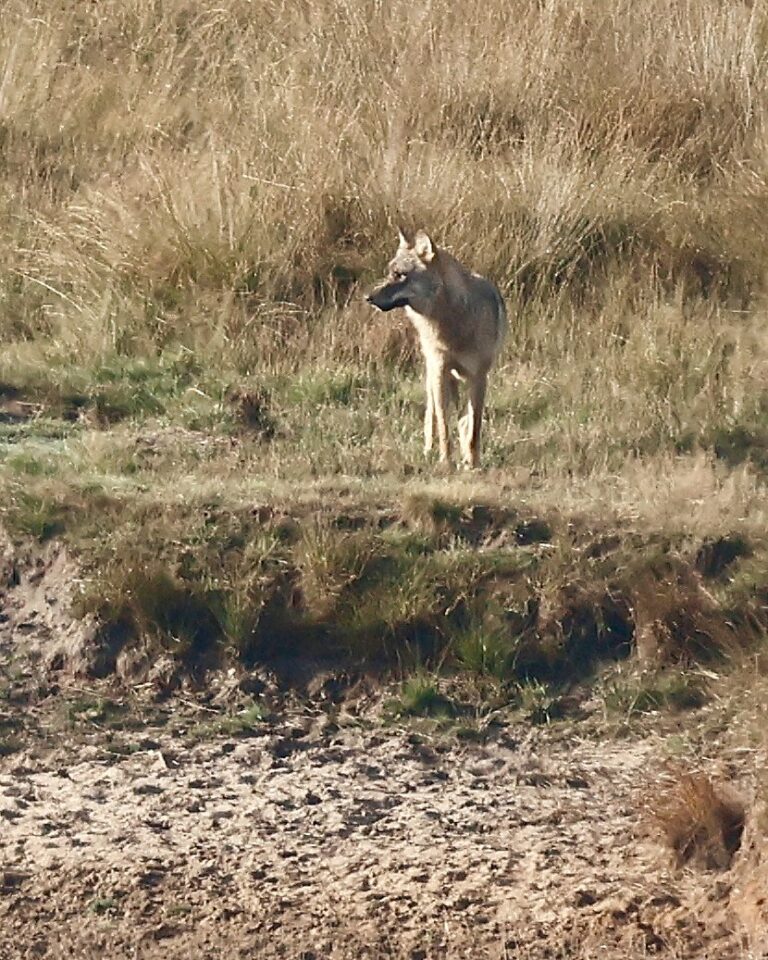
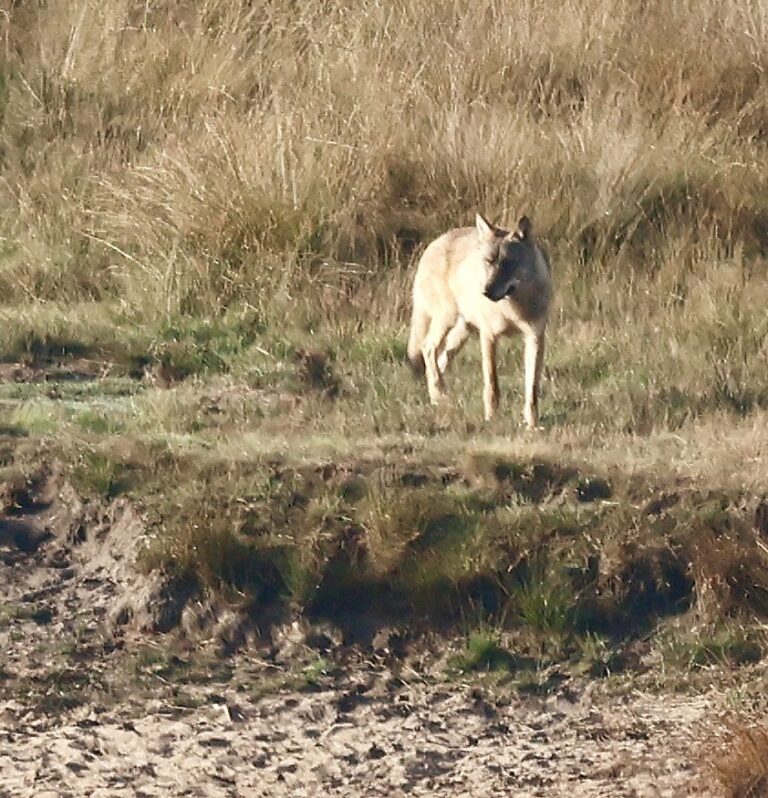
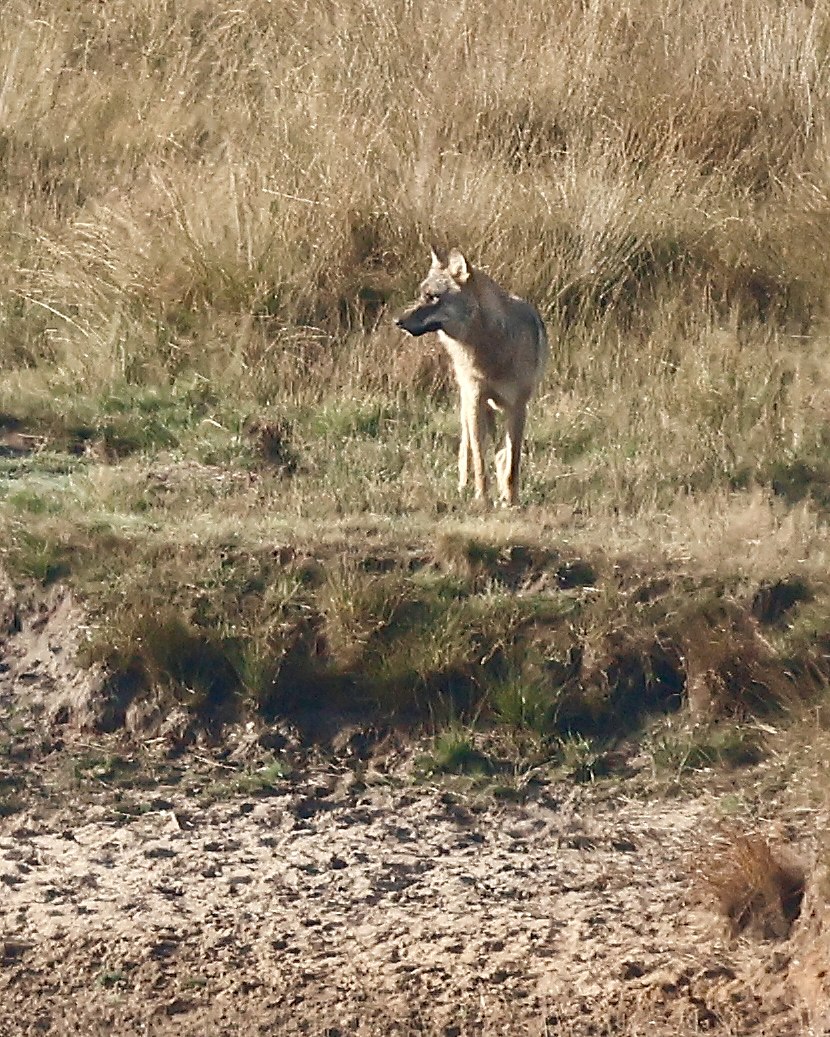
Large and dog-like, greyish brown with a pale muzzle and a dark dorsal stripe, with long legs and a short, low-carried tail. In movement it is the stamina that stands out above all: a wolf trots on in a straight line and keeps going. Many reports turn out on enquiry to be German shepherds.
What does a grey wolf sound like?
Recording: Wikimedia Commons, Public domain, via Wikimedia Commons
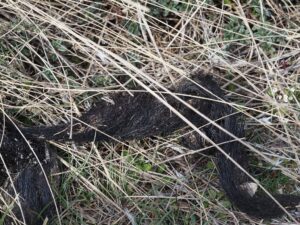
What tracks does a grey wolf leave?
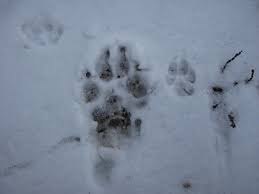
Print: 8 to 10 cm long, clearly larger than that of most dogs and strikingly oval, longer than wide, with the two middle toes far forward and the claws clearly visible. Trail: a single print is hard to tell from a large dog's, the trail as a whole is not. A trotting wolf places its hind foot exactly in the print of the fore foot and holds an almost straight line for kilometres on end, while a dog weaves and darts about. That straight, economical trail is the most reliable feature.

Where do you see this species in the Netherlands?
The Veluwe, Drenthe, the Gelderse Vallei and the Utrechtse Heuvelrug. We deliberately name only the region: more precise locations do not belong on a website for this species.
📍 Nationaal Park Drents-Friese Wold
presence reportedThese links come straight from our database, with the chance, the source and the evidence level for each area.
🗺️ Drenthe
Very rare🗺️ Gelderse Vallei en Utrechtse Heuvelrug
Very rare🗺️ Veluwe
Very rareFor this sensitive species we deliberately stay at regional level.
When is the best time?
Green = present · orange = peak period. The bar is generated from our database.
Best period: Present all year, with no season in which the chance is noticeably greater. This is not a species you can go out looking for.
Best time of day: Night, dawn and dusk. In practice almost all records are chance encounters, often from the car or through a trail camera.
Recent sightings
👁️ Where has this species been seen recently?
Check the current sightings on Waarneming.nl. A useful addition to our own verified information.
Current sightings on Waarneming.nl →
Note: for sensitive species the source already blurs or withholds sightings. We do not reproduce exact locations.
How to improve your chances
- Keep the wind in your face. Most mammals will smell you long before they see you.
- Arrive before sunrise and then stay put. Sitting still beats walking about.
- Wear muted colours, skip the scent, and put your phone on silent.
- Be patient. Expect to come back more than once before it works.
🎒 What you need for this
None. There are no wolf excursions or wolf hides in the Netherlands
🌿 Watching responsibly
Keep your distance, stay on the paths, and never lure animals with food or sound. Leave as soon as an animal becomes uneasy. This is a sensitive species. We deliberately give no exact locations. If an area is named below, that is because the site manager publishes the species there themselves, and the source is given with it. That way we do our bit for the protection of the species.
Status: Verified · Last checked: 2026-07-29
More photos