Where to see the Water-meadow Grasshopper in the Netherlands
Rare 🦗 Grasshopper
Where and when do you see a Water-meadow Grasshopper? This species is rarely seen, from June to October.
How do you recognise a Water-meadow Grasshopper?
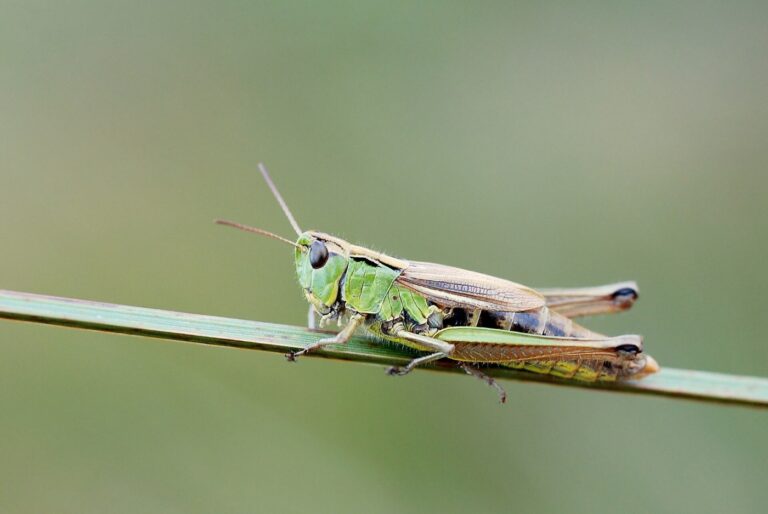
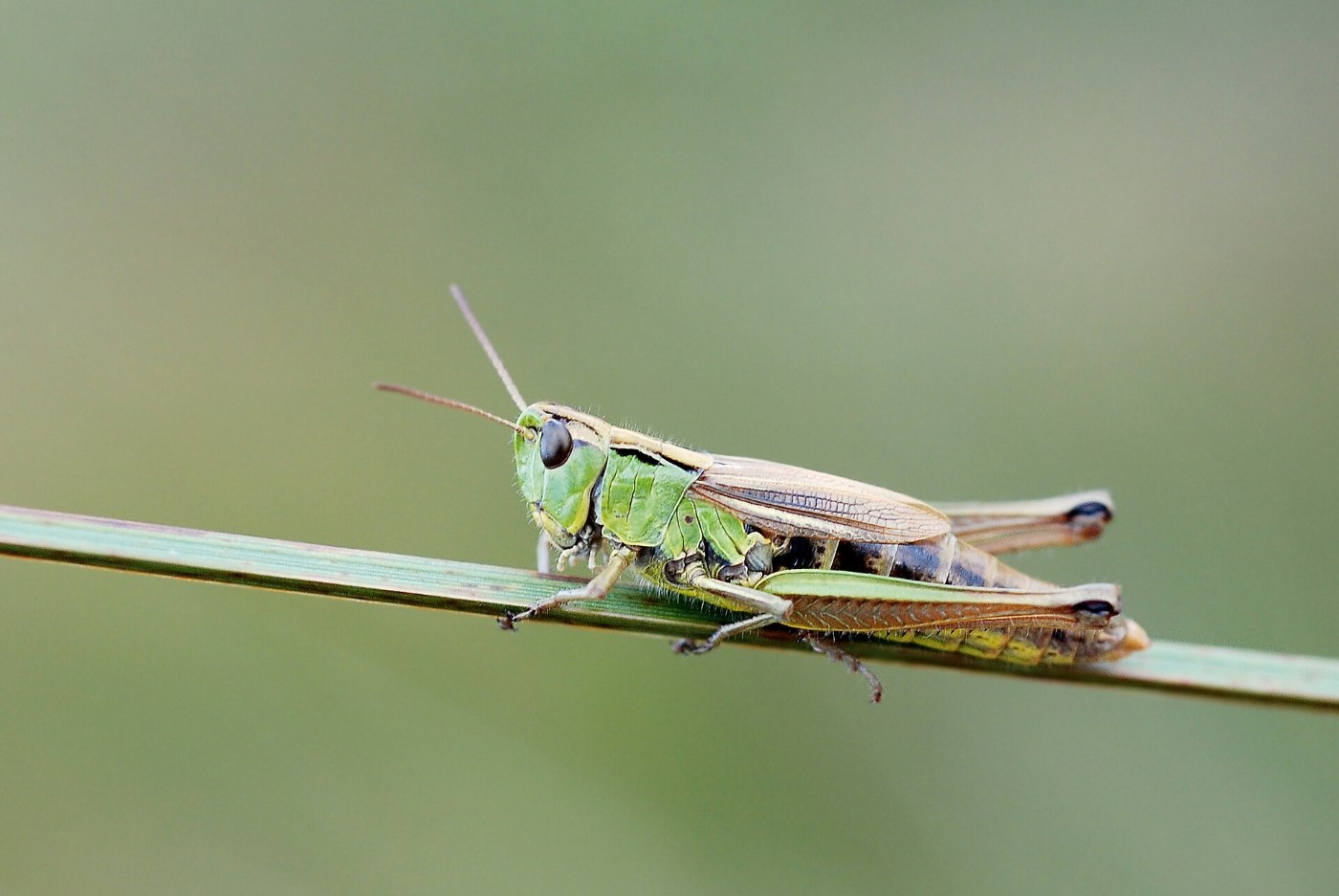
Ground colour usually green and less variable than in the Meadow Grasshopper. The hind knee is darker than the rest of the hind leg. The male's forewings do not reach the hind knee; on the female they reach just past the middle of the hind thigh. Body length 13.0 to 25.0 mm, forewing 8.7 to 12.0 mm; the long-winged form reaches a wing of 14.5 to 18.0 mm. All measurements and status data come from Kleukers et al., De sprinkhanen en krekels van Nederland (Nederlandse Fauna 1, 1997). Those figures are now almost thirty years old. In the digital version of that source the symbols for male and female do not render, so it cannot be established with certainty which range belongs to which sex; we therefore give the combined range.
What can you confuse a Water-meadow Grasshopper with?
Looks like: Meadow Grasshopper
- Meadow Grasshopper (Chorthippus parallelus): Kleukers et al. write that confusion is really only possible with C. parallelus. The separation goes by song: that of the Water-meadow Grasshopper sounds slightly louder and coarser, and the leg movement is slower.
- With the long-winged form, confusion with Chorthippus dorsatus and Chorthippus albomarginatus is added.
Where do you see this species in the Netherlands?
Local, with its stronghold in three core areas in the east of the country. A more recent, westernmost locality in the province of Utrecht has been described in the Nieuwsbrief Saltabel; we have not seen that publication ourselves.
📍 Nationaal Park Utrechtse Heuvelrug
presence reported📍 Nationaal Park Drents-Friese Wold
presence reported📍 Nationaal Park Weerribben-Wieden
presence reported📍 Oostelijke Vechtplassen
presence reported📍 Zuidlaardermeergebied en Hunzedal
presence reportedThese links come straight from our database, with the chance, the source and the evidence level for each area.
When is the best time?
Green = present · orange = peak period. The bar is generated from our database.
Best period: Most adults are found between late June and early October. The phenology graph in Kleukers et al. runs from 25 June to 26 October.
Best time of day: Warm, windless hours in the middle of the day — that is when the males sing. Record the song; that is the only reliable way to separate it from the Meadow Grasshopper.
Recent sightings
👁️ Where has this species been seen recently?
Check the current sightings on Waarneming.nl. A useful addition to our own verified information.
How to improve your chances
- Listen first. Almost every species gives itself away by singing before you spot it.
- Go on a warm, windless afternoon. In cold or wind they fall silent.
- Walk slowly and note where the sound stops. That is where it sits, usually low in the vegetation.
- A bat detector makes audible the species that sing too high for human ears.
🎒 What you need for this
Boots, and a sound recorder or phone to record the song. A bat detector is not needed — this song is within the audible range.
Photography
Shoot from the side and get the hind knee sharp in frame: it is darker than the rest of the hind leg. Note too how far the forewing reaches — on the male not as far as the hind knee. Those are the features an identification can lean on, although the song remains decisive.
🌿 Watching responsibly
Keep your distance, stay on the paths, and never lure animals with food or sound. Leave as soon as an animal becomes uneasy.
Status: Verified · Last checked: 2026-10-28
More photos