
Where to see the walrus in the Netherlands
Very rare 🦭 Marine mammal
Where and when do you see a walrus? This species is very rarely seen, all year round.
How do you recognise a walrus?
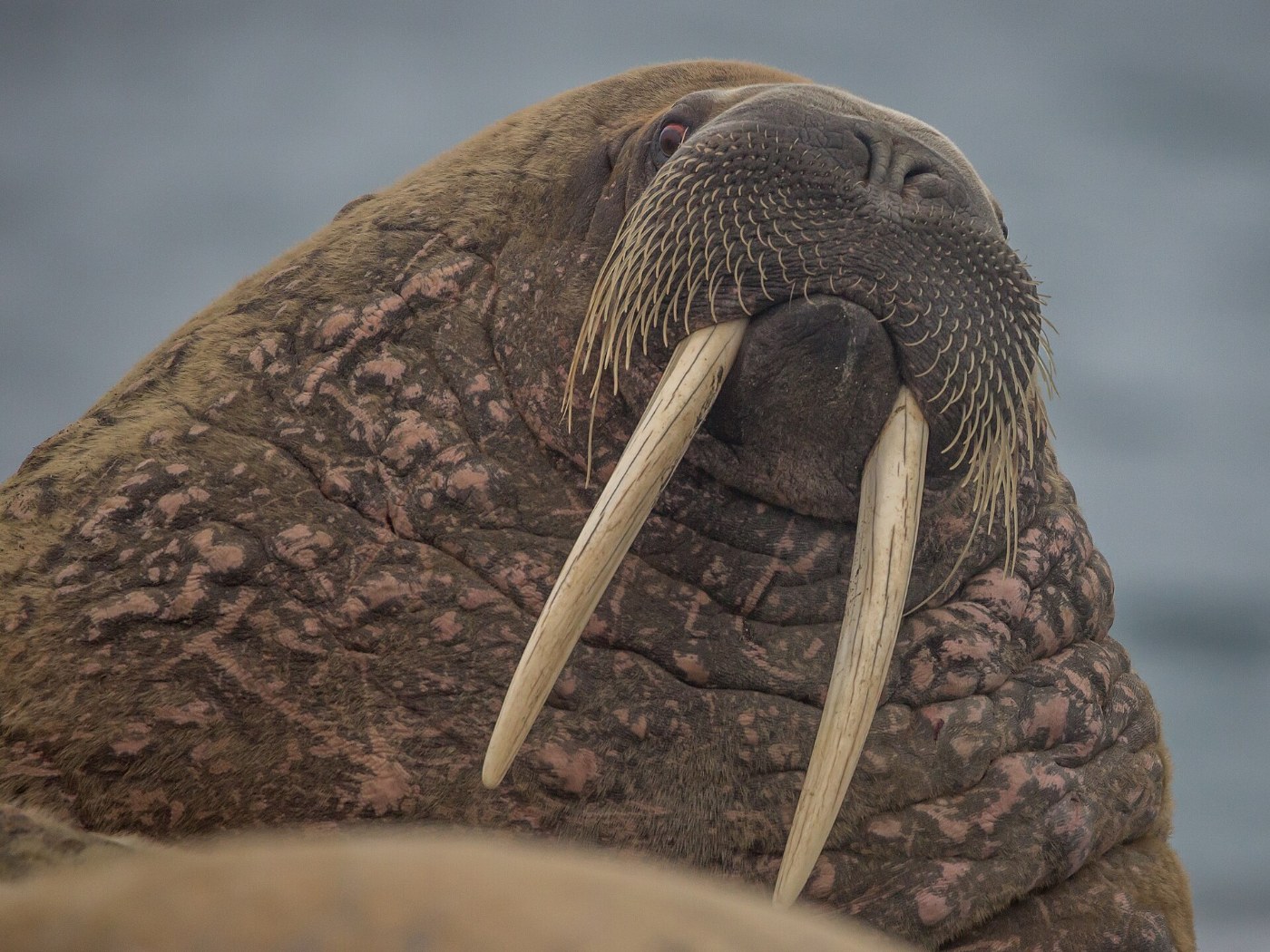
Males grow to 300 cm long and 900 kg, females to 270 cm and 600 kg respectively. The cinnamon brown skin is covered with coarse hairs, and the moustache consists of stiff short bristles. Characteristic are the tusks, which keep growing throughout life — in males the tusks reach as much as 100 cm, in females 60 cm. With its tusks, size and colour this animal cannot be confused with any other seal.
What can you confuse a walrus with?
Looks like: Grey seal
- Grey seal: the only real risk, and only at a great distance. As soon as you see the tusks or the cinnamon brown skin there is no doubt left.
- Hooded seal: much smaller and grey-blotched, without tusks.
Where do you see this species in the Netherlands?
Almost exclusively the Wadden area. The modern Dutch records: Den Helder (1926), Texel (1976 and 1982), Terschelling-Ameland (1981), Ameland (1998) and Schiermonnikoog and Harlingen (2021). The Atlantic walrus occurs from eastern Canada to western Greenland, with vagrants occasionally reaching Denmark, Germany and the Netherlands. In prehistoric times the species was far commoner here: many walrus fossils have been trawled up from the southern North Sea.
Habitat: Pack ice in winter, beaches and rocky coasts in summer. Colonies can grow very large in both seasons, and the animals then lie packed tightly together.
This is a common, widespread species: you can come across it in far more places than the areas listed below. Treat that list as a starting point rather than a full survey.
Habitat: Pack ice in winter, beaches and rocky coasts in summer. Colonies can grow very large in both seasons, and the animals then lie packed tightly together.
We have not yet recorded any areas for this species with enough evidence behind them, so we name the habitat type instead.
When is the best time?
Green = present · orange = peak period. The bar is generated from our database.
Best period: Too few records for a pattern; the Dutch records are spread across the year.
Best time of day: Not applicable. If a walrus turns up, the whole of the Netherlands knows within a day.
Recent sightings
👁️ Where has this species been seen recently?
Check the current sightings on Waarneming.nl. A useful addition to our own verified information.
How to improve your chances
- Keep the wind in your face. Most mammals will smell you long before they see you.
- Arrive before sunrise and then stay put. Sitting still beats walking about.
- Wear muted colours, skip the scent, and put your phone on silent.
- Be patient. Expect to come back more than once before it works.
🎒 What you need for this
Binoculars or a telescope; keep a good distance
Photography
Keep far more distance than you think you need. A walrus that reaches the Netherlands is an exhausted animal that needs rest, and at the 2021 records dozens of onlookers gathered within a day. Photograph with a telephoto lens from the dyke or the pier.
🌿 Watching responsibly
Keep your distance, stay on the paths, and never lure animals with food or sound. Leave as soon as an animal becomes uneasy.
Status: Verified · Last checked: 2026-10-28