
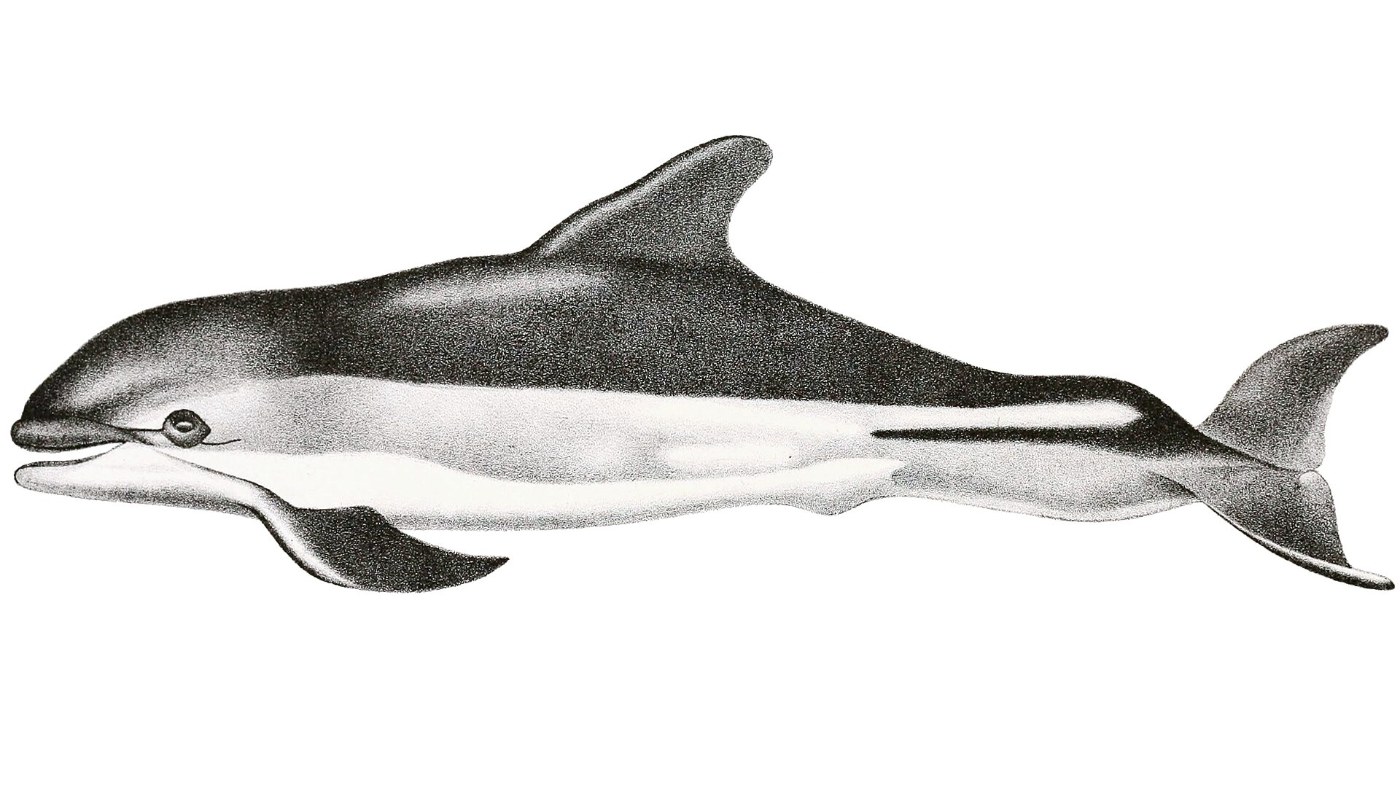
Where to see the Atlantic white-sided dolphin in the Netherlands
Very rare 🦭 Marine mammal
Where and when do you see an Atlantic white-sided dolphin? This species is very rarely seen, all year round.
How do you recognise an Atlantic white-sided dolphin?
A fairly heavily built dolphin up to 2.8 m long with a short beak. The upperside, from beak to tail, is black or dark grey, and a yellowish or ochre-coloured zone runs forward along the flank from the tail root. Adult males have a strikingly strongly keeled, "high" tail root.
What can you confuse an Atlantic white-sided dolphin with?
Looks like: White-beaked dolphin
- White-beaked dolphin: the only real confusion species. Characteristic of the white-beaked dolphin is the whitish grey saddle behind the dorsal fin and a beak of which it holds that the upper side of the beak is in any case never black; the Atlantic white-sided dolphin has an entirely dark back, a black beak and the bright white patch on the flank, exactly below the dorsal fin.
- Risso’s dolphin: also has a tall sickle-shaped dorsal fin, but is pale grey and covered in scars.
- Behaviour as an aid: white-beaked dolphins are boisterous swimmers that like to surf in front of a ship’s bow for a while, while the Atlantic white-sided dolphin does not like to swim along with ships.
Where do you see this species in the Netherlands?
The Atlantic white-sided dolphin is a species of the colder temperate and subarctic waters of the northern Atlantic and is fairly rare in the northern North Sea; in the southern North Sea it is a rare visitor. The species has only been found in Dutch waters since 1960; most strandings and records date from after 1980. The Dutch records lie mainly on the Wadden islands and the Holland coast.
Habitat: Cold, deep water of the northern Atlantic; the southern North Sea is not part of its range.
This is a common, widespread species: you can come across it in far more places than the areas listed below. Treat that list as a starting point rather than a full survey.
Habitat: Cold, deep water of the northern Atlantic; the southern North Sea is not part of its range.
We have not yet recorded any areas for this species with enough evidence behind them, so we name the habitat type instead.
When is the best time?
Green = present · orange = peak period. The bar is generated from our database.
Best period: No seasonal pattern has been found for the Dutch records.
Best time of day: Not applicable: live records are exceptional in the Netherlands.
Recent sightings
👁️ Where has this species been seen recently?
Check the current sightings on Waarneming.nl. A useful addition to our own verified information.
How to improve your chances
- Keep the wind in your face. Most mammals will smell you long before they see you.
- Arrive before sunrise and then stay put. Sitting still beats walking about.
- Wear muted colours, skip the scent, and put your phone on silent.
- Be patient. Expect to come back more than once before it works.
🎒 What you need for this
Binoculars; for identification an image of the flank is needed
Photography
Photograph the flank, not the dorsal fin. The Dutch field guide is blunt about it: the dorsal fin is unsuitable as a feature for telling the two species apart. If you cannot get the flank sharp, record "Lagenorhynchus spec." and not the species.
🌿 Watching responsibly
Keep your distance, stay on the paths, and never lure animals with food or sound. Leave as soon as an animal becomes uneasy.
Status: Verified · Last checked: 2026-10-28